Bhagalpur/Patna: Bihar’s makhana sector is set for a major boost with Bihar Agricultural University (BAU), Sabour being entrusted with an important role in strengthening production, processing and value addition of the state’s prized aquatic crop.

Under a Central Sector Scheme, the Bihar government’s Agriculture Department has selected Krishi Vigyan Kendras (KVKs) operating under BAU Sabour for the establishment of micro-level makhana processing units.
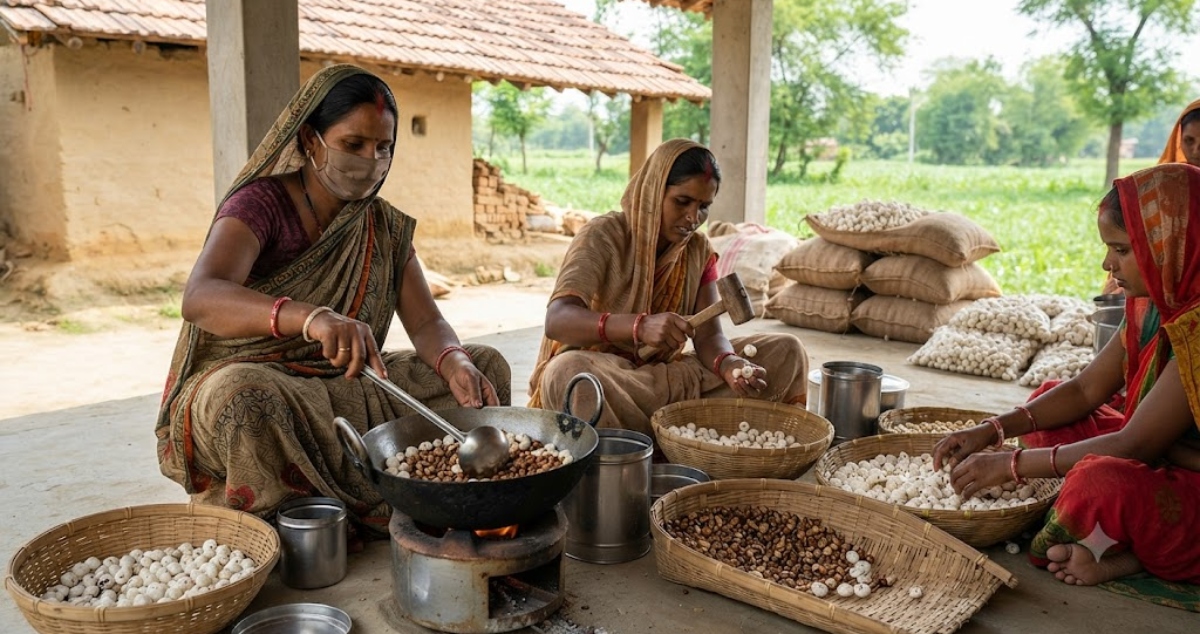
The initiative is aimed at creating modern facilities for primary processing, grading and value addition in makhana-producing areas, allowing farmers to undertake more activities locally instead of selling the crop as raw produce.

Farmers to Get Processing and Packaging Opportunities
The proposed processing units are expected to help farmers move beyond the traditional dependence on selling raw makhana at relatively low prices.
Through the facilities, farmers will have opportunities for makhana popping, quality improvement, scientific grading, attractive packaging and preparation of value-added products such as roasted and flavoured makhana.
This could allow producers to capture a larger share of the value generated between farm production and the final consumer market.
Training for Farmers and Rural Youth
The KVKs will also play a role in providing practical training to local farmers and rural youth.
Training programmes are expected to cover:
- Modern makhana processing techniques
- Quality control and food hygiene
- Packaging and branding
- Agricultural entrepreneurship
- Market management
The initiative is therefore expected to combine processing infrastructure with skill development and enterprise opportunities in rural areas.
BAU Vice-Chancellor Highlights Employment Potential
BAU Sabour Vice-Chancellor Dr D. R. Singh described makhana as an important agricultural heritage of Bihar and said the establishment of micro-processing units through KVKs could contribute to agricultural value addition and rural employment.
He said the initiative could help farmers receive better returns from their produce by connecting them more directly with markets.
Farm-to-Market Value Chain to Get Stronger
The establishment of local processing facilities is expected to strengthen Bihar’s farm-to-market makhana value chain.
Processing closer to production centres could reduce the dependence on transporting raw produce and create opportunities for local businesses involved in grading, packaging, branding and finished-product manufacturing.
The initiative could also encourage the emergence of makhana-based agricultural startups and rural enterprises, creating additional employment opportunities for young people.
Bihar Accounts for 85–90% of India’s Makhana Production
Makhana is one of Bihar’s distinctive aquatic crops, with the state accounting for an estimated 85% to 90% of India’s total makhana production, according to data cited by Bihar Agricultural University, Sabour.
The crop supports the livelihoods of thousands of farming families across several districts of the state.
With growing demand for processed and branded makhana products, strengthening local processing capacity could provide farmers and rural entrepreneurs with more opportunities to participate in the higher-value segments of the market.
From Traditional Crop to High-Value Agri Business
The new processing initiative is aimed at taking Bihar’s makhana sector beyond traditional cultivation and raw-material sales.
By combining local processing facilities, scientific grading, value addition, branding and skill development, the programme could help strengthen the state’s position in the national makhana market while supporting rural livelihoods and agricultural entrepreneurship.