Patna: Bihar has converted all 900 revenue courts across the state into virtual courts to simplify the resolution of land-related disputes and reduce the need for landowners to make repeated visits to government offices. The initiative, introduced by the Revenue and Land Reforms Department, aims to make revenue hearings more transparent, accessible and accountable through digital technology.

Under the new system, landowners, known as raiyats, will be able to participate in virtual hearings for cases related to land mutation (dakhil-kharij), Parimarjan and other revenue matters. Their submissions during hearings will be recorded and securely preserved. Applications, supporting evidence, documents and court orders will also be made available online.
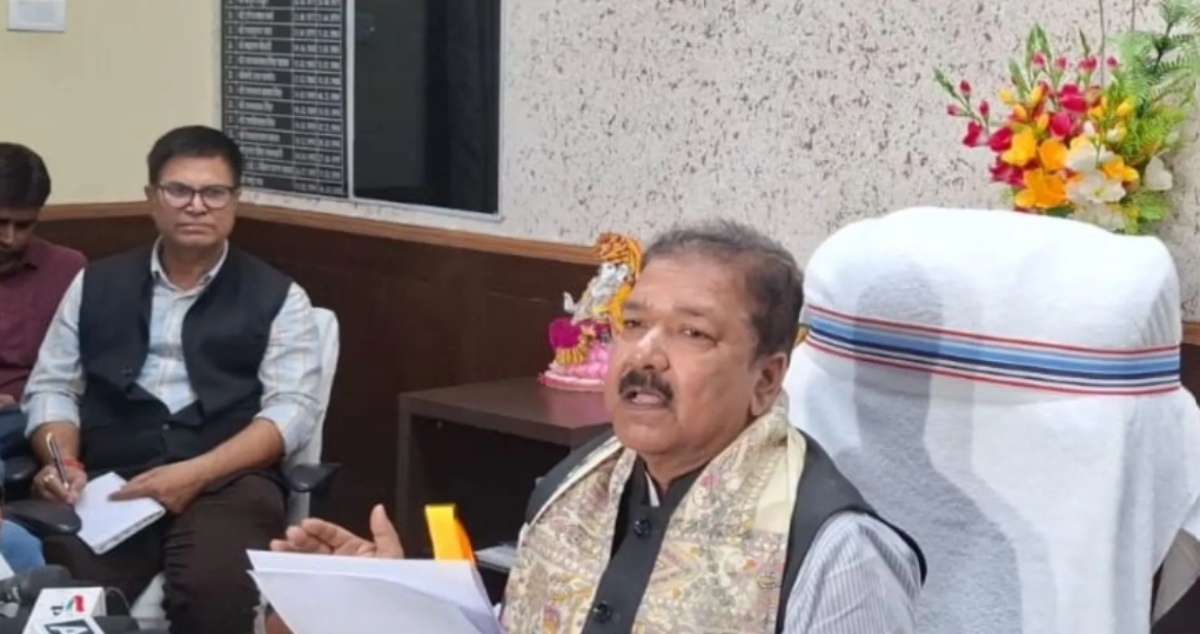
Revenue and Land Reforms Minister Dr Dilip Kumar Jaiswal announced the development during a press conference at the department’s office on Monday.

He said landowners previously had to leave their work and appear physically for revenue court hearings. In several cases, repeated adjournments delayed decisions for years, with some disputes taking up to four years to reach a conclusion. The new arrangement is intended to reduce these difficulties and improve the delivery of justice.
Patna Headquarters to Monitor All 900 Revenue Courts
Under the virtual court system, the department’s headquarters in Patna will monitor the functioning of all 900 revenue courts across Bihar.
The monitoring mechanism will track the number of hearing dates assigned to individual cases, how frequently landowners are required to appear and how often they return without their cases being heard.
The recordings of hearings and digitally maintained documents will also help preserve the arguments and evidence submitted by both sides. These records can be referred to in the event of future disputes.
Decisions of Revenue Officers to Undergo Quality Review
The department will also review the quality of decisions taken by revenue officials, including Circle Officers (COs), Deputy Collectors Land Reforms (DCLR) and other authorised officers.
A team of departmental experts will examine decisions to identify shortcomings or instances where incorrect orders have caused unnecessary difficulties for landowners.
If irregularities or deficiencies are found, the concerned cases will be reviewed and appropriate action may be taken against the officials responsible. The department expects the system to strengthen accountability at the field level.
AI-Based CCTV Monitoring Planned to Identify Middlemen
The department is also planning to connect CCTV cameras installed in circle offices and other revenue establishments with an Artificial Intelligence-based monitoring system.
According to the minister, the proposed AI module will help monitor office activities and identify suspicious behaviour. The initiative is intended to curb the activities of middlemen and help take action against individuals involved in corruption and irregularities.
GPS-Enabled Laptops for Revenue Employees and Amin
The department has also introduced GPS-enabled laptops for revenue employees. Similar devices are now being provided to Amins, who are responsible for land measurement and related fieldwork.
The GPS facility will help the department monitor employees’ activities and their field visits, making it easier to track official work and improve supervision.
Action Taken Against 144 Officials in Six Months
Dr Dilip Kumar Jaiswal said the department had taken action against 144 officials at different levels during the past six months as part of its efforts to address corruption and administrative irregularities.
He also announced action against two officials on Monday.
In the first case, an FIR was registered by the Vigilance Investigation Bureau against Dilip Kumar, Circle Officer of Atri circle in Gaya district, over allegations that he demanded a bribe of Rs 70,000 to stop a land mutation process. The department subsequently initiated action at its level.
In another case, two salary increments of Kamal Nayan Kashyap, former Circle Officer of Bodh Gaya, were withheld over the alleged mutation of land covered under the land ceiling law.
Land Survey Published in 1,617 Villages Across 20 Districts
The minister also shared an update on the ongoing land survey in Bihar. According to him, survey records have been published for 1,617 villages, known as mauzas, across 20 districts.
After the publication of the final Record of Rights, the department is working towards issuing ownership cards or passbooks to landowners.
The department will now publish Form 25 every seven days for different mauzas undergoing the survey process. After its publication, landowners will have three months to file an appeal before the Additional Collector’s court.
The minister urged residents to actively participate in the land survey process and cooperate with officials to ensure its timely completion.
He said the issuance of ownership cards would improve transparency and clarity in land records and help reduce future disputes over property ownership.