
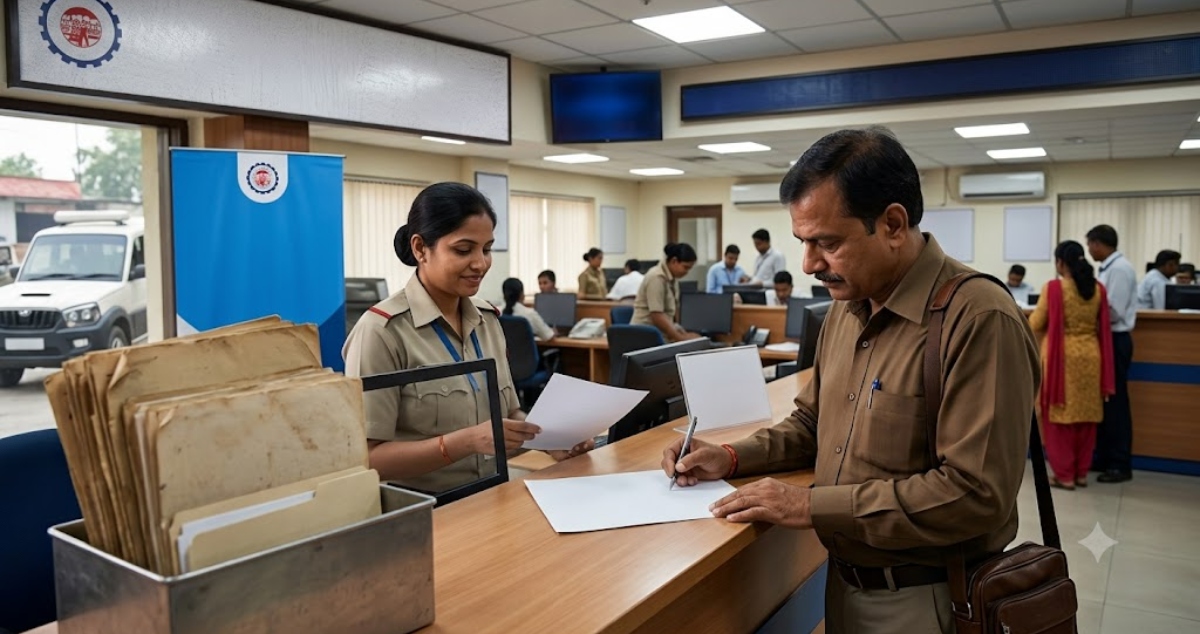
New Delhi/Patna: Provident Fund (PF) account holders planning to withdraw their savings should take note of a change in the process for requesting tax deducted at source (TDS) relief. According to the information cited in the report, Form 121 will replace Forms 15G and 15H from Tax Year 2026–27 for eligible individuals seeking to avoid TDS deductions.

The change follows the provisions of the Income-tax Act, 2025. Under the earlier system, eligible individuals generally used Form 15G or Form 15H, depending on their age and circumstances, to declare that they met the conditions for non-deduction of TDS.
The new arrangement means that PF subscribers will need to check the applicable requirements and use the prescribed form when seeking TDS relief. However, the change in paperwork does not mean that every PF withdrawal will become tax-free.

What Changes From Tax Year 2026–27?
Under the earlier system, Form 15G was generally used by eligible individuals below 60 years of age, while Form 15H was intended for eligible senior citizens aged 60 and above.
From Tax Year 2026–27, eligible individuals will instead need to use Form 121 to make the relevant declaration.
The change is particularly important for people planning to withdraw PF savings because of a job change, financial requirements or other personal circumstances.
Before submitting a declaration, account holders should check whether TDS applies to their proposed withdrawal and whether they satisfy the conditions for claiming relief.
What Is Form 121?
Form 121 is a declaration through which an eligible person can request that TDS not be deducted, provided the applicable conditions are met.
It should not be treated as an automatic exemption from tax. Eligibility depends on the individual’s circumstances and the tax rules governing the payment.
According to the information cited in the report, having a valid Permanent Account Number (PAN) is also important when seeking the benefit.
PF subscribers should therefore verify their PAN details and other account information before submitting the form.
Will PF Withdrawals Become Completely Tax-Free?
No. Replacing Forms 15G and 15H with Form 121 does not, by itself, make PF withdrawals entirely tax-free.
TDS and final tax liability are different matters. TDS is tax deducted at the time of payment under the applicable provisions. The final tax treatment of a PF withdrawal depends on factors such as the circumstances of the withdrawal and the relevant tax rules.
Submitting Form 121 may help an eligible person avoid TDS at the time of payment, but it does not automatically remove any tax liability that may otherwise apply.
Individuals should not submit the declaration unless they meet the prescribed conditions. An incorrect declaration could create compliance issues later.
What Should PF Account Holders Do?
People planning to withdraw their PF savings during Tax Year 2026–27 should take the following steps:
- Check whether TDS applies to their proposed withdrawal.
- Verify whether they qualify to submit Form 121 under the applicable rules.
- Ensure that their PAN and PF account details are accurate.
- Consult the latest official EPFO and Income Tax Department guidance before submitting the declaration.
- Understand the tax treatment of the withdrawal separately from the process for avoiding TDS.
A Procedural Change, Not a Blanket Tax Exemption
The move from Forms 15G and 15H to Form 121 marks a change in the procedure for eligible individuals seeking TDS relief. PF subscribers should familiarise themselves with the revised requirements before making a withdrawal.
The key point is that Form 121 is not a guarantee of tax-free PF withdrawal. Eligibility, the nature of the withdrawal and the applicable tax provisions will continue to determine whether TDS can be avoided and whether any final tax liability arises.
Account holders should rely on official notifications and applicable rules when making decisions about their PF savings.