Patna: The controversy over Bihar’s 11 proposed satellite townships and the Bihar City Development Act, 2026, is intensifying, with farmers’ organisations raising concerns over restrictions on land transactions, land acquisition, compensation and rehabilitation.

The organisations have warned that they will organise a farmers’ march in Patna in November if their demands are not addressed within a month. The dispute has also reached the Patna High Court, bringing the legal and administrative aspects of the proposed urban development projects into focus.
Farmers’ groups say they are not opposed to urbanisation but insist that development must protect agricultural land, livelihoods and the economic security of farming families.

11 Cities Identified For Satellite Townships
The Bihar government plans to develop satellite townships in Patna, Darbhanga, Chhapra, Sonpur, Bhagalpur, Muzaffarpur, Gaya, Purnia, Sitamarhi, Munger and Saharsa.
The projects are intended to promote planned urban growth by developing new urban areas around major cities and expanding infrastructure and basic amenities.
According to the Urban Development Department’s plan, the core areas of the proposed townships will be developed on a priority basis. These areas have been described as locations currently free of permanent structures that could be included in the initial phase.
The government’s strategy aims to establish infrastructure in a planned manner and minimise potential hurdles related to land acquisition. However, restrictions on land transactions associated with the projects have prompted objections from farmers and their organisations.
You may like to read this article as well:
Bihar Govt Signs Agreement With CEPT Foundation to Support Planned Satellite Township Development
Farmers Raise Concerns Over Land And Livelihoods
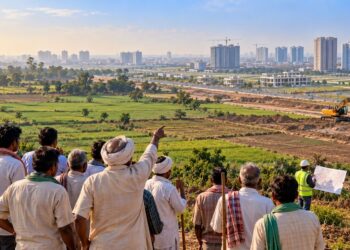
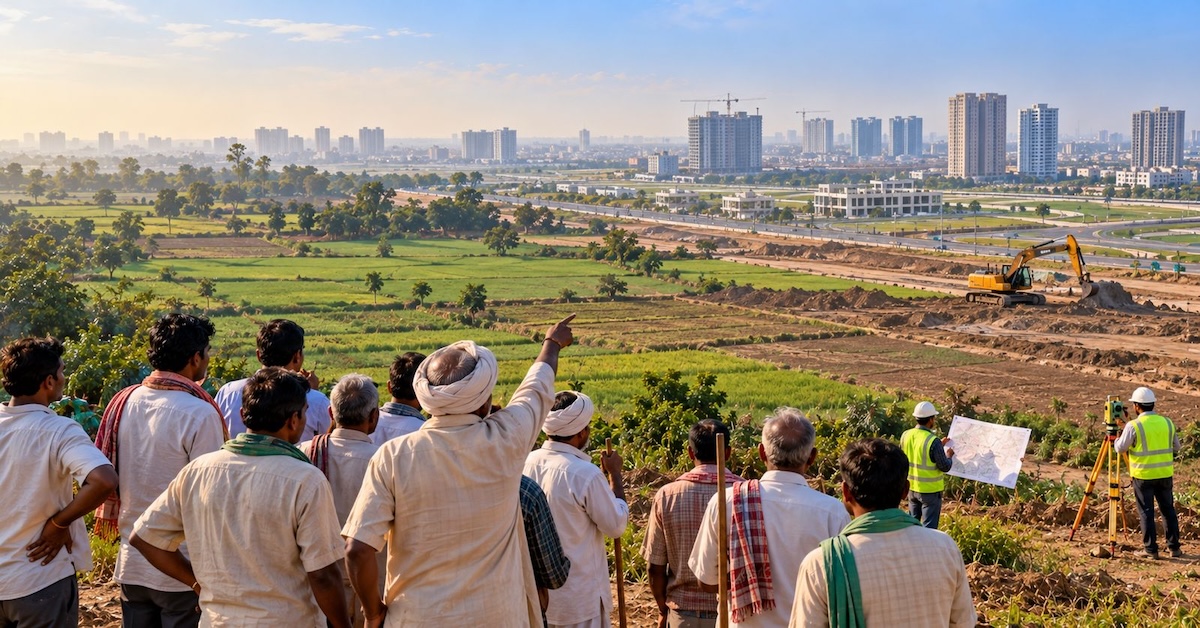
Farmers’ organisations claim that large areas of land have been identified for the projects and warn that the conversion of agricultural land for urban development could affect families dependent on farming for their regular income.
They argue that agricultural land is not merely a financial asset but also a source of livelihood, social security and long-term economic stability.
According to the organisations, land-use changes and acquisition must not proceed without adequate consideration of farmers’ interests. They maintain that compensation alone may not cover the long-term loss of agricultural income or provide equivalent security for affected families.
The groups have called for a development model that balances urban expansion with agricultural growth, rural industries, irrigation, education, healthcare and local employment opportunities.
You may like to read this article as well:
Demand For Transparency In Land Acquisition
Farmers’ organisations have raised questions over the provisions of the Bihar City Development Act, 2026, demanding clear safeguards for landowners and affected families.
Their key demands include:
- Fair compensation and rehabilitation: Clear legal guarantees covering land valuation, compensation, rehabilitation and livelihood security.
- Social impact assessments: Assessments of the social and economic consequences of each project before implementation.
- Transparent land valuation: Public disclosure of the process used to determine land prices and the details of the proposed township projects.
- Protection in land pooling: Clear provisions governing land use, equity stakes and farmers’ rights in land-pooling arrangements.
- Social audits: Social audits of all satellite township projects to improve transparency and accountability.
The organisations have also demanded the withdrawal of the Bihar City Development Act, 2026, and called for the farmer-friendly safeguards of the Right to Fair Compensation and Transparency in Land Acquisition, Rehabilitation and Resettlement Act, 2013, to be protected.
Farmers Threaten Protest In November
The organisations have set a one-month deadline for the government to address their demands. If no satisfactory action is taken, they plan to stage a farmers’ march in Patna in November.
They have warned that the agitation will continue until the law is withdrawn and concrete steps are taken to safeguard farmers’ rights and livelihoods.
The organisations maintain that their opposition is not directed at development itself but at a model of urbanisation that, they argue, could put agricultural land and the future income of farming families at risk.
With the dispute now before the Patna High Court, attention is likely to focus on the legal process, the government’s response to the objections and the safeguards that may be provided to landowners affected by the proposed projects.