Patna: Devotees across Bihar are preparing for the concluding rituals of Sharadiya Navratri, with prayers to Goddess Siddhidatri, Kanya Pujan and havan marking Maha Navami. Religious observances include offerings of halwa-puri and black chickpeas, while families follow their local traditions and Panchang for the timing of rituals and the conclusion of fasts.

According to Pandit Narayan Pandey, Maha Navami, based on the udayatithi — the lunar day prevailing at sunrise — falls on Tuesday, October 20. The worship of Goddess Siddhidatri, the ninth and final manifestation of Goddess Durga, will therefore take place on Tuesday.
Devotees who observed the Maha Ashtami fast are scheduled to break it on Monday after 8.04am, once the Ashtami Tithi concludes. The timing of fasting and other rituals may vary according to local almanacs and family traditions.

Kanya Pujan And Havan Mark Navratri’s Conclusion
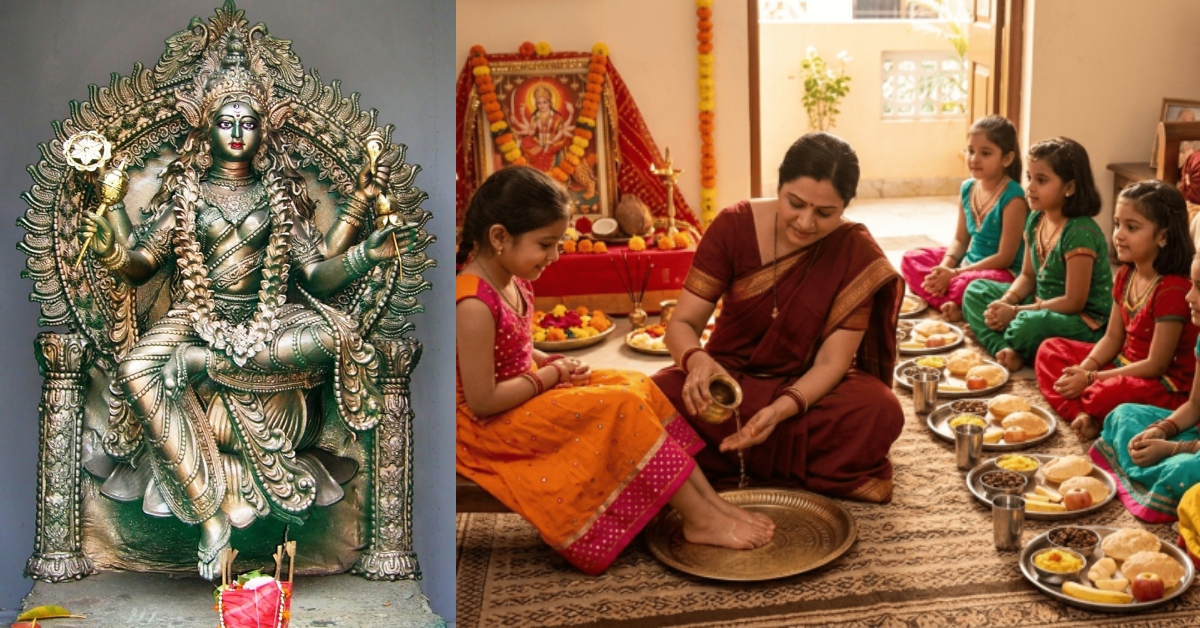
Kanya Pujan is among the key rituals performed during the final days of Navratri. Young girls are worshipped as manifestations of the Divine Mother, with the tradition commonly involving girls between the ages of two and 10.
According to Pandey, the ritual’s significance is discussed in the 27th chapter of the third Skanda of the Shrimad Devi Bhagavata Purana.
During Kanya Pujan, devotees offer young girls a meal, gifts and other offerings while seeking their blessings. Halwa, puri and black chickpeas are commonly prepared as prasad for the occasion.
Havan is another important ritual associated with Maha Navami. Devotees offer sacred materials into a ritual fire while praying for their families’ happiness, prosperity and well-being. Many households also conclude their nine-day fasts and perform the final observances, known as udyapan.
Goddess Siddhidatri: Significance And Offerings
Goddess Siddhidatri is the ninth form of Goddess Durga. Her name refers to the bestowal of siddhis, or spiritual attainments, and religious beliefs associate her worship with wisdom, strength, prosperity and the fulfilment of wishes.
She is traditionally depicted seated on a lotus, with a lion as her vehicle. Her four hands hold a discus, mace, conch shell and lotus flower.
Halwa, puri and black chickpeas are considered auspicious offerings to the Goddess. Devotees may also offer kheer and malpua. Champa, marigold and red hibiscus flowers are traditionally used during worship.
White and purple clothing are considered auspicious for the occasion in some religious traditions. White symbolises peace and purity, while purple is associated with spirituality and dignity.
Maha Navami Mantras And Auspicious Timings
Pandit Narayan Pandey said chanting the following mantra during worship is considered auspicious:
“Om Devi Siddhidatryai Namah”
(ॐ देवी सिद्धिदात्र्यै नमः)
Another mantra associated with the worship is:
“Om Hrim Klim Aim Siddhaye Namah”
(ॐ ह्रीं क्लीं ऐं सिद्धये नमः)
The Navarna Mantra — “Om Aim Hrim Klim Chamundayai Vicchai” (ॐ ऐं ह्रीं क्लीं चामुण्डायै विच्चै) — is also traditionally recited throughout Navratri, particularly during havan and spiritual practice.
According to the Varanasi Panchang timings cited by Upadhyay for Monday, October 19:
- Brahma Muhurta: 4.26am to 5.17am
- Abhijit Muhurta: 11.19am to 12.05pm
- Amrit Kaal: 11.08am to 12.17pm
- Rahu Kaal: 7.24am to 8.51am
The timings are based on the cited Panchang for October 19. Upadhyay said Abhijit Muhurta is considered favourable for havan. He also identified 8.50am to 10.16am and 2.35pm to 5.27pm as auspicious periods for religious rituals.
Rahu Kaal is traditionally regarded as an unfavourable period for beginning new ventures or auspicious activities.
Vijayadashami To Follow On Wednesday
According to Narayan Pandey, Goddess Durga will be bid farewell on Ashwin Shukla Dashami amid the Dhanishtha Nakshatra and Ravi Yoga, followed by Vijayadashami celebrations on Wednesday.
The occasion includes the tradition of Jayanti Dharan, in which sacred sprouts are worn or placed as part of the observance. Religious beliefs associate the ritual with mental peace, good health, happiness, prosperity and family well-being.
Pandey said the Goddess’s departure is traditionally associated with an elephant. Devotees observing fasts or consuming only fruits during Navratri are expected to conclude their fasts on Wednesday, following the Goddess’s departure.