Patna : One in four criminal cases examined by police in Patna in 2025 was found to be false, with 780 of the 2,950 cases recorded falling into this category, according to figures reported at a meeting of senior police officers from districts across Bihar.

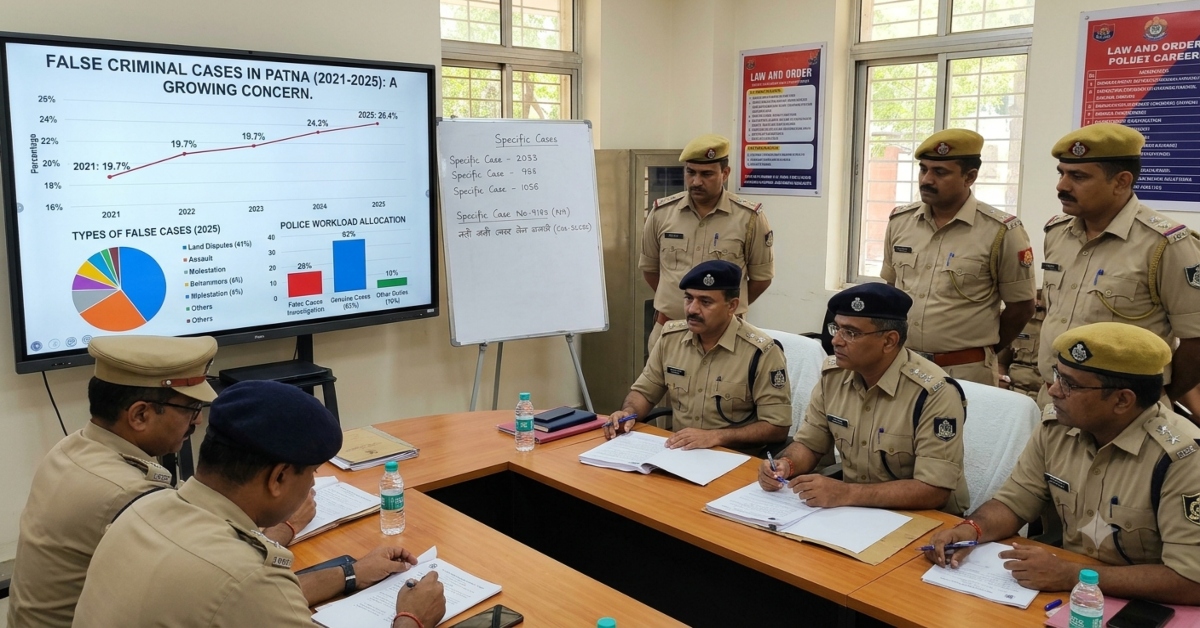
The reported data show that the proportion of cases classified as false increased from 19.7% in 2021 to 26.4% in 2025. The figures exclude serious offences such as murder, robbery, dacoity and theft, according to the report.
The trend has also affected police workload. The data indicate that 28% of police working time is spent investigating false cases, while 62% is allocated to genuine cases and the remaining 10% to other duties.

Land disputes emerged as the leading category in which cases were found to be false, followed by assault and molestation-related complaints.
False Cases Rise Over Five Years
The figures show a steady increase in both the number and proportion of cases classified as false between 2021 and 2025.
In 2021, 430 of 2,180 cases were found to be false, accounting for 19.7% of the total. The number rose to 520 out of 2,360 cases in 2022, taking the share to 22%.
In 2023, 630 of 2,610 cases were classified as false, representing 24.1%. The proportion increased further to 25.5% in 2024, when 710 of 2,780 cases fell into this category.
By 2025, the number had reached 780 out of 2,950 cases, representing 26.4% of the total.
The figures indicate an increase of 6.7 percentage points in the share of cases classified as false over the five-year period.
Land Disputes Account For 41% Of Cases
Land disputes recorded the highest proportion of cases found to be false among the categories listed in the report.
Of 560 land-dispute cases examined, 230 were classified as false, accounting for approximately 41% of the total.
Assault cases were the second-largest category, with 190 of 640 cases found to be false, representing 30%.
Among cases involving allegations of molestation, 130 of 500 were classified as false, accounting for 26%. For theft, 100 of 720 cases were found to be false, representing approximately 14%.
The figures highlight the challenges investigators face when dealing with disputes involving property, personal relationships and allegations of physical assault.
Chargesheets Filed In 55% Of Cases In 2025
The reported figures for 2025 provide a breakdown of the status of the 2,950 cases recorded that year.
Police filed chargesheets in 1,620 cases, representing 55% of the total. Another 780 cases, or 26%, were classified as false, while 550 cases, accounting for 19%, remained pending.
The distribution shows that a significant proportion of cases remained under investigation or had not reached a final stage of processing during the period covered by the data.
The figures relate to the categories included in the report and should not be interpreted as evidence that complaints in these categories are generally false.
Land Disputes And Personal Rivalries Among Key Factors
The report identifies land disputes as the leading factor associated with false cases, accounting for 39% of the cases in its analysis.
Personal enmity represented 26%, social pressure accounted for 21%, and misunderstandings made up the remaining 14%.
The report also identifies settlements between parties, pressure and fear among the circumstances associated with these cases. It states that 41% were linked to settlements, 23% to pressure, 14% to fear and 10% to financial considerations, while other reasons accounted for 12%.
These figures point to the range of circumstances investigators may encounter when assessing complaints involving disputes between individuals.
Neighbours And Relatives Feature In Case Data
The reported analysis also examined the relationships between complainants and the other parties involved.
Neighbours accounted for 28% of cases, followed by relatives at 24% and acquaintances at 21%. Strangers represented 17%, while other relationships accounted for 10%.
People aged between 26 and 35 formed the largest age group in the analysis, accounting for 41% of the cases, according to the report.
False Cases Add To Police Investigation Workload
The growing proportion of cases classified as false has implications for police resources, as investigators must examine allegations and assess the available evidence before reaching conclusions.
Land disputes and personal rivalries require particular scrutiny, according to the report. However, whether a complaint is genuine or false must be determined through investigation rather than assumptions about the complainant or the nature of the dispute.
The reported figures underline the importance of thorough investigations, accurate recording of case outcomes and efficient allocation of police resources so that genuine complaints receive timely attention.