
Patna: Married women are observing Karwa Chauth on Thursday, October 29, fasting and praying for the long life, good health and well-being of their husbands. The festival falls on Krishna Chaturthi, the fourth day of the waning lunar phase in the Hindu month of Kartika.

According to traditional Hindu beliefs, the fast is associated with marital harmony, mutual respect and family prosperity. Women observing the fast abstain from food and water during the day and conclude it after sighting the Moon and performing the prescribed rituals.
Auspicious Yogas And Worship

The day features Rohini Nakshatra, followed by Mrigashira Nakshatra, along with Parigha Yoga, Budhaditya Yoga and Lakshmi-Narayan Yoga, according to the astrological details provided by astrologers.
Worship during these auspicious periods is traditionally believed to bring blessings for a long and healthy life, enduring marital bonds, mutual affection and prosperity.
Devotees worship Lord Shiva, Goddess Parvati, Lord Ganesha, Lord Kartikeya, Chandra Dev and Karwa Mata as part of the festival’s rituals.
Astrologer Rakesh Jha said mutual contentment and respect between husband and wife are considered the foundation of family happiness and well-being in the Sanatan tradition.
He also referred to the traditional accounts of Goddess Parvati observing the fast to please Lord Shiva and Draupadi observing it during a period of crisis faced by the Pandavas.
Moonrise Rituals And Breaking The Fast
The fast begins at sunrise and continues until the Moon is sighted. Women dress in traditional or new clothes, offer prayers and prepare for the evening rituals.
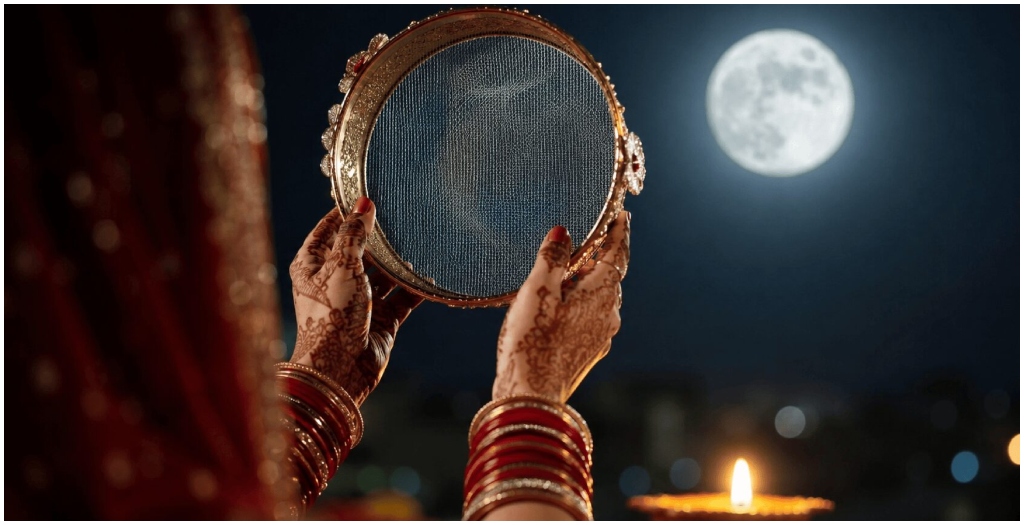
After moonrise, devotees view the Moon through a sieve, often with a lit lamp, before looking at their husbands through the same sieve. They then offer arghya, or water, to the Moon using an earthen vessel known as a karwa.
The offering may include water, milk, honey, mishri (rock sugar) and coconut, depending on family and regional customs. Women traditionally break their fast by drinking water offered by their husbands after completing the rituals.
The Moon offering is scheduled for after 8.56pm, according to the astrological timings provided for the day. The actual time of moonrise may vary by location.
Significance Of Viewing Through A Sieve
According to traditional beliefs, viewing the Moon and one’s husband through a sieve symbolises the purification of thoughts and conduct. The ritual is associated with prayers for understanding, affection and harmony in married life.
The practice remains a prominent part of Karwa Chauth celebrations, with families following customs passed down through generations.
The Legend Of Veeravati
Karwa Chauth is also associated with the traditional legend of Veeravati, who is described in the story as the only sister of seven brothers.
According to the legend, Veeravati observed the fast after marriage but became distressed by hunger and thirst. Concerned about their sister, her brothers created the illusion of moonrise by showing her a lamp’s flame.
Believing that the Moon had risen, Veeravati broke her fast. The story says that her husband’s life was subsequently threatened, prompting her to undertake prayers and penance. Through her devotion, she eventually regained her husband’s life from Yama, the god of death.
The legend is traditionally cited to explain the importance of completing the fast according to the prescribed rituals.
Mantras For Karwa Chauth Worship
Devotees may recite the following mantras while worshipping the respective deities:
– Goddess Parvati: Om Umayai Namah
– Lord Shiva: Om Namah Shivaya
– Lord Kartikeya: Om Shanmukhaya Namah
– Lord Ganesha: Om Ganeshaya Namah
– Chandra Dev: Om Somaya Namah
The prayers form part of the day’s religious observances, as devotees seek blessings for marital well-being, health and prosperity.