
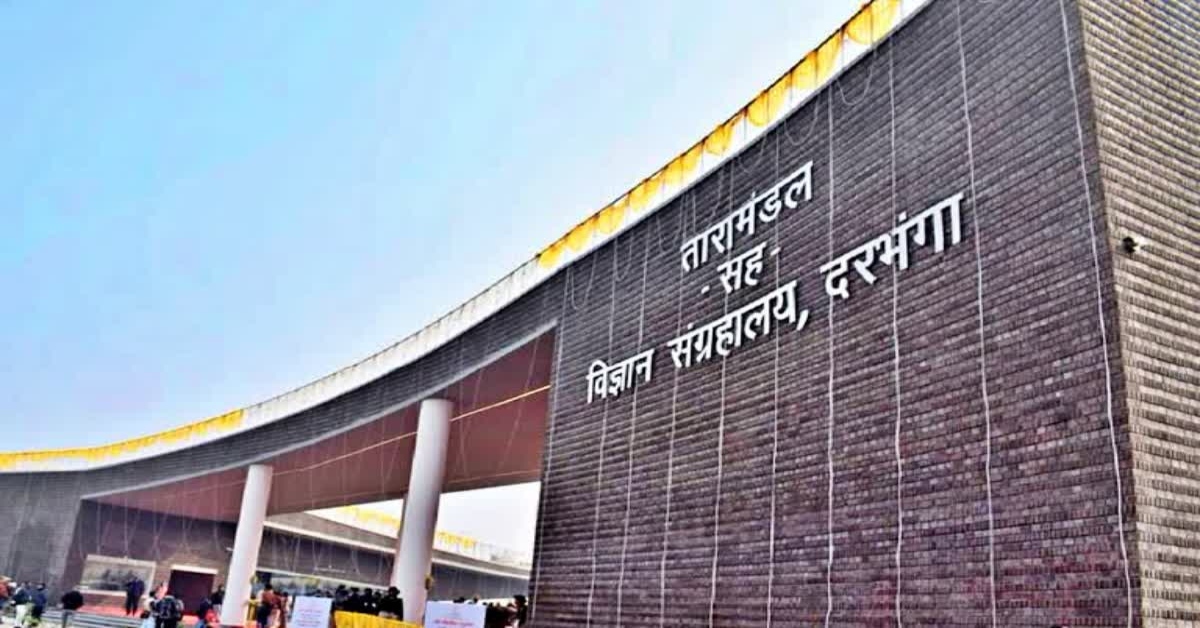
Darbhanga : Darbhanga Planetarium is set to receive an ISRO Space Gallery and Space Innovation Centre, a proposed initiative aimed at expanding access to space science education, modern technology and practical learning for students across the Mithila region.

A team of senior scientists and experts from the Indian Space Research Organisation (ISRO) visited the planetarium to inspect the proposed site and assess the available land and infrastructure. The facility is planned across approximately two acres, with space for exhibitions, innovation laboratories and modern technology-based learning facilities.
The project is estimated to cost Rs 61 crore, of which Rs 36 crore has reportedly been approved, according to the reported project details.

Darbhanga MP Dr Gopal Ji Thakur chaired a high-level review and coordination meeting at Darbhanga Circuit House to discuss the project’s technical framework, infrastructure requirements and further planning.
Space Gallery To Showcase Chandrayaan, Mangalyaan And Gaganyaan
The proposed gallery will feature exhibits on India’s major space missions, including Chandrayaan, Mangalyaan, Aditya-L1 and Gaganyaan.
Three-dimensional models of launch vehicles and spacecraft are also planned to help visitors understand the technologies behind India’s space programme.
The gallery is expected to use modern presentation methods to explain complex scientific concepts in an accessible format. Planned experiences include 3D models, virtual reality and spacewalk simulations, allowing students to explore aspects of space exploration through interactive learning.
The exhibits will highlight India’s achievements in space research and introduce visitors to the missions, launch systems and technologies involved in exploring the Moon, Mars and the Sun, as well as human spaceflight.
The proposed facility would expand the planetarium’s educational role by combining astronomy-related displays with a broader introduction to space technology and research.
Innovation Centre To Offer Robotics, Rocketry And Coding Training
The Space Innovation Centre is intended to go beyond displaying models and scientific exhibits. It is also expected to organise workshops, training programmes and educational activities for students.
The proposed areas of practical learning include rocketry, robotics, mini-satellite technology and coding.
School students, engineering students and young people interested in science and technology are expected to benefit from these activities.
The aim is to give learners opportunities to understand how scientific principles are applied in the development of technological systems. Workshops and practical activities could also encourage students to experiment with ideas and develop an interest in research and innovation.
The initiative is intended to make modern science education more accessible within the region, particularly for students who may otherwise have limited opportunities to engage with space-related technologies.
The detailed training curriculum and schedule of activities have not yet been announced.
ISRO Scientists Inspect Proposed Site At Darbhanga Planetarium
The ISRO team visited the planetarium to examine the proposed location for the gallery, exhibition areas, innovation laboratories and associated technical facilities.
The inspection focused on the available land, existing infrastructure and the possibilities for developing the proposed centre within the planetarium complex.
The site visit was followed by a review meeting at Darbhanga Circuit House chaired by MP Gopal Ji Thakur. Scientists, district officials and representatives of local educational institutions participated in discussions on the project’s technical requirements and institutional coordination.
Those present included senior ISRO scientist Vanshidhar, Darbhanga Engineering College principal Chandan Kumar, Dr Jamshed Alam, head of the postgraduate Physics Department at Lalit Narayan Mithila University, and Neha Kumari, principal of Dr APJ Abdul Kalam Women’s Institute of Technology.
Officials and representatives associated with the university’s information technology institute and the planetarium also attended the meeting.
The discussions covered the proposed technical framework, available infrastructure, institutional cooperation and the next stages of planning.
Rs 61 Crore Project, Rs 36 Crore Reportedly Approved
The proposed Space Gallery and Innovation Centre has an estimated project cost of Rs 61 crore, with Rs 36 crore reportedly approved so far.
Darbhanga MP Dr Gopal Ji Thakur said the centre would provide students and young people in Mithila with opportunities to learn about space science and research using modern educational facilities.
He said the project could broaden the role of Darbhanga Planetarium, developing it into a centre for scientific learning, research awareness and innovation rather than limiting its activities to astronomy shows and exhibitions.
The project is expected to strengthen access to science education in Darbhanga and surrounding areas. However, a construction start date and completion timeline have not been specified in the available project details.
Mithila Students Could Benefit From Modern Science Facilities
The proposed centre is expected to serve students from Darbhanga and other parts of north Bihar by bringing space science exhibits and technology-based learning closer to their educational institutions.
Exposure to satellite technology, robotics, coding and space missions could help students develop a better understanding of scientific concepts and their practical applications.
The combination of exhibitions and hands-on learning is also intended to encourage scientific curiosity among school students and young people considering careers in engineering, research and technology.
If implemented as planned, the facility could strengthen Darbhanga’s role as a regional centre for science education and public awareness of India’s space programme.
Project Implementation And Timeline Awaited
The proposed Space Gallery and Innovation Centre represents a significant planned addition to Darbhanga’s science education infrastructure. The recent site inspection and review meeting mark steps towards assessing the facilities required for its development.
The next stages will involve further planning, coordination among the institutions concerned and implementation of the proposed facilities.
The project will need to progress through these stages before the gallery and innovation centre can open to students and visitors. Its eventual impact will depend on the quality of the exhibits, the availability of practical training and the range of educational activities offered.