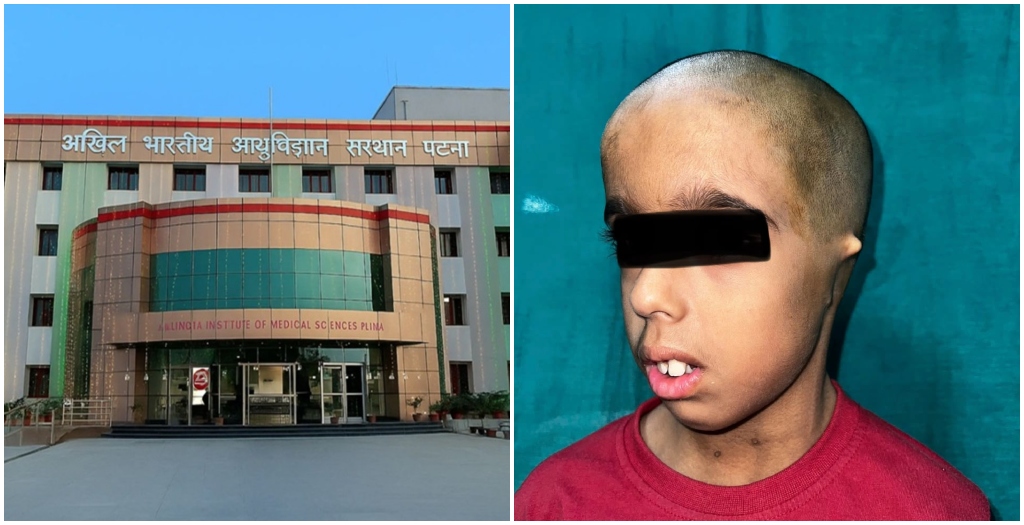
Patna: The All India Institute of Medical Sciences (AIIMS), Patna, has performed its first bone conduction implant surgery under the Rashtriya Bal Swasthya Karyakram (RBSK), marking a milestone in its specialised hearing treatment services. The procedure was conducted on October 30 on a young child born with bilateral anotia, a congenital condition in which both external ears are absent.

The Department of Ear, Nose and Throat (ENT) also performed two cochlear implant surgeries on the same day, involving a child and an adult. With three advanced hearing implant procedures completed in a single day, the institute’s Hearing Implant Programme has reached a total of 400 implants.
The surgeries were conducted under the leadership of Dr Kranti Bhavana, with guidance and support from senior expert Dr Rajesh Vishwakarma, according to an AIIMS Patna press release issued on November 2.

Bone Conduction Implant For Congenital Ear Conditions
A bone conduction implant is a hearing device that transmits sound vibrations through the bones of the skull directly to the inner ear. It bypasses the outer and middle ear, making it a potential treatment option for people with abnormalities affecting these structures.
The technology can benefit patients born with conditions such as anotia or other external ear and ear canal abnormalities, subject to medical assessment and hearing evaluation.
Cochlear implants work differently by converting sound into electrical signals that stimulate the auditory nerve, bypassing damaged sensory cells in the inner ear. The suitability of either implant depends on the type and degree of hearing loss and the patient’s medical evaluation.
Surgery Conducted Under Government Child Health Programme
The bone conduction implant surgery was performed under the Rashtriya Bal Swasthya Karyakram, a flagship child health initiative of the Government of India under the National Health Mission.
The programme focuses on the early identification and treatment of health conditions among children from birth to 18 years.
Hearing is essential for speech, language development, learning and social interaction. According to the World Health Organization, more than 430 million people worldwide, including approximately 34 million children, require rehabilitation for disabling hearing loss.
The WHO estimates that nearly 2.5 billion people could experience some degree of hearing loss by 2050.
Medical experts emphasise that early diagnosis and timely hearing intervention can improve outcomes for children with hearing difficulties. Consistent rehabilitation also supports the development of listening, communication and language skills.
CME Programme Focuses On Modern Hearing Solutions
The ENT department also organised a Continuing Medical Education (CME) programme on the theme ‘Hearing Solutions’.
The programme featured academic and clinical discussions by Dr Kranti Bhavana, guest faculty Dr Rajesh Vishwakarma and Dr Leena Vishwakarma.
The sessions covered modern hearing technologies, implant-based treatment options and recent developments in the management of different types of hearing loss. The programme also facilitated academic exchange and the sharing of clinical experiences in hearing rehabilitation.
AIIMS Patna Expands Specialised Hearing Services
The department acknowledged the contributions of the Audiology Team at AIIMS Patna and MED-EL India in supporting the institute’s Hearing Implant Programme.
The institute said the achievement reflects its efforts to expand specialised ENT services through advanced surgical technology, expert medical care and government-supported healthcare programmes.
The programme aims to improve access to quality and affordable hearing treatment, particularly for children with congenital conditions.