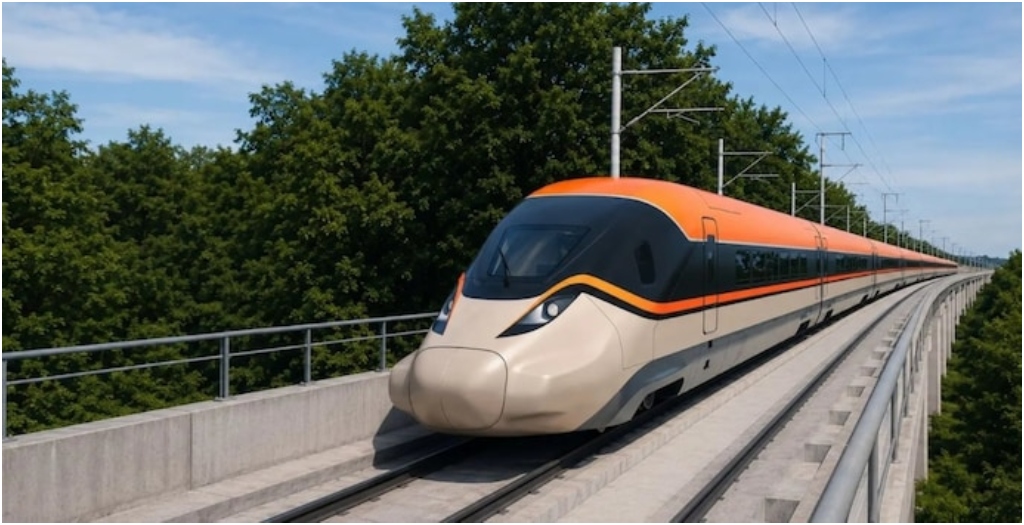
Patna: Bihar’s capital, Patna, is set to be connected to India’s proposed high-speed rail network under the Northern Bullet Train Corridor, which will link Delhi with Guwahati in Assam. The approximately 1,500-km corridor is expected to pass through Uttar Pradesh, Bihar and West Bengal, improving connectivity between northern and northeastern India.

According to the announcement attributed to Railway Minister Ashwini Vaishnaw, the proposed corridor will include Patna as one of its key stations. Once operational, the journey between Varanasi and Patna is expected to take approximately one hour.
Key Stations Along The Corridor

The proposed route will connect several major cities, including Delhi, Agra, Kanpur, Lucknow, Ayodhya, Varanasi, Prayagraj, Patna, Siliguri and Guwahati.
The corridor was initially proposed to extend up to Siliguri but was subsequently expanded to Guwahati to improve high-speed rail connectivity to the northeastern region.
Significant Reduction In Travel Time
The proposed bullet train service is expected to substantially reduce journey times between major cities.
According to the projected travel estimates:
- – Delhi to Siliguri: Around 6 hours, compared with the current journey of approximately 20 hours.
- – Varanasi to Patna: Around 1 hour.
- – Delhi to Guwahati: Less than 8 hours.
- – Delhi to Varanasi: Approximately 3 hours and 33 minutes.
- – Delhi to Kanpur: Around 1 hour and 45 minutes.
- – Delhi to Agra: Approximately 59 minutes.
These figures represent projected journey times and will depend on the final route, infrastructure and operational arrangements.
What Could Be The Patna-Delhi Bullet Train Fare?
The exact ticket prices for the proposecorridor have not yet been announced.
Railway Minister Ashwini Vaishnaw has indicated that bullet train fares are expected to be affordable and significantly lower than air travel. The project is also intended to improve access to faster transport while supporting economic activity along the route.
Improved connectivity could benefit small businesses, local artisans, industries and commuters in Bihar, while creating opportunities for regional trade and development.
Project To Follow Make In India Initiative
The proposed high-speed rail project will be developed under the Make in India initiative. According to the Railway Minister, key infrastructure components, including pillars and girders, will be manufactured domestically.
The project is expected to involve Indian engineers, technical experts and skilled workers, supporting the country’s domestic manufacturing capabilities.
Once implemented, the corridor could mark a significant development in Bihar’s railway connectivity and provide faster links between Patna, major northern cities and the Northeast.