Patna: Air pollution is worsening across Bihar, with several cities recording high Air Quality Index (AQI) levels on November 19, raising concerns about public health as winter conditions begin to set in.

Patna recorded an AQI of 374 on Wednesday morning, placing it in the very poor category. Pollution levels were significantly higher in several other cities, including Bettiah, Buxar, Saharsa, Motihari and Siwan.
The figures indicate that deteriorating air quality is not limited to the state capital but is affecting cities and towns across Bihar. Although monitoring platforms report variations in AQI readings, pollution remains a growing concern in several urban areas.

Bettiah Records AQI Above 500
According to city-wise data available on the morning of November 19, Bettiah recorded an AQI of 529, followed by Buxar at 472, Saharsa at 468, Motihari at 463 and Siwan at 457.
Other cities also reported high pollution levels. Narkatiaganj recorded an AQI of 368, Muzaffarpur 358, Darbhanga 331, Chhapra 309 and Sasaram 302.
The readings reflect the widespread nature of air pollution across Bihar, with several cities experiencing unhealthy air conditions.
Tree Cutting Raises Concerns Over Green Cover
The loss of trees amid urban development has emerged as another concern among residents. People have raised questions about tree felling for road widening, infrastructure construction and other development projects.
Trees help absorb carbon dioxide and trap dust particles, contributing to better air quality. Residents argue that the loss of green cover, particularly in expanding urban areas, could further affect the environment.
They have also called for greater accountability in plantation drives, including ensuring that saplings planted as compensation for tree removal survive and receive adequate care.
Construction Dust Adds To Pollution
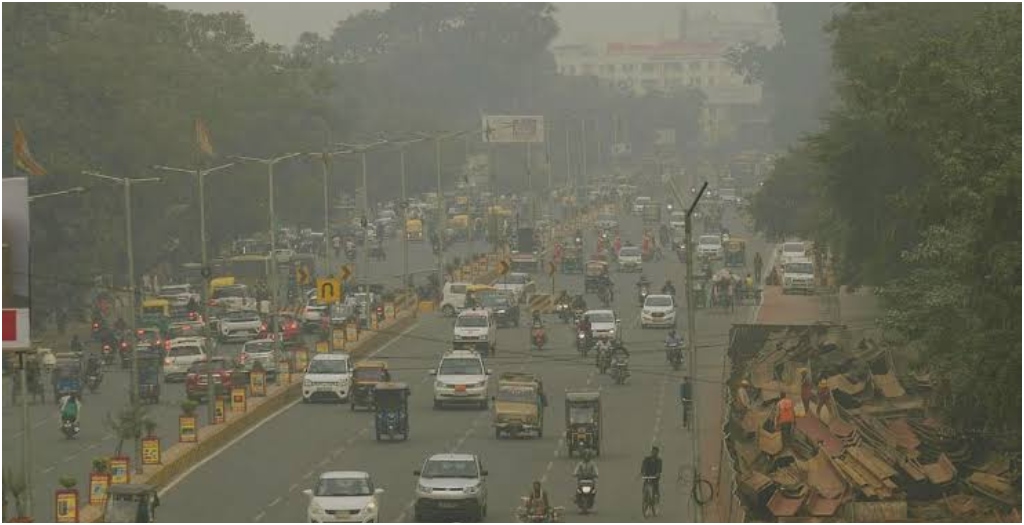
Ongoing construction work is another source of concern, particularly in Patna, where roads, bridges, flyovers and buildings are being developed across different areas.
Residents say exposed soil, sand and construction materials often generate dust, particularly when vehicles pass through construction zones. They have also raised concerns about inadequate water sprinkling and dust-control measures at several sites.
A local resident said dust from roadside construction materials and exposed soil frequently spreads into surrounding areas, affecting commuters and people living nearby.
Vehicle Emissions Contribute To Poor Air Quality
Increasing vehicle numbers and the continued use of older vehicles are also contributing to pollution in Bihar’s cities.
Petrol and diesel vehicles release pollutants through exhaust emissions, while vehicles running or idling in congested traffic add to the pollution burden. Residents have called for stricter monitoring of vehicles emitting excessive smoke and stronger enforcement of pollution-control rules.
Winter Conditions Trap Pollutants
Seasonal weather conditions are also contributing to worsening air quality. Falling temperatures and reduced wind speeds during November can limit the dispersal of pollutants, allowing dust and smoke to remain closer to the ground.
Temperature inversion conditions can further trap pollutants near the surface, making pollution more noticeable during morning and evening hours.
Brick kilns, industrial emissions, diesel generators and the open burning of waste are among the other sources contributing to poor air quality across the state.