
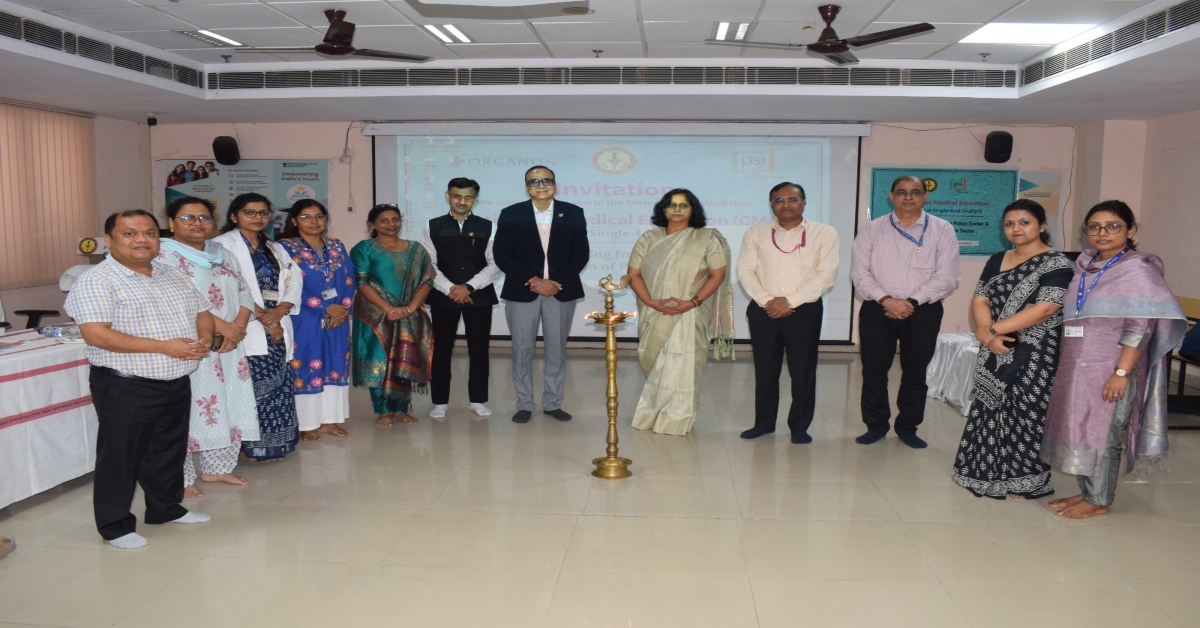
Patna : The All India Institute of Medical Sciences (AIIMS), Patna, organised a continuing medical education (CME) programme on subdermal single-rod contraceptive implants on Saturday, with support from Population Services International (PSI) India and Organon.

The programme aimed to strengthen healthcare professionals’ understanding of contraceptive implant services and improve their capacity to provide informed counselling and quality care. It also provided a platform for sharing clinical experiences and discussing collaboration between public and private healthcare providers.
Senior institutional officials, family planning specialists, healthcare professionals and representatives of development and healthcare organisations participated in the programme.

AIIMS Patna Executive Director Highlights Quality Healthcare
AIIMS Patna Executive Director Brigadier Dr Raju Agarwal highlighted the importance of strengthening healthcare services and expanding access to safe and effective family planning methods.
He emphasised the role of medical institutions in promoting evidence-based clinical practices, improving professional training and strengthening reproductive healthcare services.
The programme focused on broadening awareness of contraceptive options and supporting healthcare providers in delivering appropriate family planning services.
Family Planning Officials Discuss Expanding Contraceptive Choices
Dr Sarita, State Programme Officer for Family Planning, discussed efforts to strengthen family planning initiatives and expand the range of contraceptive methods available to women and couples.
She highlighted the importance of building healthcare providers’ capacities, increasing awareness of newer contraceptive options and coordinating efforts to improve access to quality services.
Expanding the range of available methods can help individuals make informed decisions based on their health needs, preferences and reproductive plans.
Single-Rod Implants Highlighted As A Long-Acting Contraceptive Option
Dr Mukta Agarwal, Head of the Department of Obstetrics and Gynaecology at AIIMS Patna, discussed the clinical relevance of subdermal contraceptive implants as an additional long-acting reversible contraceptive (LARC) option.
These implants are placed beneath the skin and release hormones to prevent pregnancy. They provide contraception over an extended period and can be removed by a trained healthcare professional when discontinuation or a change in method is desired.
Dr Agarwal highlighted the importance of appropriate counselling, trained providers, quality insertion and removal procedures, and follow-up care.
These measures are essential to help ensure that women understand the method, its benefits and limitations, and the services required before and after insertion.
PSI India And Organon Emphasise Provider Training
Hitesh Sahni, Director of PSI India, reiterated the organisation’s commitment to strengthening family planning services through partnerships, healthcare provider training and approaches aimed at improving service delivery.
He highlighted the importance of collaboration among government institutions, private healthcare providers and development organisations in making modern contraceptive methods more accessible.
Ruchi Jha, representing Organon, emphasised the importance of awareness, knowledge-sharing and training on contraceptive implant services. She also highlighted the need to strengthen healthcare providers’ understanding of the method and create opportunities to share practical experiences.
Public And Private Healthcare Providers Share Experiences
A key component of the CME was experience-sharing from the public healthcare sector and orientation for private-sector healthcare providers on subdermal single-rod contraceptive implants.
The discussions examined how implant services could broaden contraceptive choices, address unmet family planning needs and support informed decision-making among women and couples.
Participants also discussed the importance of counselling and access to trained providers to help individuals choose a contraceptive method suited to their circumstances.
The programme highlighted the role of public-private partnerships in strengthening reproductive healthcare services and improving healthcare professionals’ knowledge of available contraceptive options.
Collaboration Aims To Strengthen Family Planning Services
The initiative brought together AIIMS Patna, PSI India and Organon around a shared objective of strengthening healthcare provider capacity and supporting access to quality contraceptive services.
Such academic and training programmes can help improve clinical understanding, encourage the exchange of practical knowledge and support informed discussions about family planning options.
The CME concluded with a renewed commitment to collaboration, clinical experience-sharing and efforts to strengthen contraceptive implant services.
The wider impact of the initiative will depend on continued provider training, appropriate clinical services and the availability of accurate information to help women make informed reproductive health decisions.