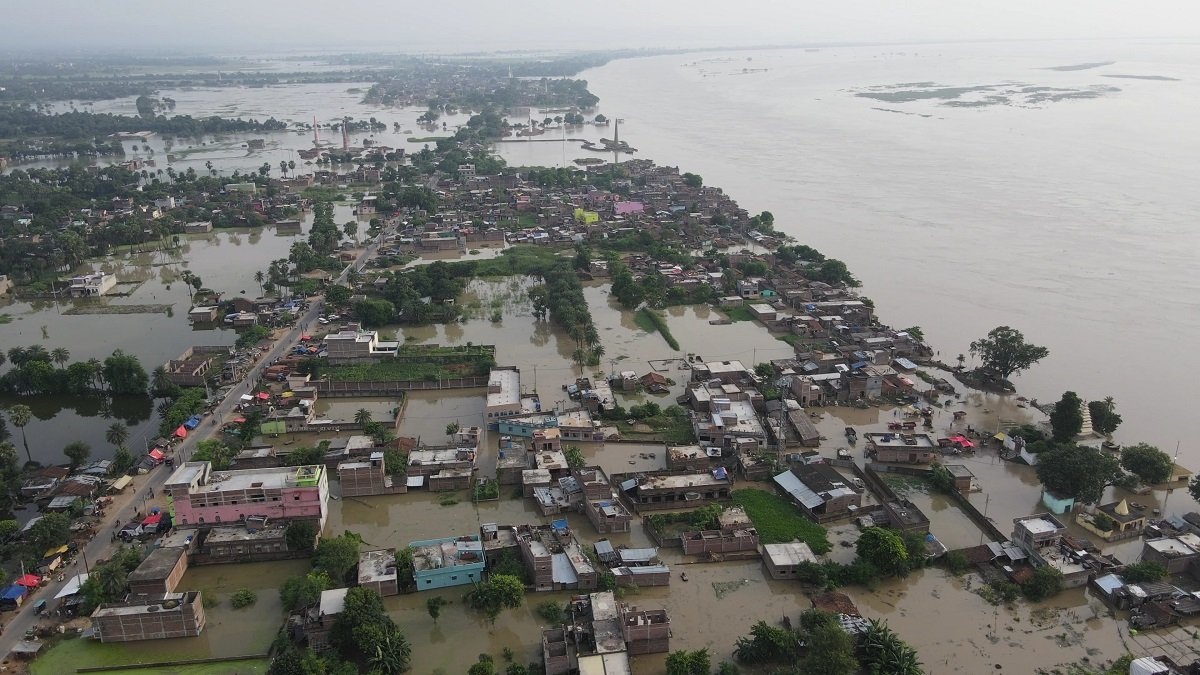
Patna: Floodwaters have started receding in several parts of Bihar, but the situation remains serious in 517 panchayats across 14 districts, with around 41.45 lakh people affected, according to the latest state-level assessment.

The water level of the Ganga has fallen from Patna to Munger. However, the river rose by four centimetres at Kahalgaon in Bhagalpur. Floodwater has entered the campus of Tilka Manjhi Bhagalpur University, forcing students and teachers to use boats for movement.
More than nine rivers in the state are still flowing above the danger or warning levels in different locations. While the receding water has brought some relief, health officials have warned of an increased risk of waterborne and infectious diseases in flood-affected areas.

According to Prof Ajay Kumar Sinha, head of the Medicine Department at Nalanda Medical College and Hospital (NMCH), the weeks following the recession of floodwater are particularly sensitive from a public health perspective. Accumulated garbage, stagnant water and contaminated drinking water can increase the risk of disease outbreaks.
Diseases including diarrhoea, typhoid, cholera, hepatitis A and E, dengue, malaria, chikungunya and leptospirosis are among the major health concerns during this period.
Two new cases of leptospirosis, a serious bacterial infection that can spread through water contaminated with the urine of infected animals, have already been reported at NMCH.
Relief camps continue to face shortages
Despite the receding floodwaters in some areas, difficulties continue in relief camps. Shortages of milk for children, sanitary pads for women and safe drinking water have been reported.
In Khagaria, a floating clinic has been set up to provide medical services to flood-affected residents.
In Munger’s Tarapur Diara panchayat, residents of Maniyarchak village continue to wade through chest-deep water to move around the area.
Floodwater has also entered homes and a temple near Gandhi Ghat.
Weather systems driving rainfall
Weather experts have attributed the changing conditions to multiple atmospheric systems.
An upper-air cyclonic circulation has formed over the northern Bay of Bengal and adjoining coastal areas of Bangladesh, with a low-pressure area likely to develop over the northern Bay of Bengal around September 10.
The monsoon trough is also passing through areas around Bihar, while another upper-air system is present over northwest Uttar Pradesh and adjoining regions.
These systems are increasing moisture levels over Bihar and triggering rainfall across different parts of the state.
Meanwhile, water discharge from the Kosi Barrage remained stable on Thursday morning. At 6 am, the total discharge was recorded at 1,44,240 cusecs, including 1,40,240 cusecs released downstream and 4,000 cusecs into the Western Kosi Main Canal.
At Barah Kshetra upstream of the barrage, the water flow was recorded at 1,11,000 cusecs, with the water level continuing to rise.