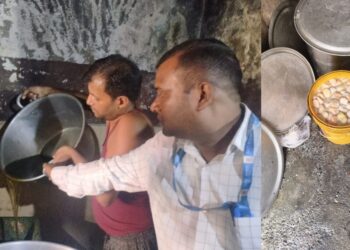

Patna: The Bihar government has directed agencies implementing the Mid-Day Meal scheme to strengthen food quality and delivery standards, introducing stricter monitoring measures aimed at ensuring that schoolchildren receive safe, nutritious and hot meals.

The directives were issued by Education Minister Mithilesh Tiwari during a review meeting at Vikas Bhawan on July 20 with voluntary organisations and suppliers associated with the scheme. According to the Education Department, the meeting focused on food quality, distribution systems and operational challenges.
No Compromise on Food Quality

Addressing representatives of organisations involved in the scheme, Tiwari said there would be “no compromise” on the quality of meals served to children.
According to the minister, providing safe, nutritious and freshly prepared food is the primary responsibility of every agency engaged in the programme. He instructed all implementing organisations to ensure that meals are served hot in schools and that quality standards are maintained throughout the distribution process.
Insulated Containers Mandatory Within Two Months
To help preserve food temperature during transportation, the Education Minister directed agencies operating centralised kitchens to replace steel containers with insulated food containers within the next two months.
According to the department, the change is intended to ensure that meals remain hot until they reach schools, particularly those located farther from centralised kitchens.
Centralised Kitchens Planned Across Bihar
The government has also asked implementing agencies to expand the network of centralised kitchens.
According to the minister, every block should have at least one centralised kitchen, while larger blocks should have two kitchens to improve the efficiency of meal preparation and distribution.
Officials said the proposal is aimed at reducing transportation time and improving the quality of food delivered to schools.
Meals Must Reach Schools Within Four Hours
During the review, Tiwari expressed concern over reports that, in some areas, children were being served food prepared seven to eight hours earlier.
He directed that the entire process—from cooking to serving meals in schools—should be completed within three to four hours. According to the department, Block Resource Persons will regularly inspect meal distribution and upload photographs to the official portal as part of the monitoring process.
Command Centre to Oversee the Scheme
The Education Department said the Mid-Day Meal programme will be monitored through a centralised command and control centre, allowing officials to track operations more closely.
The minister also urged organisations to strengthen their internal monitoring systems instead of relying on external oversight. According to him, stronger self-monitoring would help reduce complaints and ensure that unauthorised individuals do not interfere in the implementation of the scheme.
He instructed agencies to immediately report operational issues to the office of the Mid-Day Meal Director so that problems can be addressed without delay.
Government Signals Possible Changes to Implementation Model
The Education Minister said the government would continue to support organisations that consistently meet prescribed standards.
He also indicated that the department is considering assigning both the preparation and distribution of meals to a single implementing organisation in future. According to the department, the proposal is intended to improve accountability and streamline the delivery process.
The review meeting was attended by the Mid-Day Meal Director, senior departmental officials and representatives from 41 of the 43 voluntary organisations associated with the scheme.