Patna: The Bihar government is preparing to tighten its oversight of private Industrial Training Institutes (ITIs), with all 1,258 institutions across the state set to undergo inspections. The exercise will examine whether these institutes are complying with prescribed standards and providing students with the infrastructure and practical training required for technical education.

The move comes amid repeated complaints about inadequate facilities, shortages of trained instructors and poorly maintained laboratories at several private ITIs. Concerns have also been raised over institutions operating from buildings with tin-shed structures.
The Youth, Employment and Skill Development Department has initiated preparations for the inspection, which will be conducted on the basis of standards prescribed by the Union Ministry of Skill Development and Entrepreneurship.

All 1,258 Institutes to Face Infrastructure Checks
The proposed inspection will cover the basic infrastructure and functioning of private ITIs across Bihar.
Officials will examine several aspects, including:
- Availability and ownership or lease status of land.
- Condition and compliance of institute buildings.
- Adequacy of classrooms and training spaces.
- Availability of laboratories and technical equipment.
- Number and qualifications of instructors.
- Other essential facilities required for vocational training.
The objective is to determine whether institutions are genuinely equipped to provide technical education or are operating without the resources necessary for effective skill development.
Two Acres of Land Required for 200 Trainees in Rural Areas
Under the prescribed central government norms cited for the inspection, private ITIs must meet specific land and infrastructure requirements.
For an institute with a capacity of 200 trainees, the land requirements are:
- Rural areas: At least two acres of land.
- Urban areas: At least 1.25 acres of land.
- Leased property: A valid lease agreement of at least 10 years.
Institutions must also comply with the applicable building bylaws while constructing and operating their campuses.
These requirements will form an important part of the infrastructure assessment.
Tin-Shed ITI Buildings Under Scrutiny
The condition and structure of institute buildings will also receive particular attention during the inspection.
According to the prescribed standards mentioned in the report, buildings should have permanent or industrial-sheet roofing. Campuses must also have at least six entry gates.
Classroom dimensions are another important requirement. Each classroom should have a minimum length of 25 metres and a minimum width of three metres.
The inspection will assess whether institutes operating from temporary or inadequate structures meet the required infrastructure standards.
Teachers, Laboratories and Technical Equipment Also Under Scanner
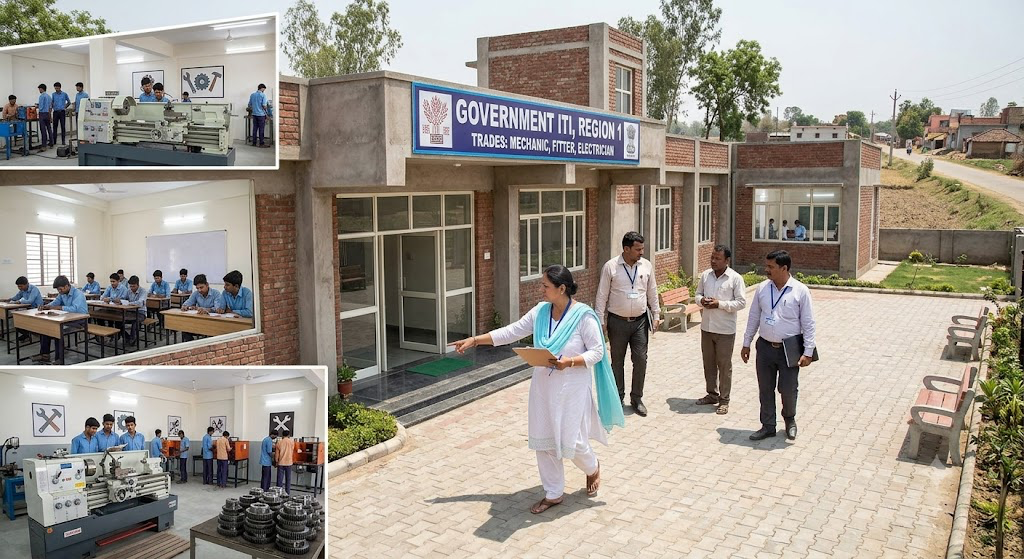
The inspection will not be limited to buildings and land. The availability of qualified instructors, laboratories and technical equipment will also be examined.
Practical training is an essential component of ITI education, as students are expected to develop industry-relevant skills through hands-on experience with machines, tools and modern equipment.
However, complaints about insufficient laboratory facilities and a shortage of professionally trained instructors have raised concerns about the quality of training at several institutions.
Officials will therefore assess whether private ITIs have the necessary equipment, functional laboratories and qualified teaching staff to deliver proper vocational training.
Why the Inspection Matters for Bihar’s Youth
Thousands of students enrol in ITIs across Bihar every year with the aim of acquiring technical skills and improving their employment prospects.
However, a shortage of instructors, inadequate machinery and poorly equipped laboratories can affect the quality of practical training and limit students’ job opportunities.
The proposed statewide inspection is expected to bring greater accountability to private ITI operations and identify institutions that are not meeting the required standards.
The findings will determine how many institutes comply with the prescribed norms and where deficiencies need to be addressed. Institutions found violating applicable requirements may face departmental action.