Patna: The Bihar Education Department will replace expensive commercial LPG cylinders with domestic LPG connections in more than 45,000 government primary and middle schools to reduce the cost of preparing mid-day meals. The move is expected to save the department more than Rs 18 crore every month without reducing the quantity of food served to students.

The department has directed the three major oil marketing companies — Indian Oil Corporation Limited (IOCL), Bharat Petroleum Corporation Limited (BPCL) and Hindustan Petroleum Corporation Limited (HPCL) — to take back commercial LPG cylinders supplied to schools and provide domestic connections instead.
According to the information provided by the department, the initiative will cover 45,389 schools across Bihar. Each school will receive two domestic LPG cylinders, taking the total number of connections to 90,778. The estimated cost of providing these connections is Rs 30 crore.

The state government says the change will help reduce cooking costs and improve the availability of cooking fuel, particularly in rural areas.
Education Department expects monthly savings of over Rs 18 crore
The department estimates a price difference of around Rs 2,000 between a commercial LPG cylinder, priced at approximately Rs 3,030, and a domestic cylinder, priced at Rs 1,032.
This difference is expected to generate substantial savings across the state’s school kitchens. The department has projected monthly savings of more than Rs 18 crore, with figures provided for the initiative putting the potential savings at around Rs 20 crore.
The savings are expected to come from lower fuel costs rather than any reduction in the quantity or quality of food served to students.
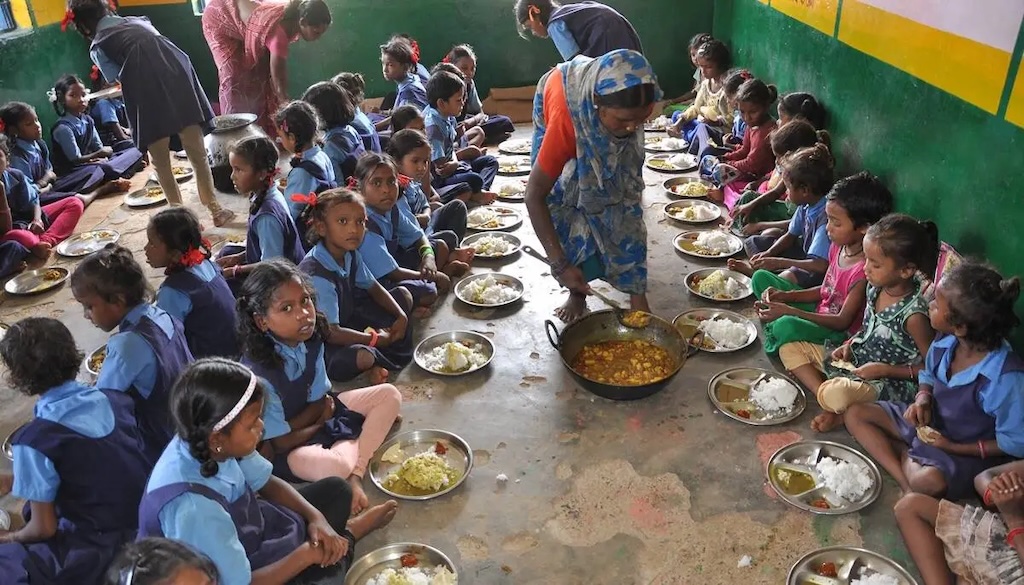
Bihar’s mid-day meal programme provides meals to approximately 1.10 crore children daily, according to the information supplied by the department.
Safety measures and training for school kitchens
The department has outlined safety measures for the new domestic LPG connections. These include ISI-marked regulators, steel-wire safety pipes and fire-safety equipment.
Cooks will also receive safety training at the block level to familiarise them with the proper handling and use of LPG cylinders.
The shift is also expected to address difficulties faced by schools in rural areas, where commercial LPG cylinders have not always been readily available. According to the information provided, some schools have relied on firewood and coal to prepare meals when commercial cylinders were unavailable.
Replacing these fuels with LPG could reduce exposure to smoke in school kitchens, benefiting cooks and others in the vicinity.
24,000 commercial cylinders returned so far
The transition is underway, with approximately 24,000 commercial LPG cylinders returned so far, according to the department’s figures.
However, implementation has faced logistical challenges. Around 5,000 schools in Bihar have been affected by floods, potentially complicating the distribution of new connections and the collection of existing commercial cylinders.
The department is coordinating with the oil marketing companies to complete the transition while ensuring that meal preparation continues without disruption.
Education Minister says meals will continue without interruption
Bihar Education Minister Mithilesh Tiwari said the government was prioritising nutritious meals for students while reducing fuel expenses and improving access to cooking fuel in rural areas.
He said domestic LPG connections were being provided to ensure that schools could prepare meals efficiently and that the change would not disrupt the mid-day meal programme.
The department’s stated objective is to reduce operational expenditure while ensuring that students continue to receive hot, nutritious meals on time.
Editorial note: Before publication, clarify the projected savings figure. The supplied information cites both approximately Rs 20 crore and more than Rs 18 crore per month. Also verify the stated daily coverage of 1.10 crore children and the exact LPG safety-equipment specifications against the latest Education Department order.