Patna: The Bihar Government has signed Memorandums of Understanding (MoUs) for six major energy projects involving a proposed investment of Rs 1,72,885 crore, marking a significant step towards expanding the state’s power generation and energy storage capacity.

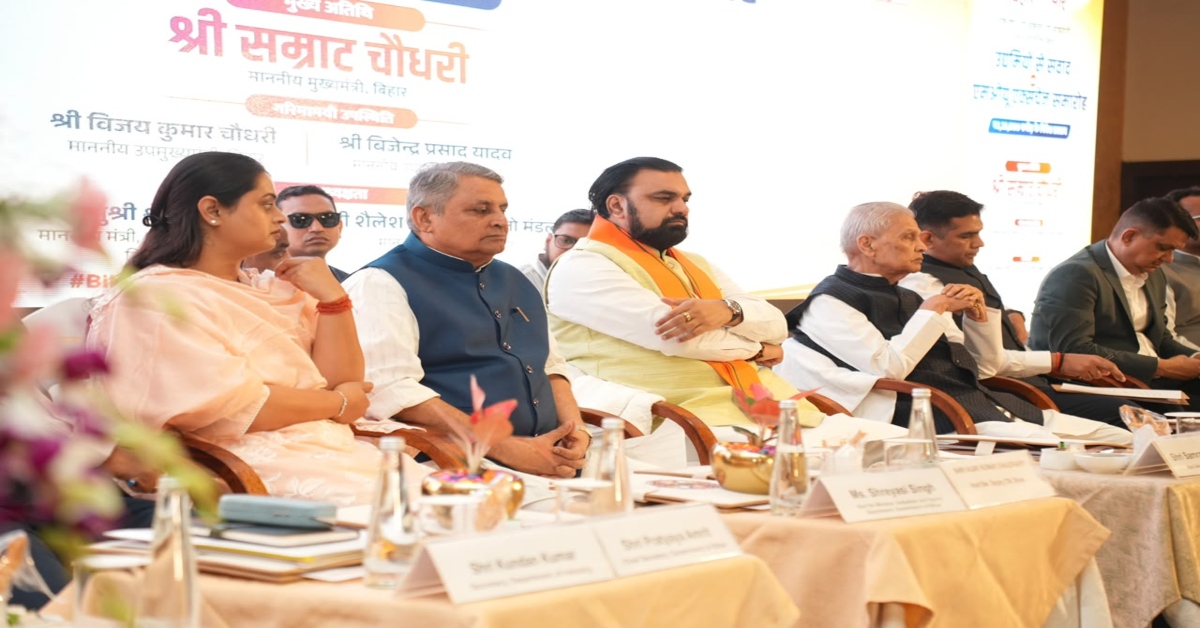
The agreements were signed during the Entrepreneurs’ Interaction and MoU Exchange Ceremony organised under Bihar Business Connect 2026 in Patna on November 20. The projects comprise two proposed nuclear power plants in Banka and Siwan and four pumped storage projects in Nawada, Jamui and Aurangabad.
Chief Minister Samrat Choudhary attended the ceremony as the chief guest. Deputy Chief Ministers Vijay Kumar Choudhary and Bijendra Prasad Yadav, along with Industries Minister Shreyasi Singh, were also present.

The six projects form part of the investment proposals received by the Energy and Industries departments under Bihar Business Connect, which together amount to Rs 2.25 lakh crore. Once implemented, the energy projects are expected to strengthen electricity generation, improve energy storage capacity and support the state’s growing industrial requirements.
Two Nuclear Power Plants Planned In Banka And Siwan
Two nuclear power projects, each with a proposed capacity of 2,800 MW, account for Rs 1.40 lakh crore of the total investment.
NTPC has signed an MoU for a 4×700 MW nuclear power plant at Bhitiya in Banka district. The proposed project will require 1,500 acres of land and an annual water supply of 160 million cubic metres (MCM). Its estimated cost is Rs 70,000 crore.
The second project, proposed by the Nuclear Power Corporation of India Limited (NPCIL), will also have a capacity of 2,800 MW. It is planned at Talhar in Raghunathpur, Siwan district, with an estimated investment of Rs 70,000 crore. The project will similarly require 1,500 acres of land and 160 MCM of water annually.
Together, the two proposed plants represent 5,600 MW of nuclear power capacity in Bihar.
Four Pumped Storage Projects Worth Rs 32,885 Crore
The remaining four projects involve a combined proposed investment of Rs 32,885 crore. They will have a total power generation capacity of 6,000 MW and an energy storage capacity of 36,078 MWh.
The projects are planned at the following locations:
- Adani Hydro Energy-7 Limited: A 1,800 MW pumped storage project with 10,800 MWh of storage capacity at Ektara and Pathra in Nawada district. Estimated investment: Rs 9,900 crore.
- Adani Hydro Energy-15 Limited: A 1,800 MW project with 10,800 MWh of storage capacity at Mircha Pathak Chak in Jamui district. Estimated investment: Rs 9,900 crore.
- Torrent Energy Storage Solutions Private Limited: A 1,500 MW project with 9,015 MWh of storage capacity at Hardiya/Fulwaria Dam in Nawada district. Estimated investment: Rs 7,685 crore.
- Greenko Energies Private Limited: A 900 MW project with 5,463 MWh of storage capacity at Narayanpur and Gajoi in Aurangabad district. Estimated investment: Rs 5,400 crore.
Pumped storage projects use electricity to pump water to an elevated reservoir and release it through turbines when power is required. This technology helps store energy and supply electricity during periods of higher demand.
Bihar Targets 24×7 Power Supply To Industries By 2030
Addressing the ceremony, Chief Minister Samrat Choudhary said Bihar’s energy sector was undergoing a major transformation in response to rising electricity demand and industrial expansion.
He said the state government aims to ensure 24×7 availability of affordable, quality and uninterrupted electricity to industries by 2030. The proposed nuclear and pumped storage projects are expected to strengthen the infrastructure required to achieve this target.
The Chief Minister also highlighted the government’s initiative to provide 125 units of free electricity every month to 1.92 crore domestic consumers.
He said rooftop solar installations were being encouraged through the PM Surya Ghar: Muft Bijli Yojana and other solar energy schemes. These initiatives are intended to reduce household electricity bills and allow consumers to earn additional income by selling surplus power.
Inviting investors and entrepreneurs to invest in Bihar, Choudhary said the state was moving towards the vision of a developed India and a prosperous Bihar. He urged businesses to follow the message, “Build and Believe in Bihar”.
Energy Minister and Secretary Highlights Investment And Energy Security
On this occasion, Energy Minister of Bihar Shri Shaileah Kumar alias Bullo Mandal said that Bihar has set a target of producing 20,000 megawatts of electricity in the coming days and is working towards it. Today’s achievement is our first step towards that goal.
Energy Secretary-cum-Chairman and Managing Director of Bihar State Power Holding Company Limited (BSPHCL) Ajay Yadav said the six projects would significantly strengthen the state’s power generation and energy storage capacity.
He said the proposed investment would help meet future electricity requirements, improve energy security and provide fresh momentum to industrial development.
The projects are also expected to attract large-scale capital investment and support infrastructure expansion across the state.
MoUs Exchanged With Project Developers
During the ceremony, Vishal Raj, Managing Director of Bihar State Power Generation Company Limited, exchanged the MoUs with representatives of the participating companies.
The representatives included Sumit Verma of the Adani Group, Krishna Tungaturthi of Greenko Group, Jigish Mehta of Torrent Power, S. D. Paraswar of NPCIL and Arnada Prasad Samal of NTPC.
Chief Secretary Pratyaya Amrit, Industries Department Secretary Kundan Kumar, senior officials from the Energy and Industries departments, and managing directors of the state’s power distribution, generation and transmission companies also attended the event.
The six agreements represent proposed investments rather than completed projects. Their implementation will involve the necessary planning, approvals, land and infrastructure arrangements. If taken forward, they could substantially expand Bihar’s electricity generation and storage capacity while supporting its long-term industrial growth.