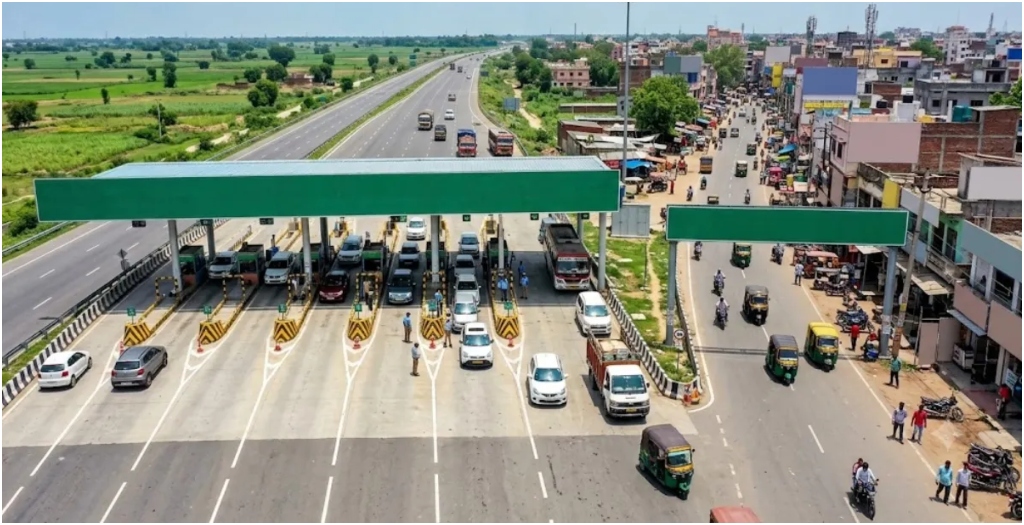
Patna: Commercial vehicles travelling on 20 additional bridges and state highways in Bihar will have to pay toll charges, with the Road Construction Department finalising rates under the state’s road-user fee framework.

The department has fixed charges based on vehicle category and the length and width of roads. Toll collection will be introduced in phases.
Private cars, jeeps, vans and other light private motor vehicles will remain exempt from the charges.

Toll rates for commercial vehicles
The department has prescribed per-kilometre toll rates for different categories of commercial vehicles.
Toll Rates For Commercial Vehicles
The Road Construction Department has fixed toll charges on a per-kilometre basis for different categories of commercial vehicles. Light commercial vehicles, including vans, cars and jeeps, will be charged Rs 1.25 per km, while mini-buses and small goods vehicles will pay Rs 2 per km. Two-axle buses and trucks will attract a toll of Rs 4.25 per km, and three-axle commercial vehicles will be charged Rs 4.60 per km. Private cars, jeeps, vans and other light private vehicles will remain exempt from toll charges.
Toll Charges Based On Road Width
Under the Bihar Road User Fee (Determination and Collection of Rates) Rules, 2026, toll charges will also depend on road width. State highways wider than two lanes but narrower than four lanes will attract 60% of the prescribed toll rate, while roads with four or more lanes will be charged at the full rate of 100%. Roads measuring 5.5 metres in width will attract 50% of the prescribed toll. For bridges, the toll amount will be calculated based on their length, with the prescribed rate multiplied by 10.
The charges will apply to commercial vehicles, while private vehicles will not be required to pay tolls under the new system.
20 bridges and roads brought under toll framework
The additional roads and bridges include several infrastructure links connecting districts and rural areas.
Among them are the bridge over the Sakri river on the Warsaliganj-Kharat road, Giriyak-Parvati road, Manjhwe-Govindpur road and the bridge over the Bagmati river on the Khagaria-Sonmankhi road.
Other routes include the bridge over the Gandak river on the Kanti-Ragai Ghat road, Maithi-Bakhri-Pilkhi road, the Kareh river bridge on the Hasanpur-Sakhuwa Ghat road and Surjichak bridge between Barahiya-Krishna Chowk and Rampur.
The list also covers the Gediya river bridge on the Sanhaula-Baisa-Hanwara road, Kosi river bridge on the Baluaha Ghat-Gandol road and Araai river bridge on the Bishanpur-Atarvel road.
Additional stretches include the Kareh river bridge on the Hasanpur-Soharwara-Sati Ghat road, Phalgu river bridge between Fatehpur, Mohanpur and Barachatti, and the Kareh river bridge on the Rosera-Baheri road.
The remaining roads and bridges include the Ghosi-Sukhiyawan road, Chautarwa-Bansi road, Dhanha-Ratwal road, Makhdumpur-Sonawa-Baudi-Hulasganj road, Gaya-Paraiya-Guraru road, Bela-Shripur-Barabar Link-Khizersarai road and Phultaura Ghat section of the Alauli-Shahrbanni road.
Toll charges to depend on road width and bridge length
The rates have been determined under the Bihar Road User Fee (Determination and Collection of Rates) Rules, 2026, which provide for toll calculation according to road dimensions.
For state highways wider than two lanes but narrower than four lanes, 60% of the prescribed toll will be charged. Roads with four or more lanes will attract the full rate, while roads measuring 5.5 metres in width will be charged 50% of the prescribed fee.
For bridges, the toll will be calculated according to their length, with the prescribed rate multiplied by 10.
Toll rates already fixed for 32 roads and bridges
The department had previously set toll rates for 29 state highways and three major bridges. With the latest notification, another 20 roads and bridges have been added to the framework.
The state cabinet had recently approved toll collection on state highways and major bridges as part of efforts to establish a uniform road-user fee system in Bihar.
The Road Construction Department is expected to implement the collection process in phases.