Patna: In the biggest political signal from Bihar’s new government, the Home Department—held by Chief Minister Nitish Kumar for two decades—has now been handed over to Deputy Chief Minister Samrat Chaudhary. This is more than a routine reshuffle; it marks a clear shift in the state’s power structure and hints at deeper strategic coordination between Patna and Delhi.

The transfer did not happen overnight. For months, the BJP had been pressing for direct control over Bihar’s law and order machinery, arguing that the state now needed a hardline, accountable leadership similar to Uttar Pradesh. At several points in recent years, posters of Yogi Adityanath had even appeared in Bihar, reflecting a push for a more assertive governance model.
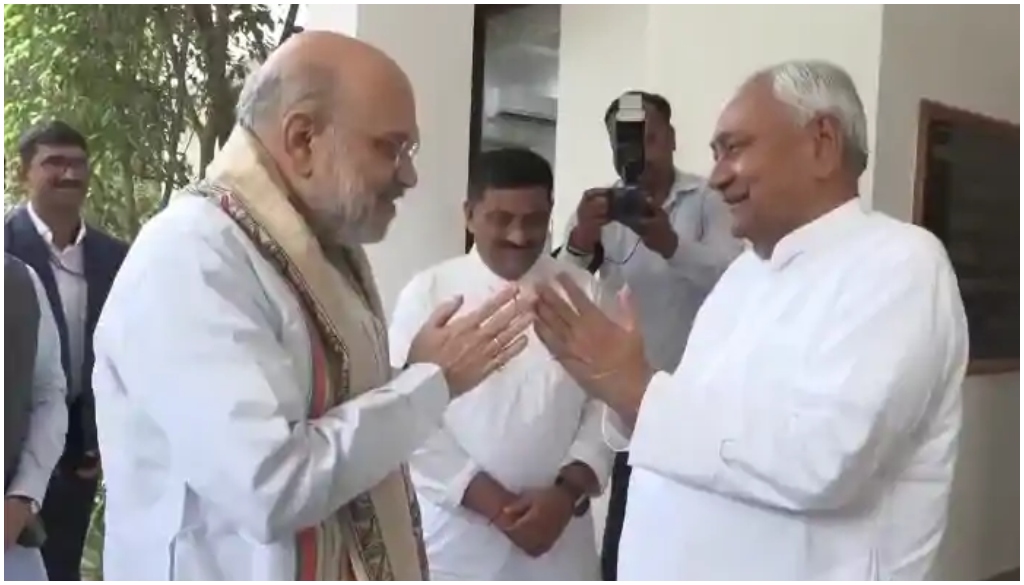
According to sources, the turning point came during Nitish Kumar’s meeting with Union Home Minister Amit Shah in Delhi. Two high-level meetings—before the election announcement—set the stage for a historic shift. Rising cybercrime, cross-border smuggling, the Gen-Z movement in Nepal, illegal arms trade, and Chicken Neck–related security concerns were discussed in detail. It was during these meetings that Shah outlined a central security roadmap and conveyed the need for a strong Home Minister capable of rapid decision-making and tight coordination with the Centre.

How the Deal Was Finalised
Sources say the decision evolved over two months, not 48 hours. In the September meeting attended by Amit Shah, Nitish Kumar, and top BJP leaders, officials presented data showing that nearly 60% of major gangs in Bihar operate from border areas, and that Bihar’s next political battleground would revolve around security and governance rather than development. The Centre wanted a Home Minister who could move quickly, work closely with Delhi, and manage crises at the border.
Samrat Chaudhary emerged as the chosen candidate. Known for his hardliner persona and repeated advocacy for a Yogi-style model, he has often declared publicly, “Criminals will either be in jail or in the grave.” Nitish Kumar agreed to relinquish the Home portfolio but ensured he retained control over IPS-level transfers—maintaining a crucial layer of administrative authority.
Why the Centre Pressed for a Leadership Change: Four Key Factors
1. Nepal’s Gen-Z Movement and the 729-km Open Border
The firing incident in Nepal on September 8–9, 2025, in which 21 youths were killed, triggered widespread unrest across the neighbouring country. Indian agencies warned that instability in Nepal—historically linked to fake currency, drug networks, and human trafficking—would directly impact border districts such as Sitamarhi, Kishanganj, Araria, and Madhubani.
The Intelligence Bureau (IB) assessed the Bihar–Nepal border as the most sensitive zone for the next 18 months. Delhi needed a Home Minister who could react swiftly, attend high-level meetings, and manage the police system effectively—something Nitish Kumar was reluctant to handle personally. He usually sent the DGP for such meetings. Realising the seriousness of the Nepal situation, Nitish agreed to the Centre’s plan.
2. Chicken Neck and National Security Concerns
The Siliguri Corridor—India’s 22-km-wide link to the Northeast—makes Bihar a critical buffer state. Between 2023 and 2024, extremist networks, counterfeit currency operations, and Rohingya infiltration increased significantly. These activities often used Bihar as an entry or transit point.
For the BJP, strengthening coordination between Bihar’s ATS, STF, and central agencies is a political and strategic priority. Samrat Chaudhary, who frequently raises national security issues in his speeches, was seen as a better fit to align the state’s policing system with central strategies.
3. Making Bihar a Leading Law-and-Order State
Bihar consistently ranks high in violent crime, including murders and attempted murders. According to NCRB data, the state has an 88% crime pendency rate. Investor sentiment—FDI, industry, and startups—remains low due to persistent concerns over safety.
Samrat Chaudhary has repeatedly declared that policing will be performance-driven under his watch. His message in internal meetings has been blunt: reduce crime or step aside. Nitish supported the goal of reshaping Bihar’s image before 2029, making law and order the state’s new political narrative.
4. Persuading Nitish: Why Samrat Was Presented as a ‘Hardliner’
The BJP argued that Bihar now needed a more aggressive approach to counter rising social media narratives, troll-driven politics, and violent crimes. They highlighted Samrat Chaudhary’s past track record: suspension of 263 officials over corruption within four months, aggressive mass campaigns as party chief, and his on-ground inspections as Deputy CM.
Realising that “hard politics” no longer matched his own leadership style, Nitish agreed to step back. However, he retained the crucial authority over IPS transfers, ensuring that while Samrat controls day-to-day policing, no major reshuffle can occur without the Chief Minister’s approval. This balancing act gives Nitish a quiet but decisive hold over the system.
What Comes Next?
With the Home portfolio now under Samrat Chaudhary, the BJP aims to craft a new governance narrative—strong policing, tighter border control, and a more assertive law-and-order regime. The Centre views Bihar not merely as a state but as a “national security belt.” However, the administrative structure still places significant decision-making power with Nitish Kumar.
Whether this power-sharing arrangement leads to smoother coordination—or political friction—will shape Bihar’s internal security and political landscape in the months to come.