
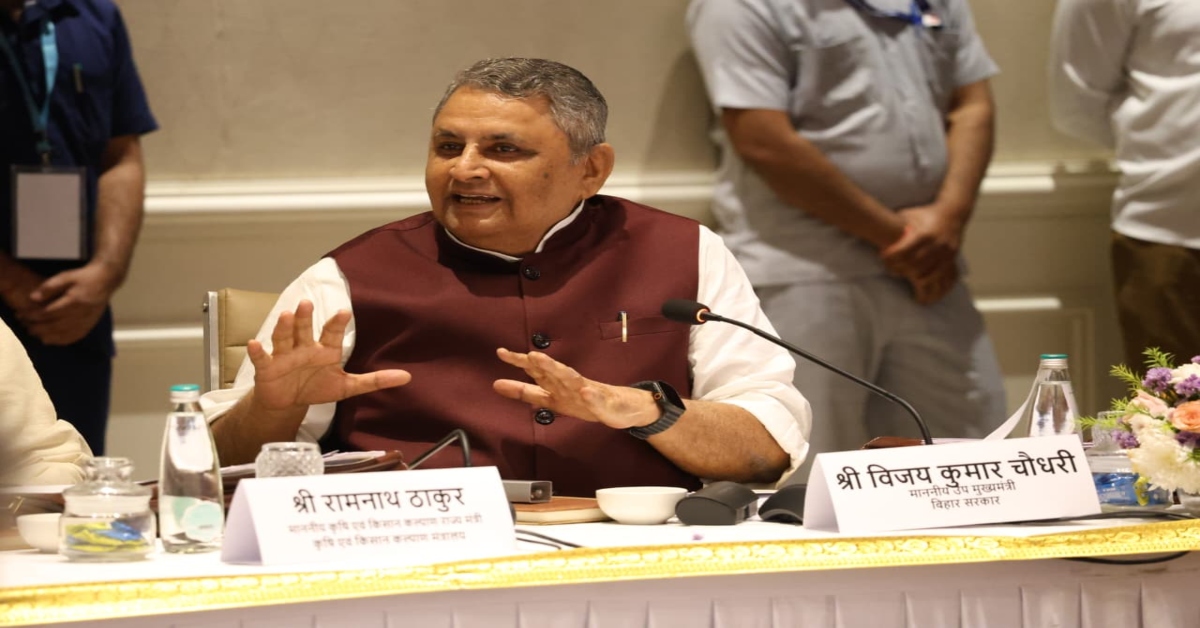
Patna : The headquarters of the Ganga Flood Control Commission (GFCC) will remain in Patna following an intervention by Bihar Deputy Chief Minister and Water Resources Minister Vijay Kumar Choudhary at the 19th meeting of the Ganga Flood Control Board in New Delhi.

Choudhary strongly opposed the recent decision to shift the commission’s headquarters from Patna to Delhi, arguing that the move could complicate the approval of flood management projects and delay essential flood protection work in Bihar.
Following his objection, West Bengal Chief Minister Shuvendu Adhikari and Uttar Pradesh Water Resources Minister Swatantra Dev Singh also supported retaining the headquarters in Patna. Union Jal Shakti Minister C R Patil subsequently directed that the commission’s headquarters remain at its existing location, according to a press release issued by the Bihar government.

Bihar Raises Concerns Over Flood Management Delays
Choudhary said the commission had been headquartered in Patna since its establishment in 1972. He argued that shifting it to Delhi would make it more difficult for Bihar to secure timely approvals for flood management schemes, potentially affecting the execution of flood prevention and protection measures.
The deputy chief minister said he had previously raised the issue with the Centre alongside Chief Minister Samrat Choudhary, requesting that the headquarters remain in Patna.
At the board meeting, he reiterated that retaining the commission in the state was important for the timely processing of flood-related proposals, particularly given Bihar’s recurring flood management challenges.
Bihar Seeks Flood Project Approvals By February
Choudhary also urged the Centre to expedite approvals for schemes under the Flood Management Programme (FMP) and the River Management and Border Areas Programme (RMBAP).
He said the Bihar government intended to submit its flood management proposals to the Centre by the end of December. He proposed a mechanism under which the Central Water Commission and the Ministry of Jal Shakti would approve the schemes by the end of February.
According to Choudhary, securing approvals by that deadline would leave approximately three months for the state to implement the planned flood protection works before the monsoon.
Patil assured the meeting that prompt action would be taken on the issue, the state government’s press release said.

Deputy CM Calls For National Silt Management Policy
The accumulation of silt in rivers was another major concern raised by Choudhary at the meeting. He said excessive deposits were reducing the water-carrying capacity of rivers and contributing to more severe flooding.
He also warned that rising riverbeds were contributing to new record-high flood levels in recent years. Without timely intervention, he said, continued silt accumulation could seriously affect river systems.
Choudhary called on the Centre to formulate a national silt management policy, highlighting Bihar’s Bihar Water Resources Restoration and Silt Management Policy 2026.
According to the state government, Bihar is the first state in the country to introduce a policy that combines silt management with the commercial utilisation of the extracted material. The approach seeks to address river silt accumulation while exploring productive uses for the removed material.
Senior Officials Attend Ganga Flood Control Board Meeting
The 19th meeting of the Ganga Flood Control Board was chaired by Union Jal Shakti Minister C R Patil. Union Minister of State for Agriculture and Farmers’ Welfare Ram Nath Thakur, West Bengal Chief Minister Shuvendu Adhikari and Uttar Pradesh Water Resources Minister Swatantra Dev Singh also attended.
Bihar Water Resources Department Secretary Chandrashekhar Singh was among the officials present, alongside representatives of the Central Water Commission, NITI Aayog, various Union ministries and several state governments.
The meeting addressed flood management, project approvals and river-related challenges. Bihar pressed for faster clearance of flood protection schemes and stronger coordination on silt management, while securing the decision to retain the commission’s headquarters in Patna.