
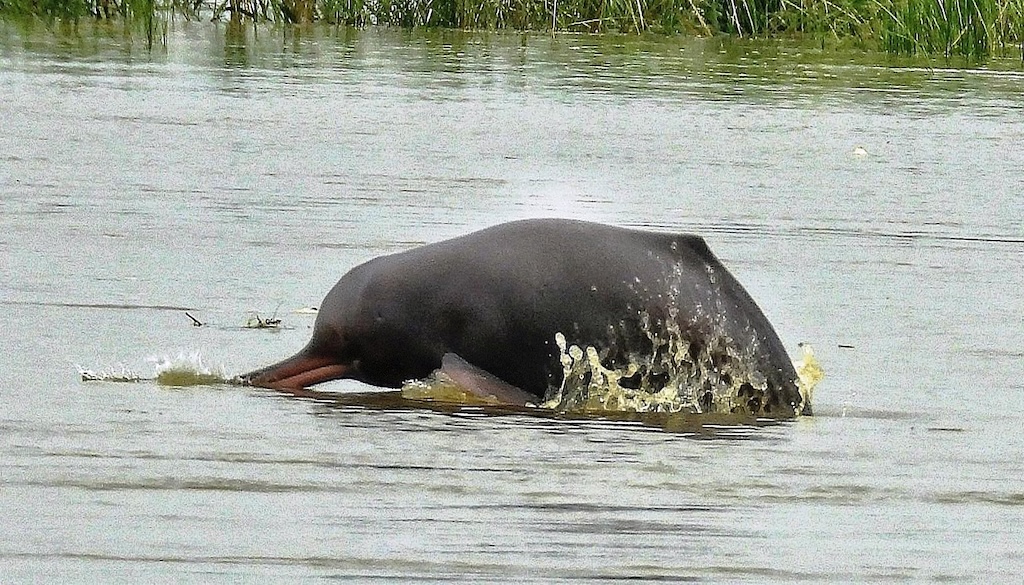
Bhagalpur/Patna: The population of Gangetic dolphins in the stretch of the river between Sultanganj and Manihari has more than doubled over the past 27 years, according to survey data, offering an encouraging sign for conservation efforts in Bihar.

The dolphin population in the stretch was estimated at about 95 in 1998. The latest estimate puts the number at around 215, an increase of about 120 dolphins.
The Gangetic dolphin, locally known as Sons, is India’s National Aquatic Animal and is classified as an endangered species.

Dolphin numbers rise in Bhagalpur region
Gangetic Dolphins continue to be sighted at different ghats and channels along the Ganga between Kahalgaon and Manihari.
The Vikramshila Gangetic Dolphin Sanctuary, which extends from Sultanganj to Kahalgaon, is the country’s only sanctuary dedicated to the conservation of the Gangetic dolphin. The sanctuary is a key habitat for the species in the region.
Experts have attributed the increase in dolphin numbers to conservation measures including the Namami Gange programme, regular monitoring by the Forest and Environment Department, efforts to prevent poaching and greater awareness among boatmen and local communities.
According to the 2025 survey, Bihar’s total Gangetic dolphin population was estimated at around 1,255, while about 200 dolphins were recorded in the Vikramshila sanctuary area.
Water quality remains a concern
Despite the rise in dolphin numbers, concerns remain over the quality of Ganga water in the region.
Recent technical reports have indicated an increase in Biological Oxygen Demand (BOD) levels in the river between Kahalgaon and Manihari. Higher BOD generally indicates greater levels of organic matter and microbial activity, which can reduce dissolved oxygen in the water and put aquatic life under stress.
Dolphins serve as indicator of river health
Environmentalists regard the Gangetic dolphin as an important indicator of the health of the river ecosystem. A stable or growing dolphin population can indicate improving conditions for aquatic biodiversity, but conservationists caution that the gains could be threatened by continued pollution.
They have called for untreated urban sewage, industrial waste, plastic and agricultural chemicals to be prevented from entering the river.
Efficient operation of sewage treatment plants (STPs) will also be crucial to maintaining water quality and protecting the river’s aquatic ecosystem, they said.