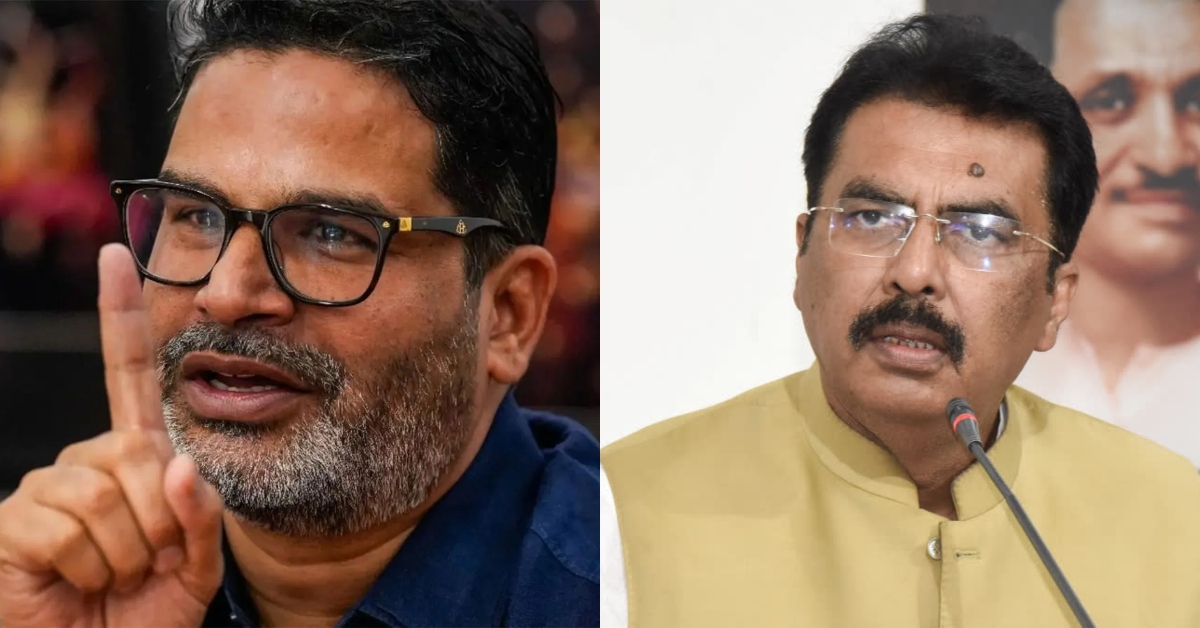
Patna: How did Prashant Kishor’s Jan Suraaj make a breakthrough in a region considered a stronghold of the BJP? The party’s victory in the Darbhanga Teachers’ constituency has brought this question into focus after its candidate, Suresh Prasad Rai, defeated Congress veteran Dr Madan Mohan Jha by 1,111 votes.

The NDA-backed candidate, Ghanshyam Rai of the JD(U), finished fourth, marking a setback for the alliance in a constituency where the teaching community determines the electoral outcome.
The result is politically significant because Darbhanga is home to Bihar BJP president Sanjay Saraogi and BJP MP Gopalji Thakur. However, the victory in a teachers’ constituency does not necessarily reflect the preferences of the wider electorate across Darbhanga or the Mithilanchal region.

For Jan Suraaj, the win offers an opportunity to strengthen its organisational presence and establish a distinct political identity beyond the state’s established political formations.
A win in a BJP-influenced region
The BJP has maintained a strong political presence in Darbhanga, where Saraogi serves as the sitting MLA and state party president, while Thakur represents the area in the Lok Sabha.
Against this backdrop, Rai’s victory has prompted questions about existing political equations. Yet the nature of the constituency is important: its electorate consists of teachers, making local educational concerns, candidates’ credibility and relationships with the teaching community potentially decisive factors.
The result should therefore be viewed as an indication of Jan Suraaj’s acceptance among a specific electorate rather than evidence of a broader political shift across the region.
Third attempt brings victory for Suresh Prasad Rai
Rai, a resident of Begusarai, defeated Jha, a senior Congress leader and former state party president, in his third attempt at contesting the election.
After receiving his victory certificate, Rai was greeted by supporters outside the counting centre. Celebrations included garlands, gulal and fireworks.
Rai credited teachers, staff members and his supporters for the victory. He also said he had resigned from his job around nine years ago to dedicate himself to serving the teaching community.
His win gives Jan Suraaj an opportunity to build on its engagement with teachers and strengthen its presence among voters concerned about education and related issues.
For the Congress, the defeat is a setback, as the seat had previously been represented by Jha, one of its senior leaders.
Can Jan Suraaj emerge as a third alternative?
Jan Suraaj has been working to expand its political base in Bihar through public outreach and padyatras. The party has focused on issues including education, employment, local concerns and systemic reform.
Its victory in Darbhanga, following its success in the Bankipur Assembly constituency, gives the party an opportunity to build momentum among its supporters.
However, the two victories come from electorates with different characteristics. Bankipur is a key Assembly constituency in Patna, while the Darbhanga Teachers’ constituency is decided by teachers. The results cannot be assessed using exactly the same yardstick.
Nor can the Darbhanga outcome be attributed solely to Kishor’s political strategy. Rai’s personal credibility, local connections, teachers’ grievances and the wider electoral dynamics may all have contributed to his victory. Determining their relative importance would require a closer examination of the contest.
Organisational strength remains the bigger test
Bihar’s politics has long been dominated by the NDA and the Mahagathbandhan. Jan Suraaj is attempting to establish itself as an alternative to both.
The victories in Bankipur and Darbhanga provide the party with an opportunity to raise its profile, but a handful of wins will not be enough to establish it as a major third force in the state.
That would require a stronger organisation across regions, credible candidates and a sustained ability to address local concerns. The Darbhanga result offers Jan Suraaj a foothold among teachers, but whether it can translate that success into broader electoral support remains an open question.