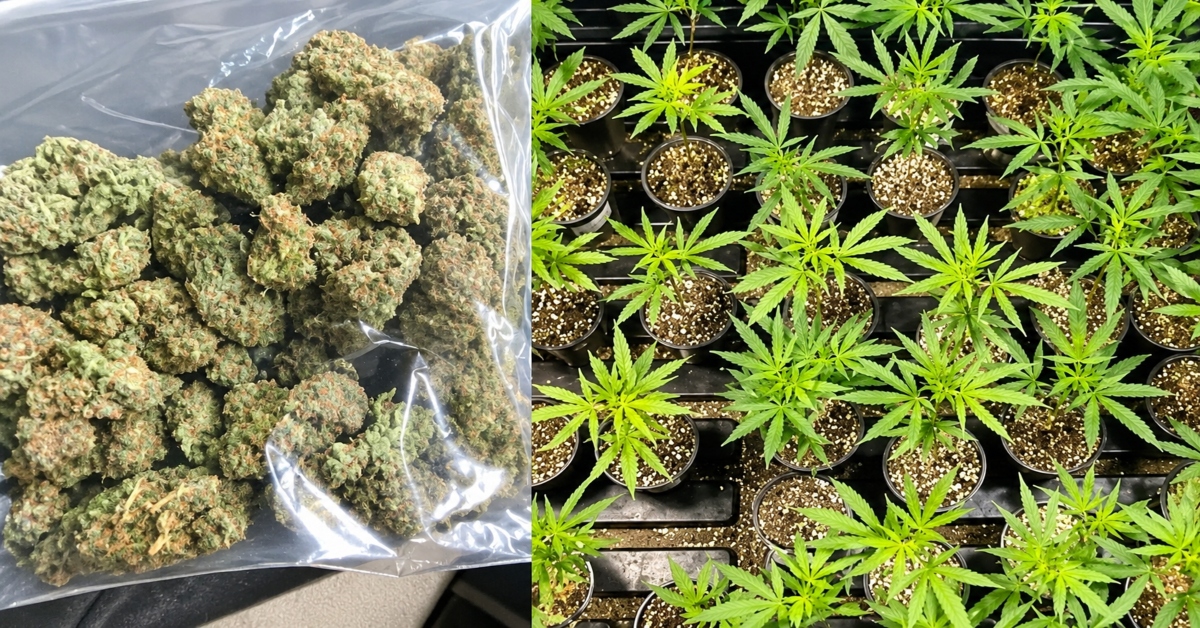
Patna: A discussion around high-grade cannabis and its purported premium pricing has drawn attention in Patna, with the term ‘organic ganja’ increasingly appearing in conversations about the product’s quality and cost.

The label suggests that cannabis is grown without synthetic chemicals, but the term alone does not establish how a product has been cultivated, whether it has been independently certified or whether it is safe for consumption.
The interest in premium cannabis also raises questions about how the product is marketed, what drives claims of higher value and how such claims should be viewed in a state where alcohol prohibition remains in force.

What Does ‘Organic Ganja’ Mean?
The word ‘organic’ is generally associated with agricultural products grown under specified cultivation standards, often involving restrictions on synthetic pesticides and fertilisers.
However, the use of the term in cannabis marketing does not automatically mean that the product has undergone recognised certification or independent testing.
Without verifiable documentation, claims of organic cultivation remain claims rather than established facts. The label also does not confirm the product’s potency, purity or safety.
Organic cultivation and hydroponic growing are different concepts. Hydroponics refers to growing plants without soil, using a nutrient solution or another growing medium. It does not, by itself, establish whether a crop is organic.
Why Is High-Grade Cannabis Said To Cost More?
Premium pricing is often linked in marketing discussions to claims about cultivation methods, appearance, aroma, consistency and perceived quality.
Some sellers may also use terms such as ‘high-grade’, ‘premium’ or ‘organic’ to position a product as more exclusive. These descriptions, however, are not reliable indicators of quality unless supported by independent evidence.
The price figures and claims circulating around the purported Patna trend should therefore be treated cautiously. They do not, on their own, establish the scale of demand or confirm the quality of products being offered.
Does The Organic Label Make Cannabis Safer?
No. A product described as organic is not necessarily safe for consumption.
Cannabis can carry health risks regardless of how it is grown. Its effects may vary depending on its composition and the individual consuming it. Use can affect memory, concentration, coordination and mental health, while frequent or high-potency use may increase the risk of dependence and other adverse effects.
The absence of synthetic pesticides, if established, would not remove these risks. Nor would an organic label guarantee that a product is free from contamination.
Cannabis Remains Restricted Under Indian Law
Cannabis is regulated under the Narcotic Drugs and Psychotropic Substances (NDPS) Act, 1985. The law prohibits various activities involving cannabis, subject to specific statutory definitions and exceptions.
The Act distinguishes between different parts and forms of the cannabis plant. Certain uses involving cannabis leaves and seeds may fall outside the definition of cannabis under the Act, while other forms remain subject to restrictions. Legal treatment can also depend on applicable state rules and the nature of the substance.
Bihar has a prohibition policy directed at alcohol. That policy is separate from the NDPS framework governing cannabis and other narcotic substances.
The description ‘organic’ does not create a legal exemption. A product’s marketing label cannot make an otherwise prohibited substance lawful.
A Trend That Needs Verification
The discussion around premium cannabis in Patna reflects the wider use of lifestyle-style marketing language for products that remain legally restricted.
But claims of rising interest, exclusive consumer groups or a substantial local market require independent verification. Anecdotal accounts and promotional descriptions are not enough to establish a trend.
For consumers and the public, the central distinction is between a marketing claim and a verified fact. In the case of ‘organic ganja’, the label may sound reassuring or premium, but it does not establish legality, quality or safety.