
Patna: Makhana produced in Bihar’s Purnia district has reached Greece through a commercial export shipment, marking another step in the expansion of the region’s fox nut trade. A one-tonne consignment prepared by Indo Global Export, based in Belauri, Purnia, was transported from Mundra Port in Gujarat to the port of Piraeus in Greece.

According to the information provided, New Delhi-based SS Foods Exports Private Limited facilitated the shipment. The consignment highlights the growing role of local producers in connecting Bihar’s makhana industry with overseas markets.
Makhana From Bihar Reaches International Markets

Makhana from the Kosi-Seemanchal region is reportedly supplied to more than 18 countries, including markets in Europe, the Gulf and South Asia.
The destinations listed include Greece, the United States, the United Kingdom, Canada, Australia, the United Arab Emirates, Qatar, Singapore, Brazil, Malaysia, Pakistan, Bangladesh and Nepal.
The supplied information also states that flavoured makhana, including the pickled variety known as achari makhana, was presented to guests at the BRICS summit. However, further details about the presentation were not provided.
Kosi-Seemanchal Records 37,440 Tonnes Of Production
The region recorded a total makhana production of 37,440 tonnes in the 2025-26 financial year, according to the figures provided. Scientific cultivation covered 31,498 hectares across eight districts.
Katihar led production with 8,950 tonnes, cultivated across 7,204 hectares. Purnia ranked second, producing 8,565 tonnes. The figures provided list 7,204 hectares for Purnia as well.
Other districts contributing to regional production include Saharsa, Supaul, Araria, Madhepura, Kishanganj and Khagaria.
Quality Supports Export Demand
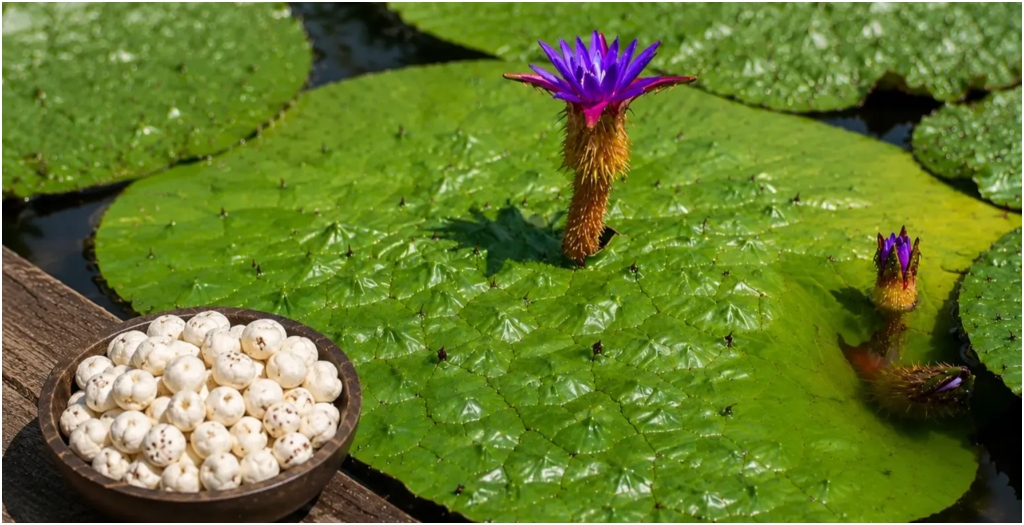
Makhana from the waterlogged areas of Kosi-Seemanchal is known for its large-sized popped seeds, locally called lava, along with its crunchy texture and milky-white appearance.
Agricultural and trade experts cited in the supplied information identify these characteristics, along with its nutritional value, as factors supporting demand in international markets. The information estimates that around 60% of the region’s total makhana production is exported, although the underlying trade data was not provided.
Better Processing And Direct Market Access
Improved grading, flavouring and packaging are helping local producers prepare makhana for international markets. The expansion of export channels could also enable farmers and processors to reach buyers more directly.
For producers in Purnia and neighbouring districts, access to overseas markets offers an opportunity to strengthen the value chain beyond cultivation and local trading. However, the extent of any improvement in farm-gate prices would need to be established through specific price and trade data.
As international demand develops, processing facilities, quality control and reliable export networks will remain important to sustaining the region’s position in the global makhana market.