
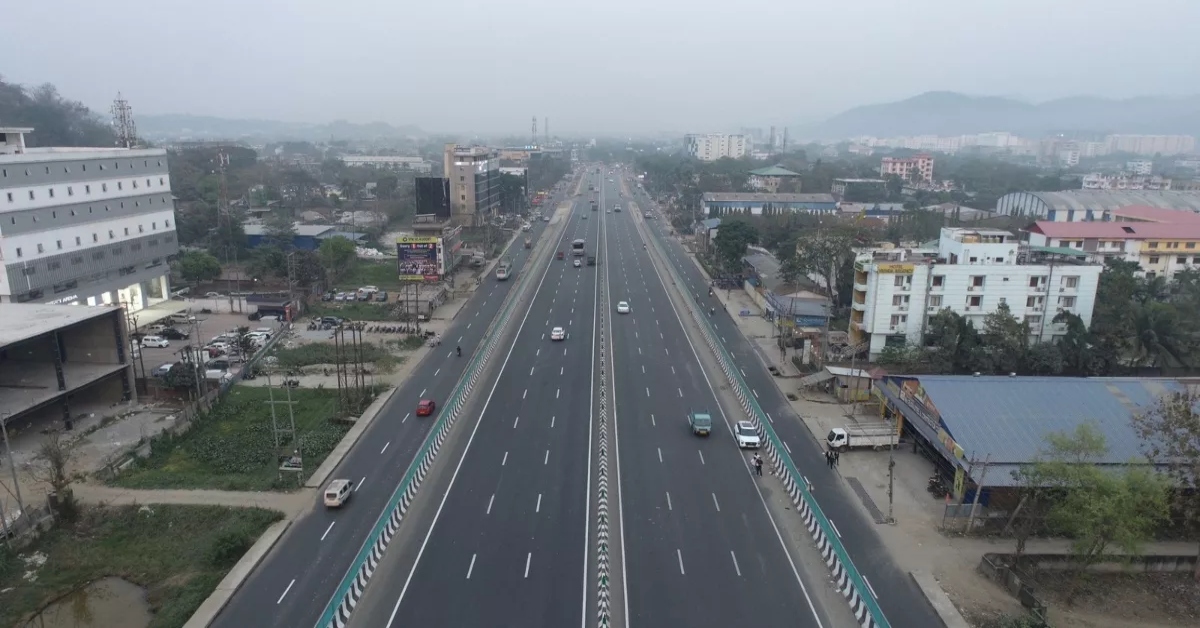
Patna : The Varanasi-Ranchi-Kolkata six-lane greenfield expressway is expected to improve road connectivity across four districts of Bihar, supporting tourism, industrial activity and employment opportunities.

The corridor will pass through Kaimur, Rohtas, Aurangabad and Gaya, linking Bihar with Uttar Pradesh, Jharkhand and West Bengal. The project is expected to reduce travel time between Varanasi and Kolkata and make the movement of passengers and goods more convenient.
The expressway is also expected to ease pressure on National Highway 19 and improve access to industrial and commercial centres in southern Bihar.

The Bihar stretch has been reported to cover approximately 162 km, with a completion target of March 2028 for the state’s section. However, the reported length and completion timeline should be confirmed against the latest official project schedule.
Rs 1,248.37 Crore Package Under Construction In Gaya
During a media visit organised by the National Highways Authority of India (NHAI) on October 16, officials briefed reporters about construction near Chapri village in the Imamganj block of Gaya district.
The Gaya section includes a 33.5-km stretch under Package 7, extending from Anirban Salaiya village in Dumaria block to Sangrampur in Imamganj block.
According to a report published on October 1, the package has an estimated cost of Rs 1,248.37 crore. Construction began on July 1, 2025, and the scheduled completion date for this package is June 30, 2027. At the time of that report, approximately 28.2% of the physical work had been completed.
The package forms part of the wider Varanasi-Ranchi-Kolkata economic corridor, which is intended to improve connectivity between the four states.
Four Bihar Districts To Gain Better Connectivity
Devendra Bansal, project director of NHAI’s Aurangabad project unit, said the expressway would pass through Kaimur, Rohtas, Aurangabad and Gaya.
The improved road network is expected to make travel between these districts and neighbouring states easier. It could also support tourism by improving access to destinations across the region.
The corridor is expected to help reduce the movement of heavy vehicles on NH-19, potentially easing traffic pressure on existing roads.
Plans also include connecting the expressway with the industrial corridor being developed at Dobhi in Gaya district. Better freight connectivity could make the transportation of goods more efficient and improve access to markets for businesses.
Wildlife Overpasses And Underpasses Planned
Parts of the expressway in Kaimur and Gaya will pass through forest areas. Approximately five kilometres of the route in these districts fall within forest stretches, according to the report.
To support the safe movement of wildlife, the project includes plans for overpasses and underpasses along the affected sections.
Officials have also proposed planting around 50,000 trees along the expressway to support environmental conservation.
The effectiveness of these measures will depend on their implementation and the suitability of the wildlife crossings for the species living in the surrounding forests.
Trauma Centres Planned Every 30 Km
The proposed road-safety infrastructure includes high-quality surveillance cameras at one-kilometre intervals and trauma centres every 30 kilometres.
The cameras are intended to support traffic monitoring and incident response, while the trauma centres are expected to improve access to emergency medical assistance for people injured in road accidents.
These facilities form part of the planned safety arrangements for the corridor.
Expressway To Connect Four States
The expressway will begin near Rewasa in Varanasi, Uttar Pradesh, and pass through Chandauli before entering Bihar. It will then cross Kaimur, Rohtas, Aurangabad and Gaya before continuing into Jharkhand and West Bengal.
The route is expected to connect areas including Chatra, Hazaribagh, Ranchi, Bokaro, Dhanbad and Ramgarh in Jharkhand, along with Purulia and Bankura in West Bengal, before reaching Kolkata.
By linking major locations across four states, the corridor is expected to improve passenger travel and freight movement.
For Imamganj and surrounding areas of Gaya district, the project could bring better road access and create opportunities for tourism and industrial activity. The extent of these benefits will depend on timely completion, effective links with local roads and the development of supporting infrastructure.