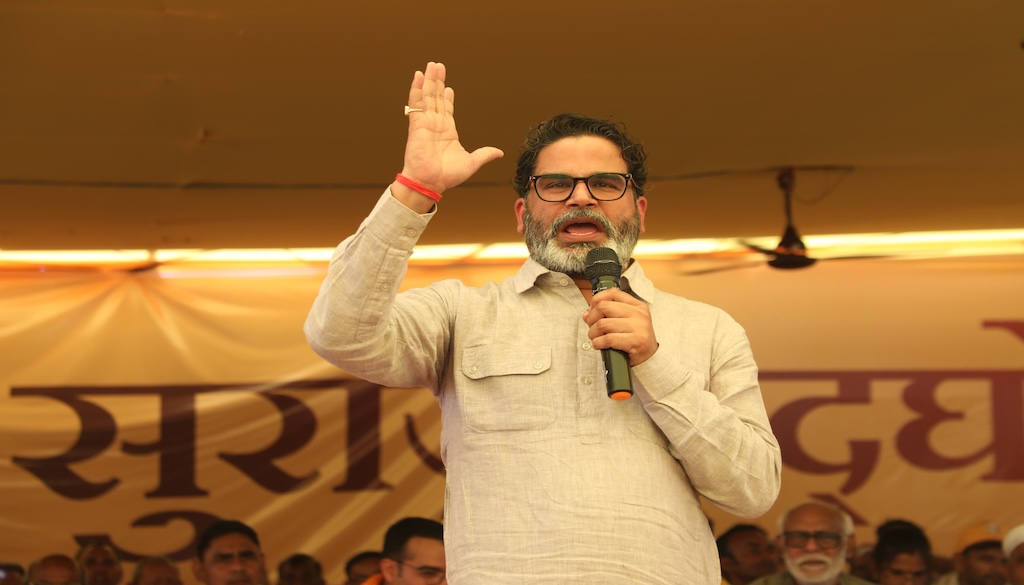
Patna: Political strategist-turned-politician Prashant Kishor has announced that he will contest the upcoming by-election from the Bankipur Assembly constituency in Patna, marking his first direct electoral contest. The decision comes months after the Jan Suraaj Party failed to win a single seat in the 2025 Bihar Assembly elections despite fielding candidates in 238 of the state’s 243 constituencies.

The by-election has generated significant political interest, with Bankipur long regarded as one of the Bharatiya Janata Party’s (BJP) strongest urban bastions. The seat fell vacant after BJP leader Nitin Nabin moved to the Rajya Sabha.
Why Prashant Kishor Decided to Contest
According to Jan Suraaj leaders, the decision followed an extensive internal review of the party’s disappointing performance in the 2025 Assembly elections, in which it secured around 3.4 per cent of the statewide vote but failed to win any seats.

Party leaders said feedback from workers and voters indicated that Kishor’s decision not to contest the Assembly elections had affected public confidence in the party. Based on those findings, the leadership resolved that if a suitable by-election arose, Kishor himself would enter the electoral arena.
Jan Suraaj State President Manoj Bharti and senior leader Kishore Kumar Munna said the decision was approved by the party’s core committee after reviewing extensive grassroots feedback. They said workers believed the party needed Kishor to personally lead its electoral campaign to establish itself as a credible political alternative in Bihar.
Groundwork Before the Announcement
Before formally announcing Kishor’s candidature, Jan Suraaj undertook months of organisational preparation in Bankipur.
According to party leaders, the constituency was divided into multiple operational zones, with committees formed at ward and booth levels. The party also conducted a three-month door-to-door outreach campaign, particularly in slum areas, and surveyed local residents, traders and youth to assess voter sentiment.
The party claims the survey suggested that many voters, especially those from lower-income and lower-middle-class backgrounds, were looking for an alternative to the state’s traditional political parties.
To strengthen its organisational network, Jan Suraaj also constituted more than 100 committees at ward and booth levels to improve voter mobilisation during the by-election.
Why Bankipur?
Political observers believe Kishor’s decision to contest from Bankipur is both symbolic and strategic.
Bankipur has remained a BJP stronghold since 1995, making it one of the party’s safest urban seats in Bihar. A strong performance against the BJP in such a constituency could help Kishor project himself as a serious challenger in state politics.
Kishor has described the by-election as more than a contest for a single Assembly seat, calling it a political test for the BJP-led government in Bihar.
Analysts also note that contesting from an urban constituency allows Kishor to avoid the rigid caste equations that dominate several rural constituencies while appealing to educated urban voters seeking an alternative political option.
Can Prashant Kishor Win?
Despite the political buzz surrounding his candidature, electoral data suggests that Kishor faces an uphill battle.
In the 2025 Assembly election, BJP’s Nitin Nabin secured over 98,000 votes, polling more than 63 per cent of the vote share. Jan Suraaj’s candidate, Vandana Kumari, received fewer than 8,000 votes.
Political analysts say Kishor’s personal popularity and national profile could significantly improve the party’s vote share. However, converting that into a winning margin against the BJP’s entrenched organisation and loyal voter base remains a formidable challenge.
Observers believe Kishor’s prospects could improve if anti-incumbency emerges against the BJP’s new candidate, if opposition voters consolidate behind him, or if he succeeds in increasing voter turnout among urban residents who typically abstain from voting.
Bankipur’s Electoral Landscape
Bankipur is one of Patna’s most prominent urban constituencies, with nearly 3.8 lakh registered voters.
The constituency is traditionally dominated by upper-caste communities, particularly Kayasthas, along with significant populations of Bhumihars, Brahmins and Rajputs. It also has sizeable Yadav, Other Backward Classes (OBC), Muslim and Scheduled Caste (SC) electorates.
Political experts attribute the BJP’s long-standing dominance in the constituency to its strong urban support base, consolidation among upper-caste voters and the influence of national political issues on the electorate.
The by-election is expected to attract statewide attention as it will serve as an important test for both Prashant Kishor’s transition from political strategist to electoral leader and the BJP’s hold over one of its strongest constituencies in Bihar.