Patna: In a concerted effort to combat vehicular pollution and promote sustainable transportation, the Bihar Transport Department, in collaboration with the Petroleum and Natural Gas Regulatory Board (PNGRB), hosted a one-day state-level CNG seminar at Hotel Maurya on Wednesday. The event brought together key stakeholders, including vehicle manufacturers, CNG infrastructure companies, oil companies, environmental experts, and transporters.

Additional Chief Secretary of the Transport Department, Mihir Kumar Singh, inaugurated the seminar, emphasizing the government’s commitment to expanding CNG accessibility. He announced plans to establish CNG stations at Bihar State Road Transport Corporation (BSRTC) and other bus stands to ensure easy availability for public transport vehicles.
Singh also stressed the need for extensive awareness campaigns to promote the adoption of both piped natural gas (PNG) for domestic use and CNG for vehicles. He suggested leveraging the electricity department’s consumer database to make these campaigns more targeted and effective.

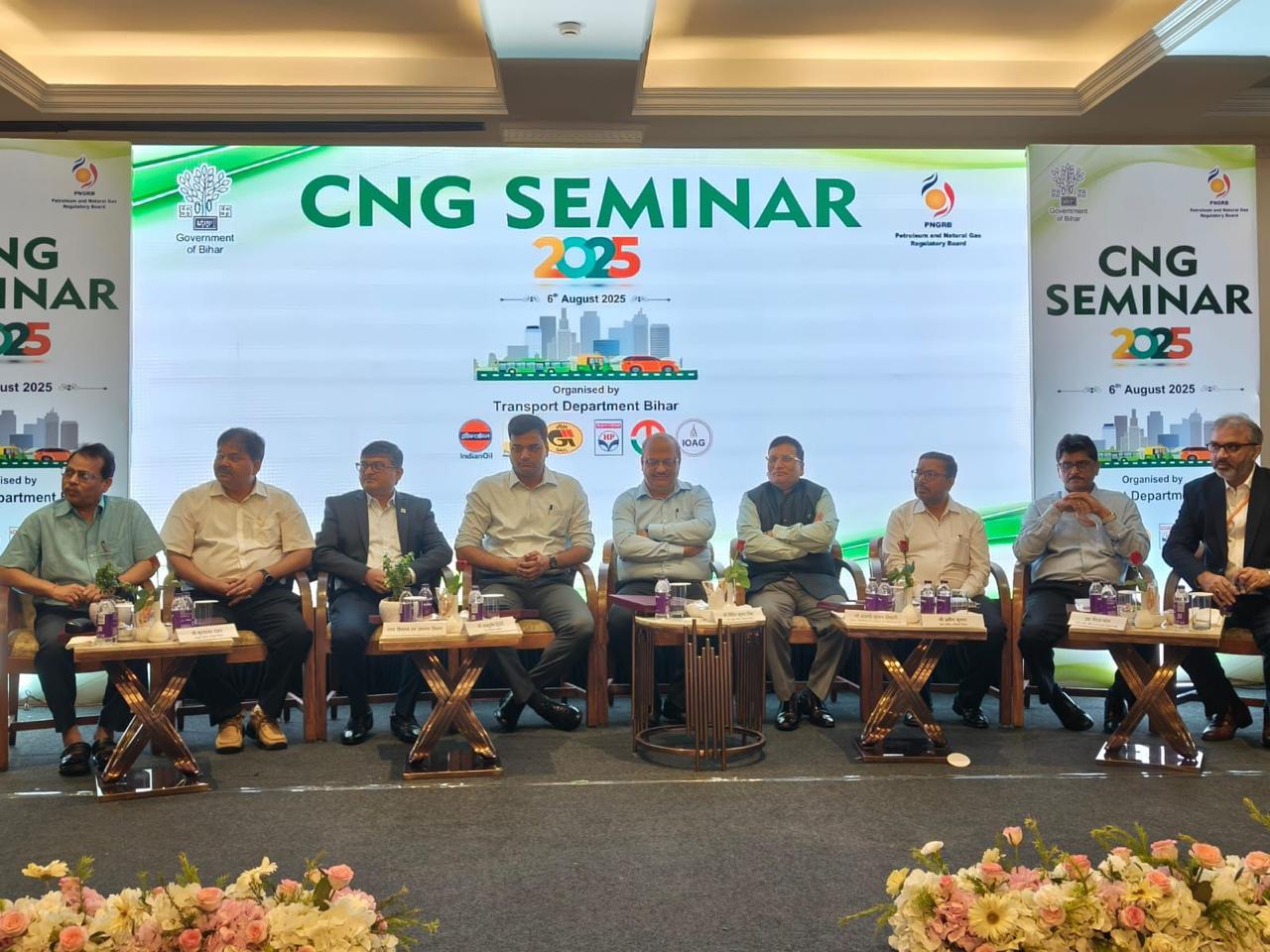
State Transport Commissioner Ashutosh Dwivedi highlighted that the seminar’s objective was to promote alternative, environment-friendly fuels, particularly Compressed Natural Gas (CNG), and to discuss related policies, challenges, and opportunities. “CNG is the fuel of the future,” he asserted, noting the state government’s proactive steps in promoting it.
A presentation by GAIL revealed significant progress: all 38 districts of Bihar are now connected to the CNG network. Currently, 197 CNG stations are operational, with an additional 55 new stations expected to commence operations within the next six months. To ensure safety and quality, cylinder testing units have also been activated. The state has already seen over 1.5 lakh autos and more than 1200 CNG buses transition to this cleaner fuel.
Additional Secretary of Urban Development and Housing Department, Vijay Prakash Meena, spoke about the state government’s efforts to transform waste management into a circular economy model, aiming to convert waste into resources, thereby conserving natural resources and saving energy.
The seminar also featured presentations on Bihar’s City Gas Distribution (CGD) policy, future plans for infrastructure development, and the technical benefits of CNG vehicles. Dignitaries present included Anjani Kumar Tiwari, Member, PNGRB; Dr. Neeraj Narayan, Member Secretary, Bihar State Pollution Control Board; and other senior officials from various departments.