Patna: When a government department’s social media account is hacked, the expectation is that alarms will ring quickly. But in Bihar, an unsettling post praising Adolf Hitler and Benito Mussolini remained on the official X handle of the state’s Water Resources Department for nine months — unnoticed, unreported and untouched.

The post, published on February 15, 2025, showed the two dictators standing together alongside a caption describing them as “two of the most influential politicians of the 20th century” whose “ideology was absolutely correct”. The message — starkly at odds with any democratic institution — remained visible until it was quietly deleted only after reports began circulating this week.
According to a PTI report, officials confirmed that the department’s account had been hacked. Cybercriminals allegedly gained control of the handle, changed its username multiple times and posted unrelated content. Among the posts retweeted from the compromised account were photographs from a trip to Portugal, a Truth Social post by Donald Trump about tariff policy and even a 20th-anniversary wedding picture featuring Trump and Melania.

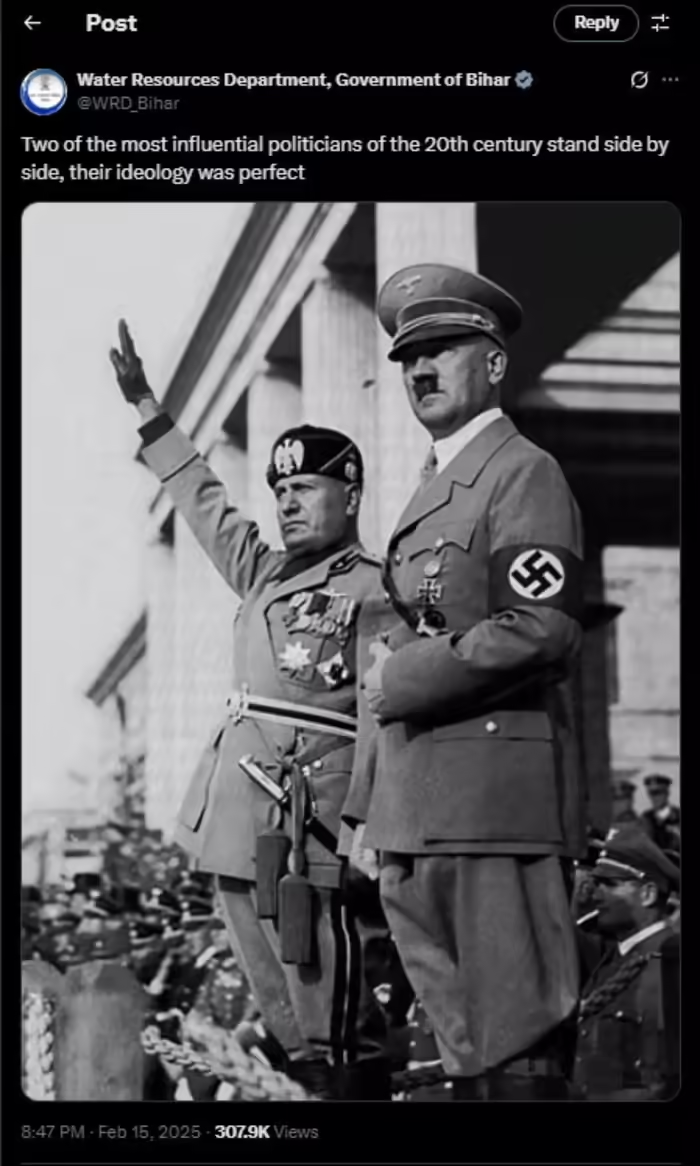
What has shocked many observers, however, is not only the nature of the hacked content but the duration for which it remained online. The Water Resources Department had not posted anything else on the account in nine months — meaning that the Hitler-Mussolini message stood as its most recent public communication throughout that period.
Reactions on social media were swift once the post resurfaced. Commenters questioned how such an inflammatory message could sit untreated for so long, with some suggesting it reinforced stereotypes about administrative indifference in one of India’s poorest states. Others expressed disbelief that a government-run handle was not monitored regularly enough to detect a hack.
Officials said the post was removed once the breach came to light and that steps were being taken to secure the account. But the episode has highlighted a broader vulnerability: government departments, particularly at the state level, often treat social media as an afterthought — leaving accounts under-monitored, under-secured and easy targets for exploitation.
For nine months, a post celebrating two dictators sat on a government account, drawing little attention internally. It is a lapse that raises questions not only about cybersecurity but about digital governance and accountability in the public sector.