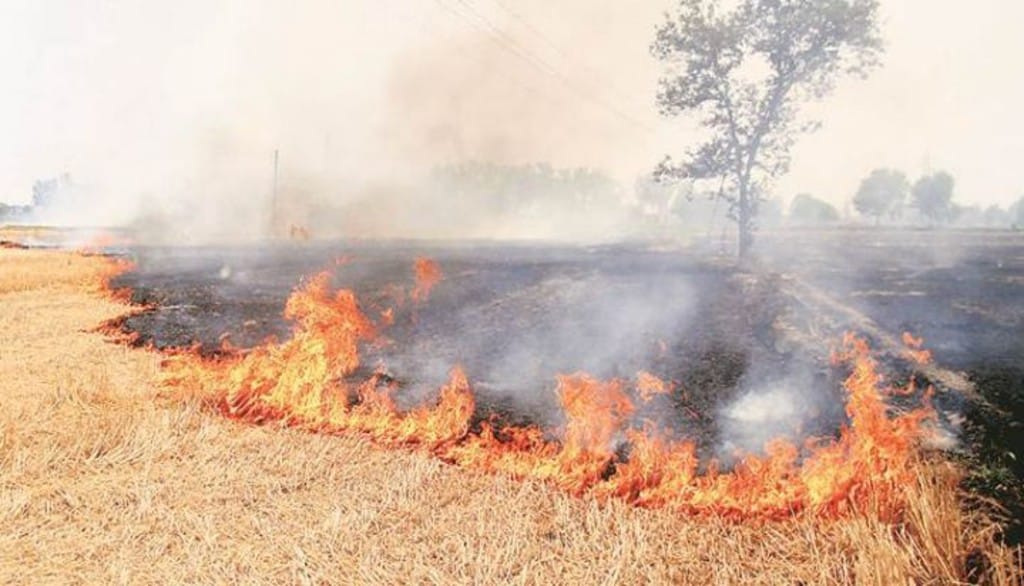
Patna: Bihar has announced a series of strict enforcement measures to curb the rising cases of crop residue burning in six districts—Kaimur, Rohtas, Buxar, Bhojpur, Nalanda and Aurangabad—where deteriorating air quality has become a growing public health concern.

Officials say that burning leftover straw (pual) is increasingly contaminating the air, prompting immediate intervention from the state administration. According to authorities, the Air Quality Index (AQI) in parts of these districts has begun crossing unsafe thresholds, demanding urgent policy action.
Farmer advisors will face FIRs for violations

In a significant shift, the government has decided to hold farmer advisors directly accountable.
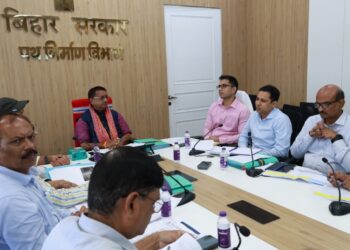
The state’s Development Commissioner has instructed the Bihar State Pollution Control Board to install AQI monitoring devices in affected areas without delay. At the same time, advisors responsible for monitoring agricultural practices will face FIRs if crop-residue burning occurs under their jurisdiction.
The Cooperative Department has also been ordered not to purchase paddy or wheat from farmers who continue burning stubble. Such farmers may also be barred from availing benefits under various government schemes.
Briquette units to be set up near NTPC plants
To provide a sustainable alternative, the state plans to establish biomass briquette production units in blocks where burning incidents are highest.
These units will be linked with NTPC power plants in Chausa, Barh and Nabinagar. NTPC has been directed to ensure that at least 5% of its fuel mix includes briquettes made from agricultural waste.
Rice mills will also be encouraged to use briquette-based boilers, while COMFED units will set up their own briquette production systems.
What are briquettes and why they matter
Briquettes, officials explain, are formed by compressing crop residue—similar in shape and function to traditional cow dung cakes. They burn easily, produce significantly less smoke, and are considered a cleaner and cost-effective alternative to coal.
Their growing adoption could help drastically reduce open-field burning and improve rural air quality.
FIRs under Section 152 to be filed against violators
The government has ordered that cases be registered under Section 152 against farmers who continue burning stubble. Authorities argue that accountability and deterrence are essential to protect the environment during peak pollution months.