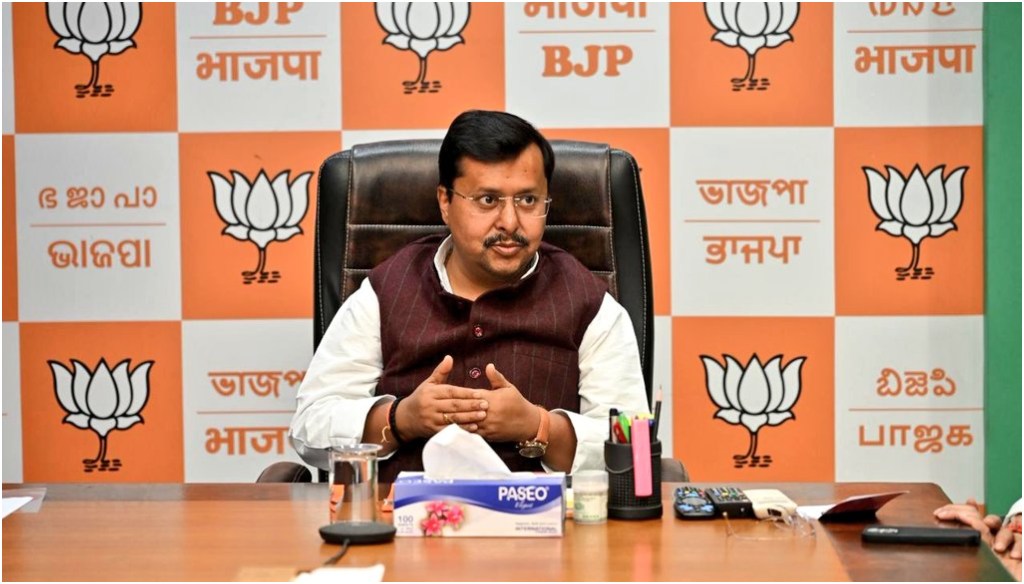
Patna: The Bharatiya Janata Party (BJP) is set to elect its new national president on January 19 and 20, with party sources indicating that Nitin Nabin has emerged as the leading contender for the post.

The nomination process will take place on January 19, while the name of the new president will be formally announced on January 20 following the completion of voting. Preparations for the election, for a post that has remained vacant for several months, are now in their final stages.
Senior party figures including Narendra Modi, Amit Shah and Rajnath Singh are expected to act as proposers, along with around 10 other senior leaders from the party and its organisation.

The election is being closely watched within the BJP as it is seen as critical to shaping the party’s organisational and electoral strategy in the run-up to the 2029 general election.
According to Sources, Nitin Nabin is currently regarded as the strongest candidate. If elected, the 45-year-old would become the youngest national president in the party’s history. His term would run until January 2029, although it could be extended in view of the Lok Sabha elections scheduled that year.
Nabin was appointed acting national president on December 15, 2025 but assumed charge later owing to the inauspicious Hindu period of Kharmas. He currently serves as Bihar’s road construction minister and has been elected five consecutive times as a legislator from the Bankipur assembly constituency. His father, Naveen Kishore Sinha, was also a senior BJP leader.
Party sources said the BJP’s organisational elections have been completed in 29 of its 37 state units. State presidents from these units are expected to submit a joint set of nomination papers backing Nabin, along with members of the party’s national council.
Under the BJP constitution, the national president is elected by an electoral college comprising members of the party’s national and state councils. Candidates must have been primary members of the party for at least 15 years and require the support of a minimum of 20 members of the electoral college as proposers.
The election process includes the filing of nominations followed by voting, with the final count and declaration taking place in Delhi. Party rules allow a national president to serve a maximum of two consecutive terms, or six years.
At a recent meeting at the BJP headquarters, the convenor of the national president election committee, K Laxman, along with co-convenors Sambit Patra and Naresh Bansal, reviewed the election timetable and organisational arrangements. An official announcement detailing the process is expected shortly.