Kaimur: A small tribal village in Bihar’s Kaimur district is preparing for a major change as solar power is set to reach 51 families for the first time. The families belong to a Particularly Vulnerable Tribal Group (PVTG) living in Saradog village, an area that has long struggled with limited access to reliable electricity. With the installation of solar panels in their homes, the village is expected to move towards a cleaner, safer and more sustainable source of energy.

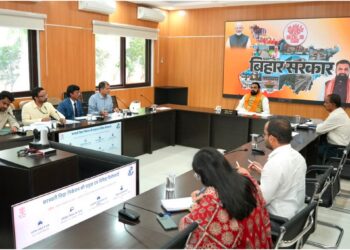
The project was officially launched after a memorandum of understanding was signed in Patna between the Indian Railway Electricity Company Limited (BRBCL) and the South Bihar Power Distribution Company Limited (SBPDCL). This agreement has been signed under the corporate social responsibility (CSR) programme of BRBCL. Under this arrangement, BRBCL will bear the entire cost of the project, ensuring that there is no additional financial burden on the Bihar government while directly supporting families who need it the most.
Several senior officials were present at the signing ceremony, including D.K. Singh, director (projects) at BRBCL, D.R. Dehuri, chief executive officer of BRBCL, and Jai Shankar Sahni, chief engineer (project-1, rural) at SBPDCL. Officials described the initiative as an important step towards tribal development, saying that access to electricity is not just about power supply but about improving overall quality of life. They also highlighted that using solar energy is especially suitable for remote and hilly areas like Kaimur.

For the families of Saradog village, the arrival of solar power is expected to bring meaningful improvements in everyday life. Children will be able to study in the evening under proper lighting, households will find daily chores easier, and the sense of safety in the village will improve after dark. Reliable electricity can also support better health, communication and access to information, helping the community feel more connected to the wider world.
The main aim of the project is to promote clean and renewable energy in rural and tribal areas while reducing dependence on traditional electricity sources. By becoming energy self-sufficient through solar power, the families will face fewer problems related to power cuts and unstable supply. Officials believe that this initiative can serve as a model for other tribal regions in Bihar and beyond, showing how government agencies and public sector companies can work together to support sustainable development and social inclusion.