
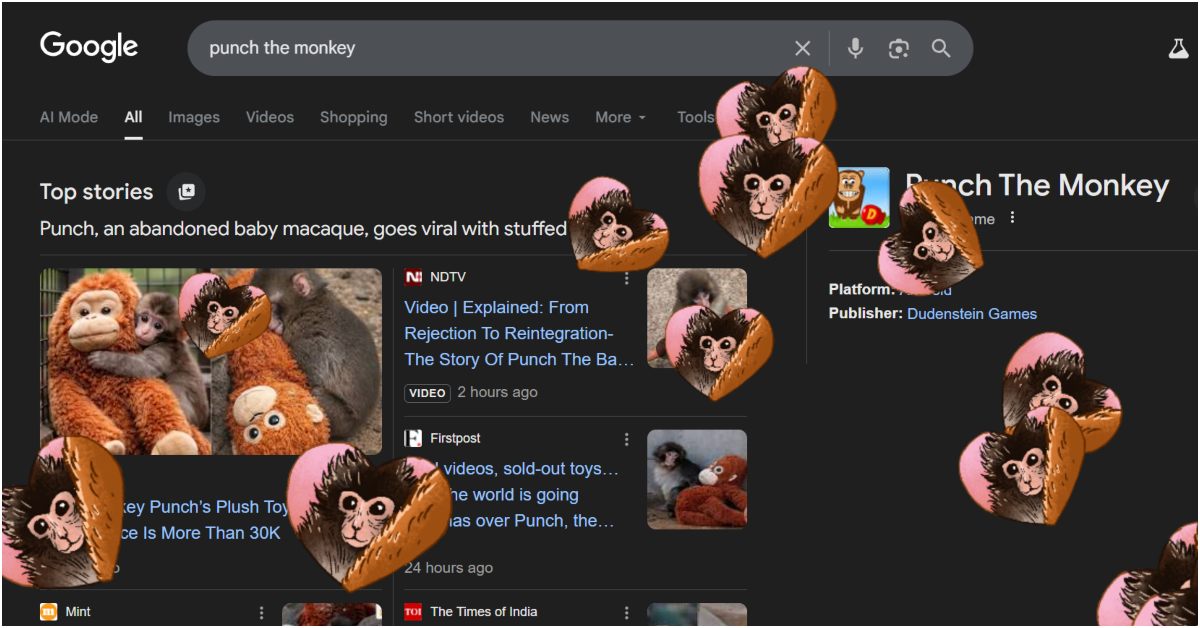
Patna: A hidden animation on Google is delighting users around the world, after a search for the phrase “Punch the Monkey” began triggering an unexpected on-screen surprise.

Typing the words into the search bar reveals a small cartoon monkey that pops up from the corner of the screen. Clicking – or “punching” – the character makes it disappear and reappear with playful sound effects. The simple interactive feature, known as an “Easter egg”, has spread rapidly across social media, with users sharing videos of themselves repeatedly summoning and tapping the animated primate.
Google has long embedded such hidden features in its search engine, but this latest addition appears to have struck a particular chord. Many users describe it as a brief but welcome distraction from routine scrolling – a moment of levity delivered by the world’s most widely used search tool.

The digital monkey’s sudden popularity coincides with global attention on a real-life primate named Punch, a six-month-old Japanese macaque living in Japan. Punch resides at the Ichikawa Zoological and Botanical Garden, where he has become an unlikely internet celebrity.
More than 200 species of monkeys exist worldwide, but Punch has drawn unusual focus after images and videos circulated online showing him clinging to a soft toy for comfort after being separated from his mother. The footage prompted an outpouring of sympathy from viewers, many of whom described the scenes as both heartbreaking and endearing.
According to reports from the zoo, staff intervened to care for Punch after he was abandoned. When later introduced to a troop of other macaques, early videos appeared to show him being bullied by older monkeys. Those clips fuelled further online concern, amplifying his viral status.
More recent footage suggests a more complex social dynamic. In some clips, other monkeys are seen grooming or huddling with him, gestures typically associated with bonding in primate groups. Observers say his experience within the troop appears to fluctuate between acceptance and conflict.
The connection between the real-life Punch and Google’s animated Easter egg has not been formally explained. But the timing has encouraged many users to draw a line between the viral macaque and the search engine’s playful feature.
For now, the effect is largely one of digital whimsy. A few keystrokes summon a mischievous character to the screen; a click sends it scampering away. In an online landscape often dominated by grim headlines, a tiny monkey – real or animated – has offered a fleeting moment of collective amusement.