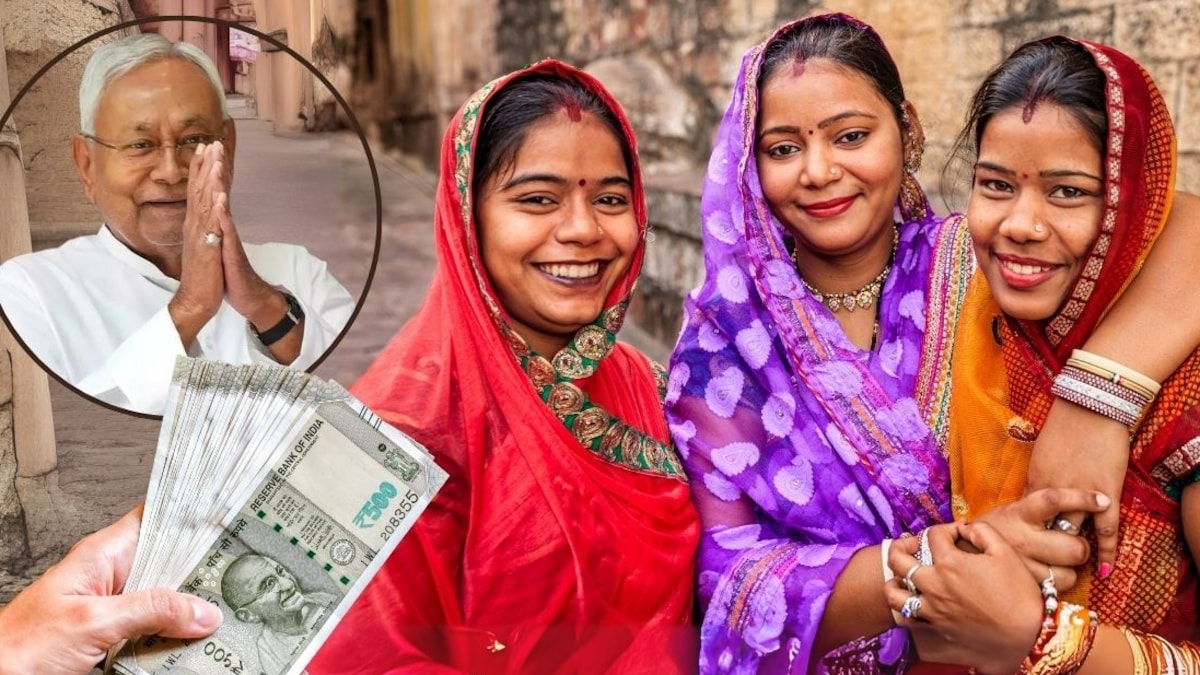
Patna: The Bihar government has announced an ambitious expansion of its flagship women’s livelihood programme, promising financial assistance of up to Rs 2 lakh to eligible beneficiaries under the Mukhyamantri Mahila Rozgar Yojana. The scheme aims to connect nearly 18.1 million women across the state with sustainable self-employment opportunities through a phased funding model tied to performance.

In its first phase, women received Rs 10,000 each to start small businesses in rural areas. According to officials, many have used the funds to open grocery shops, begin goat rearing, or take up tailoring and other home-based enterprises. The Rural Development Department’s Jeevika unit has now begun verifying whether recipients have genuinely launched income-generating activities before releasing further instalments.
Unlike traditional grant-based welfare schemes, the programme follows a matching contribution model. In the second phase, beneficiaries will receive Rs 20,000 but must invest Rs 5,000 of their own savings. The third phase offers Rs 40,000 in state support, provided the woman contributes Rs 10,000. In the fourth stage, Rs 80,000 will be disbursed, with a mandatory personal investment of Rs 20,000. Officials say the structure is designed to foster accountability and encourage women to view themselves as entrepreneurs rather than aid recipients.

The final stage focuses on expanding market access. Once businesses are established, the government will provide an additional Rs 60,000 for branding, packaging and marketing support, helping rural products reach larger markets. Jeevika’s chief executive, Himanshu Sharma, said that women demonstrating exceptional performance could, on the recommendation of a state committee, receive a lump sum grant of up to Rs 2 lakh.
To ensure transparency, district and block-level teams have launched a verification drive. Authorities have warned that beneficiaries who fail to start any economic activity after receiving the initial payment may be barred from future instalments. However, officials say priority will be given to counselling and encouraging women to launch viable enterprises before punitive steps are taken.
For a state where women form nearly half the population, the scheme represents a significant attempt to boost rural incomes and strengthen grassroots entrepreneurship. Its success, however, may depend on effective monitoring and the ability of new businesses to survive beyond initial government support.