Patna: The Bihar State Disaster Management Authority (BSDMA) held a coordination meeting with government agencies, non-governmental organisations and partner institutions to strengthen disaster risk reduction (DRR) efforts in the state.

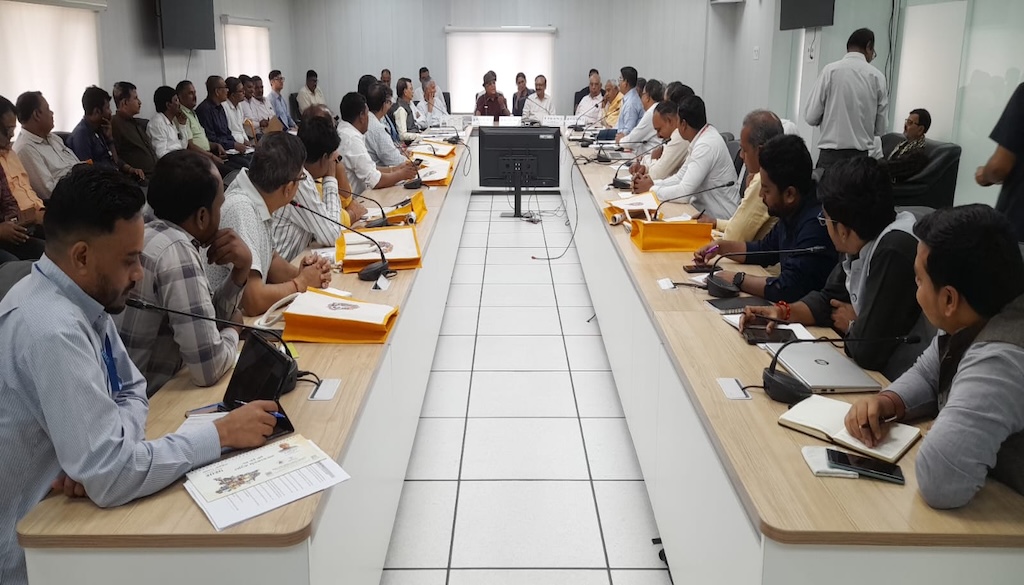
The meeting, held at the authority’s auditorium in Patna, was organised in collaboration with UNICEF, GPSVS and several NGOs working in the field of disaster management. Representatives from around 30 organisations, including government departments and civil society groups, participated in the discussions.
The meeting was chaired by the vice-chairperson of the authority, Dr Udaykant, who emphasised the need to improve coordination and strengthen the state’s rapid response mechanisms during disasters.

Members of the authority, including P N Rai, Kaushal Kishore Mishra, Narendra Kumar Singh and Shambhu Dutt Jha, also shared their views and recommendations on improving disaster preparedness and mitigation strategies.
During the meeting, participants agreed to strengthen the Roadmap Implementation Support Unit (RISU), which will be coordinated by the Bihar State Disaster Management Authority.
Officials also proposed activating a State Platform for Disaster Risk Reduction (SPDRR) as a common state-level forum to bring together government departments, academic institutions, civil society organisations and other stakeholders involved in disaster management.
The platform is intended to enhance coordination, information sharing and collective planning to reduce disaster risks in the state.
Several key decisions were taken during the meeting.
Officials agreed to establish a coordination committee chaired by the vice-chairperson of the authority or a nominated member, with representatives from relevant departments.
Specialised working groups will also be formed to focus on specific hazards and sectors, including fire, heatwaves, lightning, floods, health, water resources, climate change and disaster management.
Participants also proposed creating similar coordination platforms at the district and block levels to encourage greater involvement of local organisations and trained volunteers.
Regular coordination meetings are expected to be held monthly at the divisional, district and block levels, with participation from senior officials of the authority.
The meeting also highlighted the importance of incorporating modern technologies such as artificial intelligence, data analysis and remote sensing into disaster management systems.
Participants agreed to invite practical proposals from partner organisations that could help strengthen disaster preparedness and response across the state.
Officials also emphasised the need to integrate traditional and local knowledge with modern scientific approaches to develop effective and locally relevant disaster risk reduction strategies.
P N Rai, a member of the authority, said non-governmental organisations played a crucial role because of their deep engagement with communities.
“If their outreach and community trust are utilised in a coordinated way, disaster risk reduction efforts can reach the last person in society,” he said.
At the end of the meeting, officials said that financial resources were not a major constraint for disaster management initiatives, as both the state and central governments were prioritising the sector.
They stressed that what was needed most were practical and forward-looking proposals aimed at protecting communities and strengthening resilience to disasters across Bihar.