Patna: The National Democratic Alliance (NDA) secured a decisive victory in the Rajya Sabha elections in Bihar, winning all five seats from the state. The opposition Mahagathbandhan’s only candidate, Amarendra Dhari Singh (A.D. Singh), was defeated after three Congress MLAs and one RJD MLA remained absent during voting.

The Rajya Sabha election, held in Bihar after 12 years, has emerged as politically significant, sending multiple signals for the state’s political landscape ahead of future contests. The results come amid evolving equations between opposition leaders and ongoing shifts within the ruling alliance.
According to political observers, the election has highlighted changing dynamics between opposition parties, including growing political proximity between RJD leader Tejashwi Yadav and AIMIM chief Asaduddin Owaisi. At the same time, the outcome is also seen as offering some relief to Chief Minister Nitish Kumar, who is expected to step down from the post in the coming weeks.

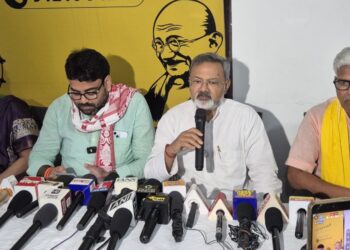
One of the key political messages from the election relates to Owaisi’s attempt to shed the perception that his party acts as the BJP’s “B team.” AIMIM has often faced such allegations from opposition parties, including the Congress and RJD, particularly during previous elections. By extending support to the opposition candidate in the Rajya Sabha poll, AIMIM appears to be signalling its willingness to work with the Mahagathbandhan.
Although there has been no official confirmation about AIMIM formally joining the opposition alliance, recent political gestures suggest closer coordination. Earlier this month, Tejashwi Yadav attended an iftar gathering hosted by Bihar AIMIM president Akhtarul Iman, indicating a possible effort to strengthen ties between the two parties.
Analysts believe the development may also help Tejashwi Yadav maintain his support base among Muslim voters, who traditionally form a key electoral constituency for the RJD and Congress. According to the Bihar caste survey conducted in 2023, Muslims constitute around 17.7 percent of the state’s population, with significant influence in several Assembly constituencies.
Data from the Centre for the Study of Developing Societies (CSDS) suggests that the Mahagathbandhan received slightly fewer Muslim votes in the 2025 Assembly elections compared to 2020. While 76 percent of Muslim voters supported the alliance in 2020, the figure reportedly declined to around 70 percent in 2025. During the same period, AIMIM’s share among Muslim voters rose to around 9 percent.
In the 2025 Assembly elections, AIMIM contested 28 seats and won five constituencies, including Baisi, Amour, Kochadhaman, Bahadurganj and Jokihat. The party also finished second in two seats. Its presence was particularly visible in the Seemanchal region, where it fielded candidates in several constituencies across Katihar, Purnia, Araria and Kishanganj districts.
Political analysts say the Rajya Sabha election has brought RJD and AIMIM closer, which could help consolidate Muslim voters within the broader opposition space.
A political analyst said Tejashwi Yadav appears to have taken a conciliatory approach toward AIMIM, which may help reduce growing distance among Muslim voters and encourage greater consolidation of the community’s vote. However, he cautioned that the development could also allow the BJP to frame future political contests along religious lines.
Another key takeaway from the election relates to the position of Chief Minister Nitish Kumar within the NDA. Although the opposition candidate lost, analysts believe the vote count indicates that the Mahagathbandhan still commands significant legislative support.
In the 2025 Bihar Assembly elections, Nitish Kumar’s Janata Dal (United) contested 101 seats and won 85. Analysts note that if the party were to part ways with the BJP in the future, it would require support from around 37 additional MLAs to reach the majority mark of 122 in the 243-member Assembly.
Observers point out that the opposition managed to mobilise roughly that level of support during the Rajya Sabha election, suggesting that alternative political combinations may still be possible.
Another political analyst said that although the Mahagathbandhan candidate lost the Rajya Sabha contest, the vote tally indicates that the opposition remains capable of mobilising a sizeable number of legislators. According to him, this outcome could provide Nitish Kumar with additional political leverage and potentially reduce the pressure exerted by the BJP in alliance negotiations.
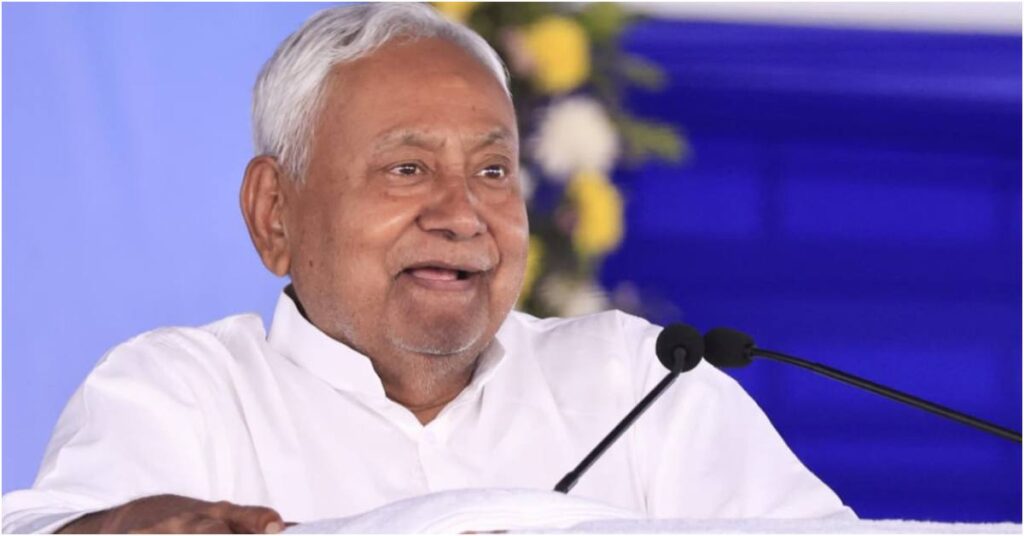
Nitish Kumar, who took oath as Chief Minister for the tenth time on November 20, 2025, is expected to step down from the post in early April, according to political sources. The developments surrounding the Rajya Sabha election are therefore being closely watched for their potential impact on Bihar’s evolving political equations.