Patna: Four indigenous livestock and poultry breeds from Jharkhand have received national-level recognition, in what experts describe as a significant development for biodiversity conservation and rural livelihoods in eastern India. The recognition was granted by the National Bureau of Animal Genetic Resources following research efforts led by Indian Council of Agricultural Research’s Patna-based institute.

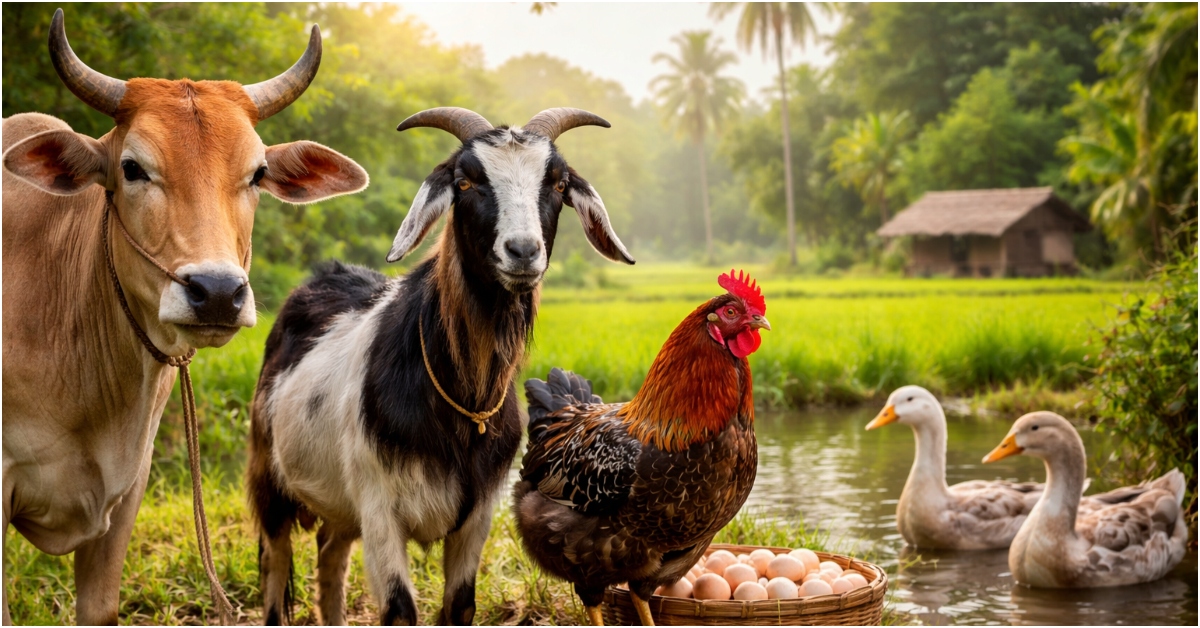
The newly registered breeds include the Medini cow, Palamu goat, Mala chicken and Kodo duck, all of which are native to different parts of Jharkhand. Scientists say the move will not only help preserve unique genetic traits but also support the development of breed-specific improvement programmes aimed at increasing productivity and resilience.
The Medini cow, found mainly in Palamu, Latehar and Garhwa districts, is a medium-sized breed known for its suitability in traditional farming activities such as ploughing. Its adaptability to pasture-based systems has made it particularly valuable for small and marginal farmers. With an estimated population of around 1.4 million, it represents a crucial component of the region’s agrarian economy.

Similarly, the Palamu goat has gained recognition for its strong build and high meat production potential. Its ability to survive and perform well under resource-constrained conditions makes it an important asset for rural households. The Mala chicken, largely reared in Ranchi and Khunti districts, is popular among farmers due to its distinctive feather patterns and high survivability even in low-input systems.
The Kodo duck, found across West Singhbhum, Saraikela-Kharsawan, Ranchi and Pakur districts, is valued for both egg and meat production. With an estimated population of about 42,000, it offers reliable returns even with minimal investment, making it suitable for small-scale farming.
The research behind the recognition was carried out by a team led by scientists including Reena Kamal and P. C. Chandran. According to Anup Das, director of ICAR’s research complex in Patna, the official registration is expected to benefit livestock farmers by enabling structured breeding programmes, strengthening conservation efforts and improving incomes across the state.