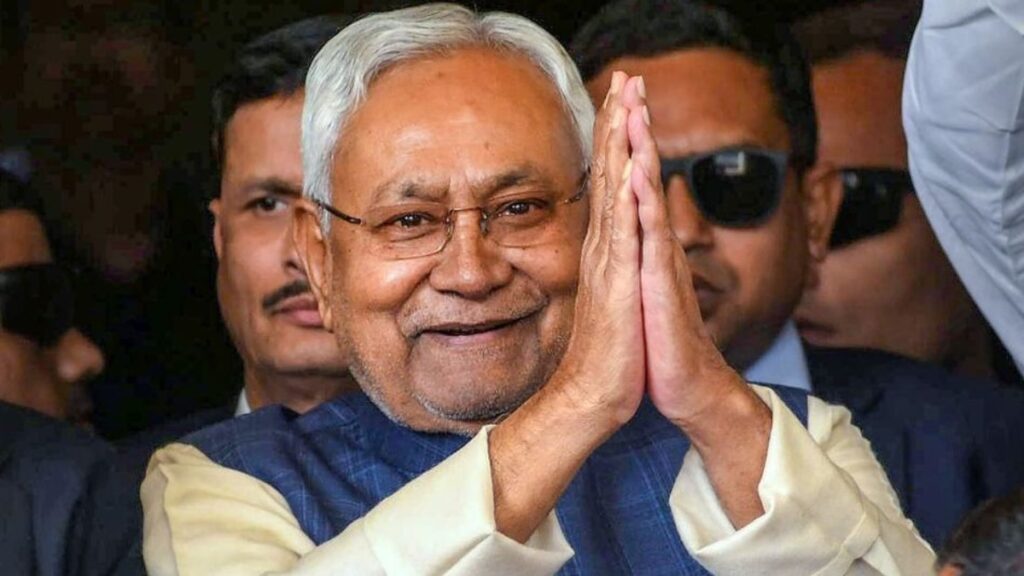
Patna/New Delhi: Bihar Chief Minister Nitish Kumar has filed his nomination for the post of national president of the Janata Dal (United), paving the way for him to take charge of the party once again. After completion of the formal process, including the withdrawal of nominations, Kumar is expected to be elected unopposed as the party’s national president for the fourth time.

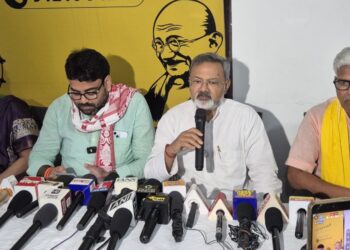
The nomination was filed at the JD(U) office on Jantar Mantar Road in New Delhi. The nomination papers were submitted on Kumar’s behalf by the party’s national working president and Rajya Sabha MP Sanjay Kumar Jha to returning officer Anil Hegde.
Fourth term as JD(U) chief

This will be Nitish Kumar’s fourth tenure as the national president of the JD(U). He first assumed the party’s top organisational post in 2016 after replacing Sharad Yadav. He was again elected unopposed as national president in 2019.
In 2020, Kumar handed over the position to RCP Singh, and later appointed Rajiv Ranjan Singh, popularly known as Lalan Singh, as the party’s national president. After Lalan Singh resigned from the post in 2023, Kumar once again took charge of the organisation and has remained at the helm since then.
Party meetings in Patna on March 29
The JD(U) is preparing to hold its national council and national executive meetings in Patna on March 29. Party representatives from across the country are expected to attend the meetings, where key organisational and political decisions will be discussed.
Why Nitish Kumar continues to lead the party
Political observers say there are several reasons behind the party’s decision to retain Nitish Kumar as its national president.
Lack of a strong alternative face
Analysts say JD(U) does not currently have another leader with a comparable mass appeal or organisational authority to lead the party nationally. Political commentator Praveen Bagi noted that Kumar has remained the most prominent and widely accepted face within the party, making him central to its identity and electoral strategy.
Maintaining control over the organisation
At a time when reports of factionalism and internal differences occasionally surface within the party, keeping Nitish Kumar at the helm is seen as a move to maintain unity. Party leaders believe that his leadership helps keep legislators and senior leaders together and prevents organisational fragmentation.
Strengthening national ambitions
By projecting Nitish Kumar as the national president, the JD(U) also aims to expand its presence beyond Bihar. Party leaders believe his experience and political stature can help the organisation build influence in other states and strengthen its role in national politics.
Electoral calculations and alliance dynamics
Political analysts say Kumar continues to hold influence among a significant segment of voters in Bihar. According to analyst Kumar Prabodh, around 15 percent of the state’s voters are believed to be closely aligned with Nitish Kumar’s leadership. Maintaining his prominence within the party is therefore considered crucial to preserving this support base, especially within the National Democratic Alliance (NDA).
Key organisational decisions under Nitish Kumar
Over the past few years, Nitish Kumar has taken several organisational steps aimed at strengthening the party structure.
Appointment of a working president
In 2024, Kumar appointed his close aide and Rajya Sabha MP Sanjay Kumar Jha as the national working president. The move was seen as an attempt to balance his responsibilities as chief minister and party chief while ensuring smoother organisational functioning.
Restructuring the national team
After resuming the role of national president in 2024, Kumar initiated major changes in the party’s national executive. The number of office-bearers was reduced to streamline the organisation. The number of national general secretaries was cut from 22 to 11 to make the structure more efficient.
Focus on social representation
Known for his social engineering strategies, Kumar ensured representation of Extremely Backward Classes (EBCs) and minorities in the reconstituted team. The move was aimed at strengthening the party’s traditional support base.
Disciplinary actions within the party
Kumar has also taken a firm stance against factionalism. Reports in March 2026 indicated that disciplinary action was taken against some members allegedly involved in anti-party activities, including cancellation of memberships.
Keeping loyalists close
Throughout his political career, Kumar has maintained close ties with long-time associates and loyal party workers. Many of them continue to hold key organisational responsibilities within the JD(U), reflecting his preference for relying on trusted colleagues while managing the party structure.
With his latest nomination, Nitish Kumar is set to continue steering the JD(U) at a time when the party is preparing for key political battles and organisational expansion.