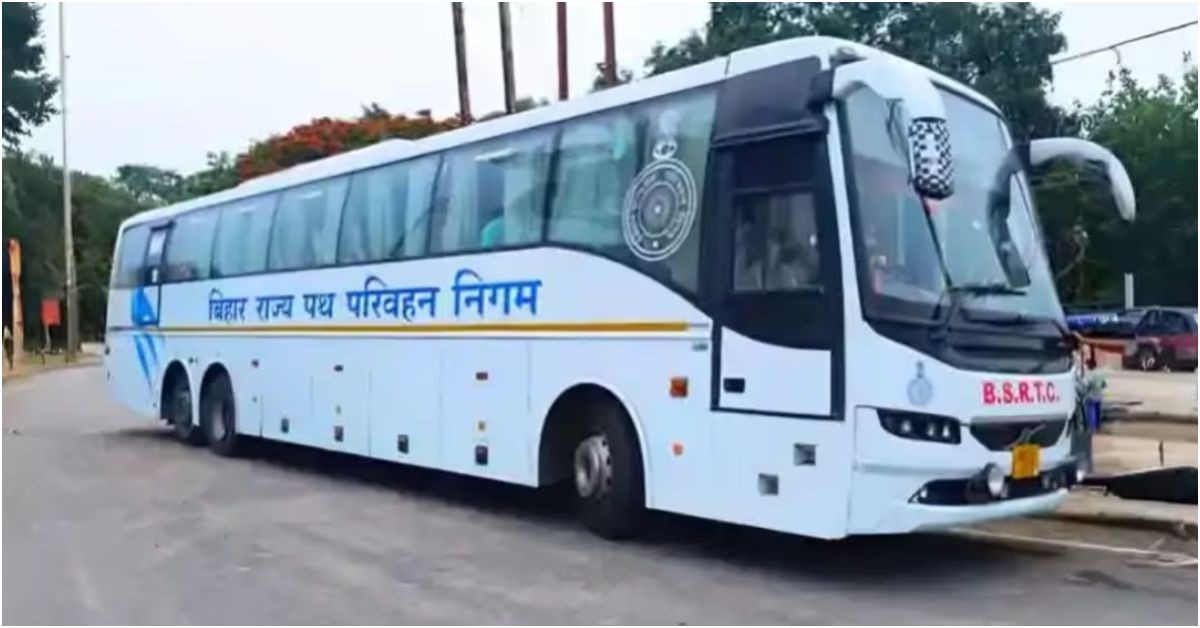
Patna: As India’s festive season triggered a familiar surge in travel demand, overstretched train services in Bihar left thousands scrambling for confirmed tickets. In response, state-run buses operated by the Bihar State Road Transport Corporation (BSRTC) emerged as a crucial alternative, transporting more than 73,000 passengers in a month and setting a new record for interstate travel.

The spike coincided with Holi and Eid, when large numbers of migrant workers travel home from northern states. With many trains displaying “no room” notices, BSRTC’s expanding fleet of air-conditioned seater and sleeper buses absorbed a significant share of the demand, offering what passengers described as a more accessible and affordable option.
According to official data, 118 buses operated by the corporation recorded an average occupancy rate of 94% between 23 February and 23 March, underlining the scale of the shift. The busiest corridor was the Delhi–Muzaffarpur route, which alone carried more than 29,000 passengers over the period.

Other long-distance routes—including Darbhanga to Gurugram and Gaya to Delhi—also saw sustained demand, while services linking smaller cities and towns reported steady usage. More than 5,400 passengers travelled between Purnia and Delhi, and roughly 5,000 used the Darbhanga–Panipat route, reflecting the growing reach of the network beyond major urban centres.
Transport officials said the service played a dual role: easing pressure on the railways while ensuring that migrant workers could return home without excessive cost or uncertainty. Routes such as Gurugram–Purnia, Ambala–Darbhanga and Patna–Delhi were among those benefiting from increased frequency and improved connectivity.
Passengers cited three main reasons for opting for buses over trains: easier booking, comparatively comfortable journeys and lower fares. For many low-income travellers, particularly migrant workers, the cost difference proved decisive during a period when rail tickets were either unavailable or priced at a premium.
The surge in bus travel marks a notable shift in Bihar’s transport landscape, where railways have traditionally dominated long-distance mobility. Officials say the figures highlight the potential for state-run bus services to play a larger role during peak travel periods, particularly when demand outstrips rail capacity.