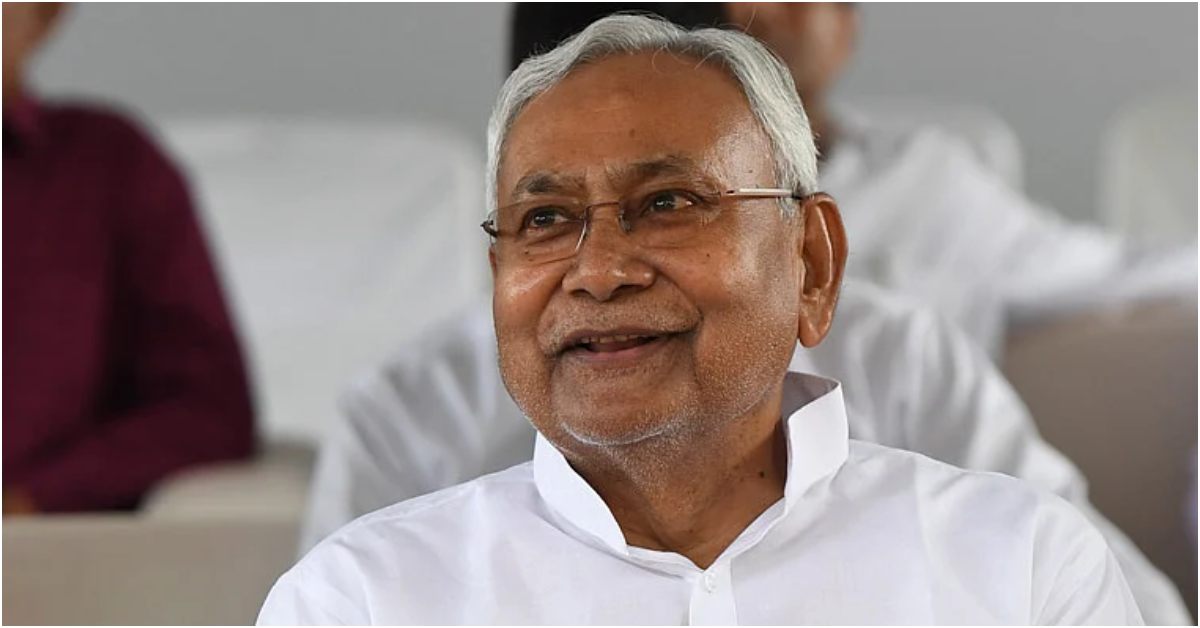
Patna: The political trajectory of Bihar’s Chief Minister Nitish Kumar is once again at a turning point, with his expected move to the Rajya Sabha prompting him to step down from the Bihar Legislative Council and, in the coming days, from the chief ministership.

Kumar, who first took oath as chief minister in November 2005, had entered that role after winning the 2004 Lok Sabha election from Nalanda. He subsequently resigned from the Lok Sabha following the formation of a new government in Bihar, aligning himself with the shift in state politics under the National Democratic Alliance at the time.
A veteran of multiple political transitions, Kumar’s career has frequently involved resignations tied to changes in political alignment and electoral outcomes. In 2014, he stepped down as chief minister after his party’s poor performance in the general election, taking moral responsibility for the result. He later returned to office after a period in which Jitan Ram Manjhi, a former ally, was appointed as his successor.

His first tenure as chief minister in 2000 was short-lived. He resigned within a week after failing to secure a majority in the state assembly, underscoring the instability of the coalition arrangements at the time.
Nitish Kumar has also held ministerial positions at the centre. He resigned as Union railway minister in 1999 following the Gaisal train disaster, taking moral responsibility for the accident. Earlier, he had also served as Union agriculture minister before stepping down in 2000 to assume charge as Bihar’s chief minister.
His long association with national politics includes close ties with senior leaders of the Bharatiya Janata Party during earlier phases of his career, including former prime minister Atal Bihari Vajpayee.
The latest move to the Rajya Sabha marks another transition between state and national roles for Kumar, whose political career has repeatedly shifted between Delhi and Patna. While formal announcements regarding his resignation from the chief minister’s post are still awaited, his exit from the Bihar Legislative Council signals an imminent change in leadership in the state.
The development is being seen as part of a broader recalibration in Bihar’s political landscape, where Kumar has remained a central figure for nearly two decades, frequently reshaping alliances and positions in response to evolving electoral equations.