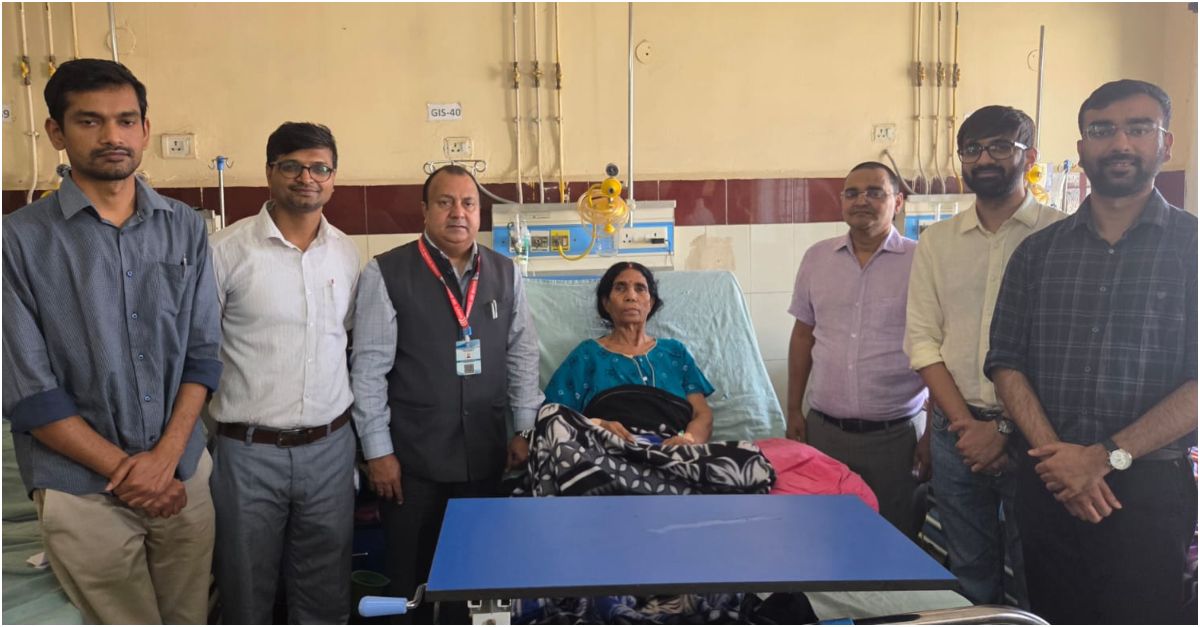
Patna: A government hospital in Bihar has carried out what doctors say is the state’s first robotic radical cholecystectomy for gall bladder cancer, marking a significant step in the adoption of advanced surgical technology in the public sector.

The procedure was performed on April 9 at Indira Gandhi Institute of Medical Sciences (IGIMS) in Patna by the department of surgical gastroenterology. According to Dr Manish Mandal, the institute’s medical superintendent and head of department, the surgery was conducted using the Da Vinci Xi robotic system, which was introduced at the hospital last month.
Mandal said the institute had recently begun offering robotic procedures in the government sector, adding that the team had previously carried out a robotic surgery for pancreatic cancer, also a first for Bihar.

The patient, a 66-year-old woman from Saran district, had been experiencing persistent pain in the right upper abdomen for several months, along with bloating. Diagnostic tests, including ultrasound and CT scans, confirmed gall bladder cancer after she was referred to IGIMS from another facility.
A surgical team led by Dr Rakesh Kumar Singh, along with Dr Netranand and Dr Danish, performed the operation under Mandal’s supervision. The procedure involved removal of the gall bladder along with a portion of the liver and surrounding lymph nodes. Anaesthesia was managed by a team including Dr Anantu, Dr Bibha and Dr Vinod Verma.
Doctors said the surgery lasted around five hours and involved minimal blood loss, in contrast to conventional open or laparoscopic procedures, which can require transfusions. The patient was able to mobilise the day after surgery and is reported to be recovering well.
Dr Bibhti Prasan Sinha, deputy director of administration at IGIMS, praised the surgical and anaesthesia teams for the outcome. The institute’s director, Dr Bindey Kumar, said the hospital aims to expand its robotic surgery programme, with several surgeons currently undergoing training.
Officials at IGIMS said such procedures are being offered at a subsidised cost of around Rs 50,000, with the goal of improving access to advanced cancer care for patients in the state.