
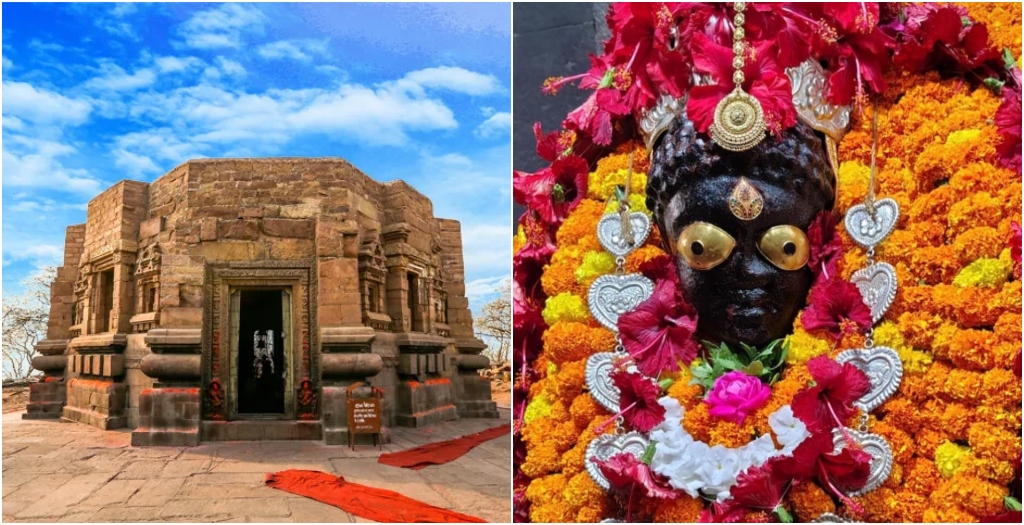
Kaimur: The Maa Mundeshwari Temple, located atop the scenic Pavra Hill, stands as one of the oldest surviving temples in India. Situated around 608 feet above sea level in Bihar’s Kaimur district, the temple is both a major religious centre and an important cultural landmark. Devotees visit throughout the year, but the number increases significantly during festivals such as Navratri and the holy month of Sawan, when the hill comes alive with prayers and rituals.

The temple is believed to be nearly 1,900 years old, giving it a deep historical significance. It has attracted the attention of historians and scholars for centuries. Among them was Alexander Cunningham, who documented the site during the British era. Ancient inscriptions related to the temple, now preserved at the Indian Museum, suggest that the temple dates back to between the 4th and 7th centuries. Some historians believe the temple may have originally been dedicated to Lord Vishnu before becoming associated with Goddess Mundeshwari.
One of the most unique aspects of this temple is its tradition of “bloodless sacrifice”. Unlike other places where animal sacrifice may involve harm, here the ritual is symbolic. It is believed that when a priest performs a simple ritual involving rice grains and touches the animal, it briefly falls unconscious and then recovers shortly after. Devotees consider this a miracle and a sign of the goddess’s power, as the offering is accepted without any bloodshed.

The temple’s structure is also special. Built in an octagonal shape with entrances in four directions, it reflects advanced architectural knowledge from ancient times. Many experts believe its design is based on the sacred Shri Yantra pattern, which represents cosmic energy in Hindu beliefs. Inside the temple, the goddess is shown seated on a buffalo, symbolising her victory over evil forces. There is also a five-faced Shivling and an idol of Lord Ganesha, making the temple spiritually rich.
In earlier times, reaching the temple was very difficult, as people had to climb steep rocks to reach the top. Today, proper roads and stairs have been built, making the journey easier for visitors. Facilities such as resting areas and an eco-park have also been developed around the temple, improving the overall experience for pilgrims and tourists. Despite these changes, the temple continues to retain its ancient charm and spiritual importance.