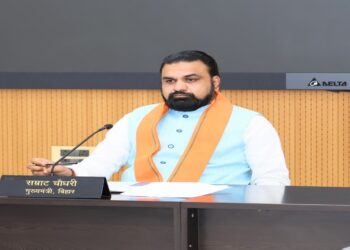
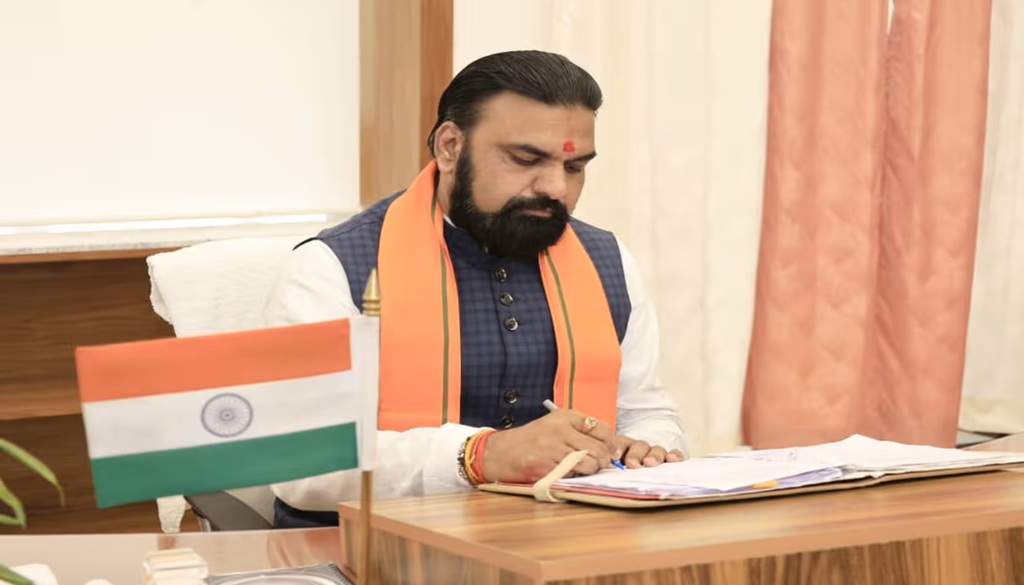
Patna: A new phase in Bihar politics has begun with Samrat Choudhary assuming office as chief minister, marking a significant transition after years of leadership under Nitish Kumar.

While Nitish Kumar’s decision to hand over leadership within the NDA signals a generational shift, Samrat Choudhary faces an immediate and formidable challenge: matching the legacy of a leader who governed for nearly two decades with the reputation of “Sushasan Babu”.
Corruption remains deeply rooted

Despite changes in government, corruption continues to be a persistent issue in Bihar. Recent raids on senior officials have underlined the scale of the problem.
Samrat Choudhary has spoken of a zero-tolerance approach, but the challenge lies in translating that into action. Ensuring transparency, particularly in the use of CSR funds and public services, will be key. For many residents, everyday interactions with government offices remain burdened by unofficial payments, a system the new administration will be expected to dismantle.
Law and order under scrutiny
The issue of law and order is likely to be an early test for the new chief minister. While Nitish Kumar’s early years in power saw a decline in crime, recent years have witnessed a resurgence.
Criticism has also come from political allies such as Chirag Paswan, who has publicly questioned the state of policing. According to data from the National Crime Records Bureau, Bihar recorded 2,556 murders in 2025, alongside more than 2,000 reported rape cases.
Having previously handled the home portfolio, Samrat Choudhary is expected to push a stricter enforcement policy. Success could improve public safety and attract investment, while failure risks weakening the NDA’s development narrative and strengthening opposition attacks led by Tejashwi Yadav.
Struggles in education and healthcare
Bihar’s infrastructure in education and healthcare has expanded over the years, but quality remains a concern. Schools and hospitals often face shortages of teachers and doctors, while higher education institutions continue to lag behind.
Even prominent institutions such as Patna Medical College have struggled to meet expectations. While welfare schemes like the bicycle programme for girls improved access to schooling, long-term investments in quality education and healthcare remain limited.
With support from the central government, the NDA has an opportunity to address these gaps. Improvements could reduce migration and strengthen the state’s workforce, while continued shortcomings may fuel political criticism.
Controversies return to spotlight
Samrat Choudhary’s elevation has also revived scrutiny of his political past. Questions around his early ministerial role and educational qualifications have been raised by the opposition, particularly the Rashtriya Janata Dal.
These issues are likely to be used politically by opponents, with Tejashwi Yadav expected to press them both inside the assembly and in public campaigns. For Samrat Choudhary, the most effective response may lie in governance outcomes rather than political rebuttal.
A legacy to match
Nitish Kumar’s tenure set a high benchmark, particularly in maintaining an image free from personal corruption allegations. Replicating that standard will be critical for Samrat Choudhary’s credibility.
Any deterioration in law and order or governance standards could quickly translate into political pressure. Conversely, visible improvements could consolidate his leadership and redefine Bihar’s political trajectory.
For now, Samrat Choudhary stands at a crossroads: success could secure his place in the state’s political history, while failure risks undermining his party’s long-awaited opportunity to lead Bihar independently.