
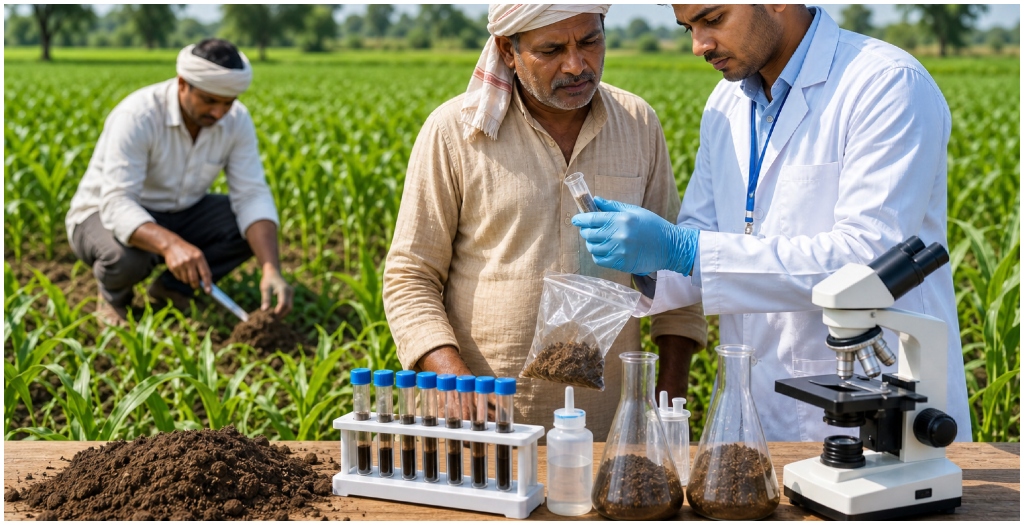
Patna: Bihar is witnessing a major transformation in agriculture as the state government continues to expand soil testing facilities and promote scientific farming methods among farmers. According to the latest figures released by the agriculture department, nearly 800,000 soil samples have been tested across the state during the last two financial years. Officials said 500,000 soil samples were examined in the financial year 2024-25, while another 300,000 were tested in 2025-26. Soil testing is generally required once every three years, and the process is currently being carried out in all 38 districts of Bihar. The achievement has placed Bihar among the leading states in the country in the field of soil health assessment.

The state government has also rapidly expanded laboratory facilities to make soil testing more accessible for farmers living in rural and remote areas. During the financial year 2025-26, 32 new soil testing laboratories were established at the sub-divisional level across 25 districts. These were added to 14 laboratories that were already functioning in the state. Apart from these centres, soil testing is also being conducted at agricultural universities and Krishi Vigyan Kendras. District-level soil testing laboratories are now operational in all districts of Bihar so that farmers can easily access the service without travelling far from their homes. In addition, the government has deployed nine mobile soil testing laboratories across administrative divisions and 72 village-level testing units to improve outreach in villages.
Officials said the Soil Health Card programme is playing an important role in helping farmers understand the condition of their fields. The cards provide detailed information about the nutrients available in the soil and recommend the correct amount of fertilisers according to the crop and land size. Agriculture experts believe this is helping farmers avoid the unnecessary use of chemical fertilisers, which not only reduces production costs but also improves soil quality over time. Farmers are also seeing better crop yields due to balanced fertiliser use. The state government said the initiative is bringing long-term benefits to agriculture and increasing farmers’ incomes through more efficient farming practices.

To ensure the quality and accuracy of testing, the state has appointed three referral laboratories, including the Central Soil Testing Laboratory and laboratories at both state agricultural universities. Soil samples are tested on 12 scientific parameters, including pH level, nitrogen, phosphorus, potassium, zinc and sulphur. The agriculture department has also introduced a software-based system for sample collection. Officials visit farms directly, take photographs of the fields, record latitude and longitude details and upload the information through a mobile application. In a further digital step, Soil Health Cards are now being sent directly to farmers through WhatsApp. The digital cards include recommendations for around 106 crops and remain valid for three years, making it easier for farmers to plan cultivation using scientific advice.