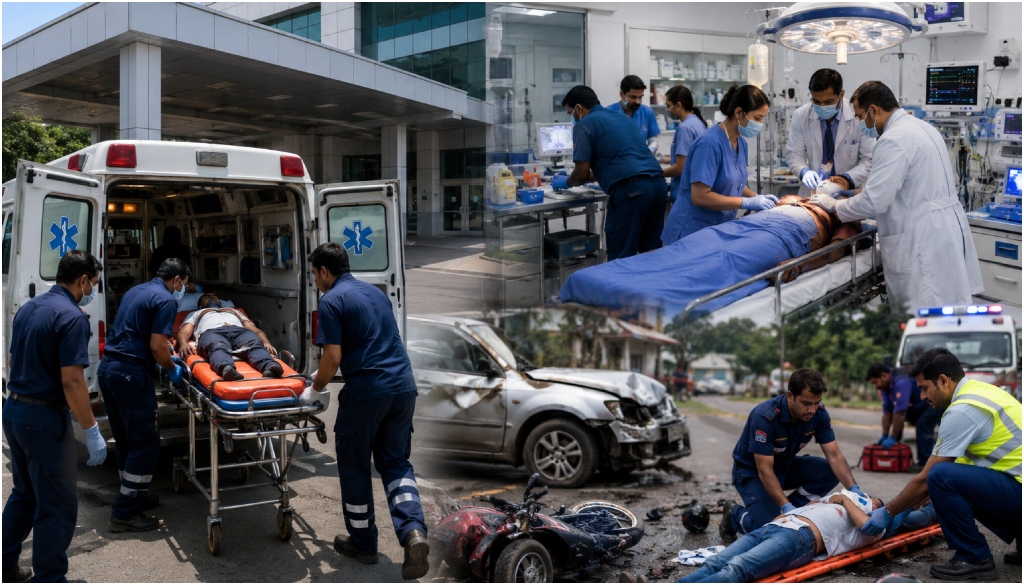
Patna: The Bihar government is preparing a major overhaul of its trauma care and emergency medical services network to improve survival rates among road accident victims. The move is aimed at ensuring faster treatment during the “golden hour” — the first hour after a crash, widely regarded by medical experts as the most critical period for saving lives.

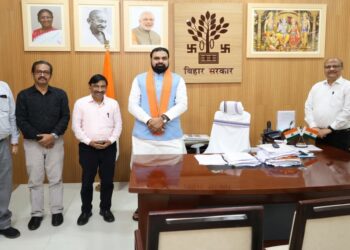
The initiative was discussed at a one-day workshop held on Wednesday at Bapu Tower Auditorium in Patna. Organised jointly by the State Health Society and the Bihar State Disaster Management Authority, the event brought together officials from the health department, police and district administrations to review strategies for strengthening trauma care across the state.
15-day inspection drive ordered

Addressing the workshop, State Health Society Administrative Officer Rajesh Kumar said the government is committed to making all trauma centres modern, fully functional and capable of handling critical cases.
He said the health minister has directed authorities to ensure quality treatment facilities are available across Bihar so that seriously injured patients do not have to travel to larger cities for emergency care.
Officials have been instructed to conduct physical inspections of trauma centres in their respective jurisdictions within the next 15 days. The assessment will cover the availability of doctors, nurses, hospital beds, medical equipment, life-saving medicines and other essential resources.
The findings will be submitted to the state headquarters, where deficiencies will be reviewed and addressed.
Referral delays under scrutiny
The Health Department also plans to streamline the referral system for accident victims. Officials noted that delays in transferring patients between hospitals often consume valuable time and can worsen outcomes.
To address the issue, a dedicated referral protocol is being developed to facilitate quicker transfers and faster access to specialised treatment.
In another key measure, all private ambulances operating in Bihar will be digitally mapped. The system is expected to help authorities identify and dispatch the nearest available ambulance to accident sites, reducing response times during emergencies.
Road safety awareness remains crucial
Speaking at the workshop, Additional Director General of Police (Traffic) Mohammed Ali Ansari said improving healthcare infrastructure alone would not be sufficient to reduce road accident deaths.
He called for wider public awareness campaigns on road safety, particularly in rural areas, and urged authorities to promote helmet use, seat-belt compliance and responsible driving practices.
Ali Ansari also stressed the need to ensure timely compensation for accident victims and their families. He said coordination between police and administrative departments would be essential to speed up the process.
The ADG further recommended that district administrations and local police stations be provided with updated information on operational trauma centres and their available facilities, enabling emergency responders to quickly transport patients to the most appropriate hospital.
The workshop concluded with a renewed focus on improving coordination between healthcare providers, emergency responders and law enforcement agencies to strengthen Bihar’s accident response system and reduce preventable deaths.