
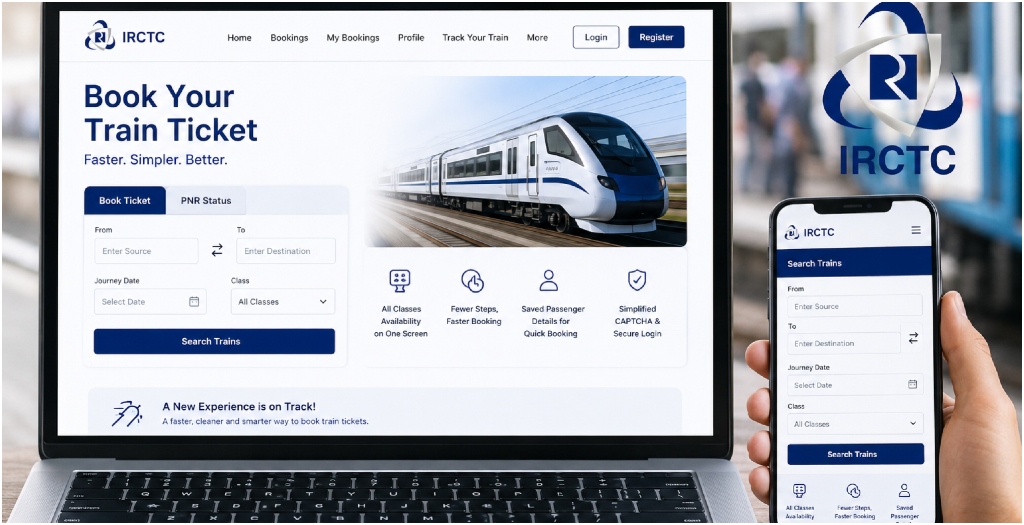
Patna: The Indian Railway Catering and Tourism Corporation (IRCTC) is preparing to launch the public beta version of its redesigned ticket booking website, with reports indicating that the rollout could take place by July 15. The updated platform is designed to improve booking speed, simplify navigation and reduce common user frustrations.

According to the Railway Board, the beta version has already been reviewed by senior railway officials and students from the Malaviya National Institute of Technology (MNIT), Jaipur. Feedback from the review has helped identify technical issues, which are being addressed before the public release.
Simplified Booking Experience

The new website removes several features that users have often found inconvenient, including excessive advertisements, complex CAPTCHAs and intrusive pop-ups. The booking process has also been shortened, allowing passengers to reserve tickets in fewer steps.
IRCTC has also simplified the login and payment process by introducing shorter CAPTCHAs, which are expected to reduce the time taken to complete transactions.
Seat Availability On A Single Screen
One of the key changes is the way seat availability will be displayed. Instead of checking each travel class separately, passengers will be able to view seat availability for all classes—including Sleeper, 3AC and 2AC—on a single screen.
The redesigned interface is intended to make ticket selection faster, particularly during periods of high booking demand.
Passenger Details To Be Saved
Frequent travellers will no longer have to enter their personal details each time they book a ticket. The new website will securely store passenger information, allowing faster repeat bookings.
The Railway Board said these improvements are expected to reduce booking time and provide a smoother experience for users.
What Is A Public Beta Version?
A public beta version is an early release of a website or software made available for testing before its official launch. During this phase, users can access the platform while developers identify and fix technical issues or bugs based on real-world usage. Once testing is complete, the stable version is released.