
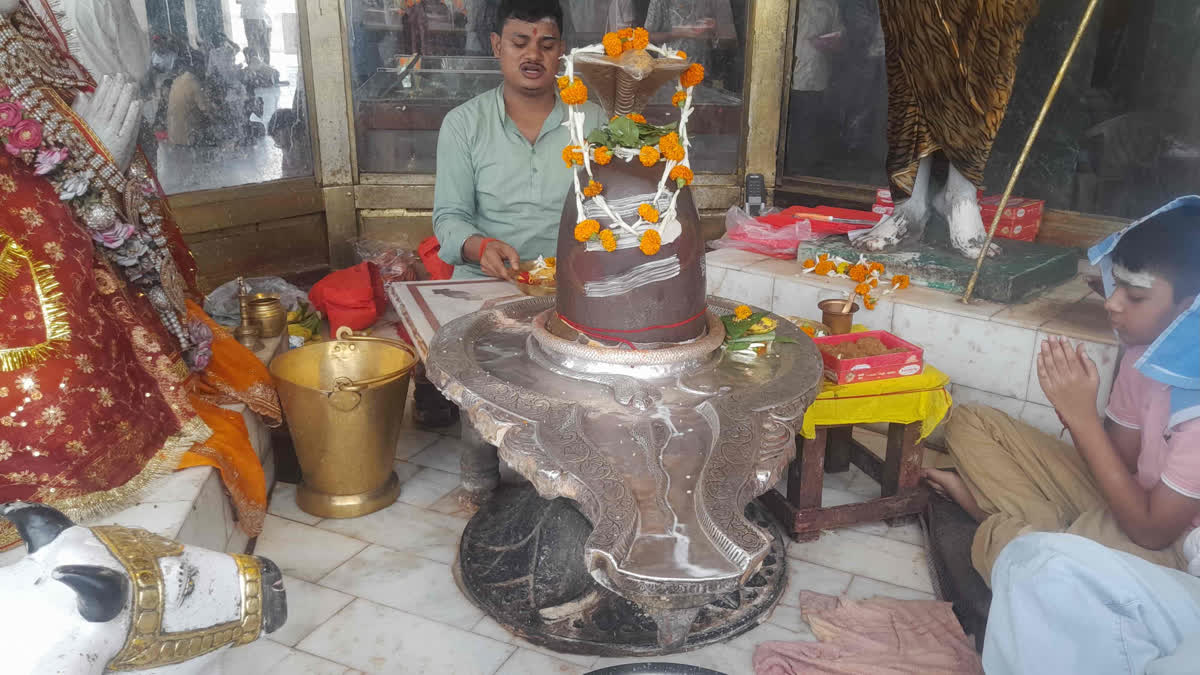
Patna: The chants of “Bol Bam” and “Har Har Mahadev” are already reverberating through the streets of Patna, days before the start of the holy month of Sawan, signalling the beginning of one of Bihar’s largest annual pilgrimages.

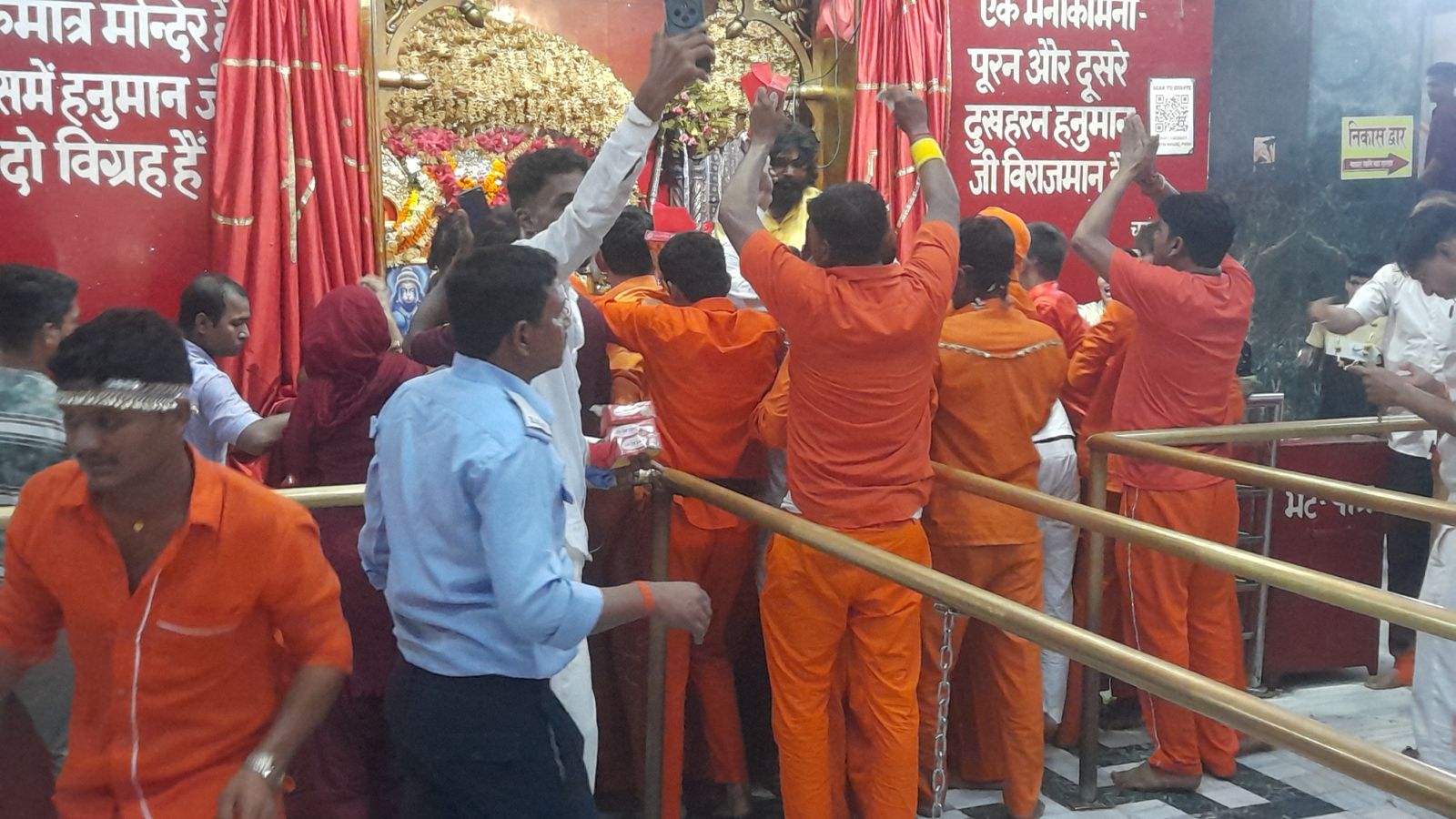
At the Mahavir Mandir near Patna Junction, saffron-clad Kanwariyas carrying sacred Ganga water have begun arriving in large numbers on their way to Baba Baidyanath Dham in Deoghar, transforming the temple precinct into a hub of devotion and activity.
A Sacred Halt Before Deoghar

For many pilgrims travelling to Deoghar by train, Mahavir Mandir is more than a transit point. It is a place where devotees first seek the blessings of Lord Hanuman before embarking on their journey to offer holy water to Lord Shiva.
The temple also welcomes pilgrims on their return, many of whom stop again to offer prayers after completing the revered Kanwar Yatra.
Among the most striking sights are the Dak Bams—pilgrims who complete the journey without stopping. Clad in saffron and chanting “Bol Bam”, they enter the temple while running, pausing briefly for prayers before continuing their pilgrimage.
Sawan Rush Begins Before The Festival
Although Sawan officially runs from July 30 to August 28, preparations at Mahavir Mandir have been underway for weeks.
According to Ajay Kumar, Public Relations Officer of Mahavir Mandir, bookings for the temple’s popular Rudrabhishek ritual opened on May 30, and around 1,100 bookings have already been made.
Most available slots have already been filled, reflecting the growing enthusiasm among devotees even before the festival begins.
“Every year, hundreds of thousands of devotees visit Mahavir Mandir during Sawan for Jalabhishek and Rudrabhishek. Extensive arrangements have been made this year as well,” Kumar said.
Four Shrines, 56 Rituals Every Day
The temple complex houses four Shiva shrines, three of which will conduct Rudrabhishek continuously from 5 am to 9 pm throughout Sawan.
The fourth shrine, located within the old sanctum behind the main temple, will begin rituals at 12 noon, allowing morning pilgrims to perform Jalabhishek without disruption.
Temple authorities said 56 Rudrabhishek ceremonies will be conducted daily.
A standard Rudrabhishek lasts about 45 minutes, while devotees seeking a more elaborate three-hour ritual can also register.
The temple has fixed the fee for Rudrabhishek at Rs 3,100 on Mondays during Sawan and Rs 2,500 on other days. The extended three-hour ritual is priced at Rs 7,100.
Crowd Management Plan For Mondays
Mondays during Sawan traditionally attract the largest crowds, prompting the temple administration to introduce a dedicated crowd management plan.
If queues become unusually long, devotees arriving for Jalabhishek will be guided through a separate barricaded route at the rear of the temple to ensure orderly movement for both worshippers and visitors seeking darshan.
The temple’s security arrangements will be supplemented by the permanent police outpost operating under Kotwali Police Station.
More Than Worship
Mahavir Mandir’s role during Sawan extends beyond religious rituals.
Every group of Dak Bams passing through the temple will be welcomed with Pitambari robes, while arrangements have been made for drinking water, sharbat and resting facilities for pilgrims travelling through Patna Junction on their way to Deoghar.
The temple expects thousands of devotees to use these facilities throughout the pilgrimage season.
Why Sawan Holds Special Significance
According to temple priest Satyendra Pandey, the month of Sawan is regarded as the most sacred period for the worship of Lord Shiva.
He said the tradition of offering water to the Shivling is rooted in the belief that the gods poured water over Lord Shiva after he consumed the poison during the Samudra Manthan, helping to cool its effects.
Devotees perform Jalabhishek using Gangajal, raw milk, honey, curd, sandalwood paste, Belpatra, Dhatura, Bhang and Akshat, each carrying symbolic significance in Hindu tradition.
Pandey explained that Belpatra represents Lord Shiva’s three eyes and the three cosmic qualities, while Dhatura and Bhang symbolise his ascetic nature. Raw milk signifies purity, and Gangajal is believed to bring spiritual liberation.
He also highlighted the special significance of Mondays during Sawan, when married women traditionally observe fasts for the well-being and longevity of their husbands, while many unmarried women pray to Lord Shiva for a suitable life partner.
For devotees across Bihar, the arrival of Sawan marks not only a religious observance but also a season in which faith, pilgrimage and community service come together—long before the first Monday of the holy month arrives.