Sabour/Patna: Bihar Agricultural University marked India’s 80th Independence Day on Saturday with a flag-hoisting ceremony and a message focused on agricultural research, innovation and the role of farmers in building a self-reliant India.

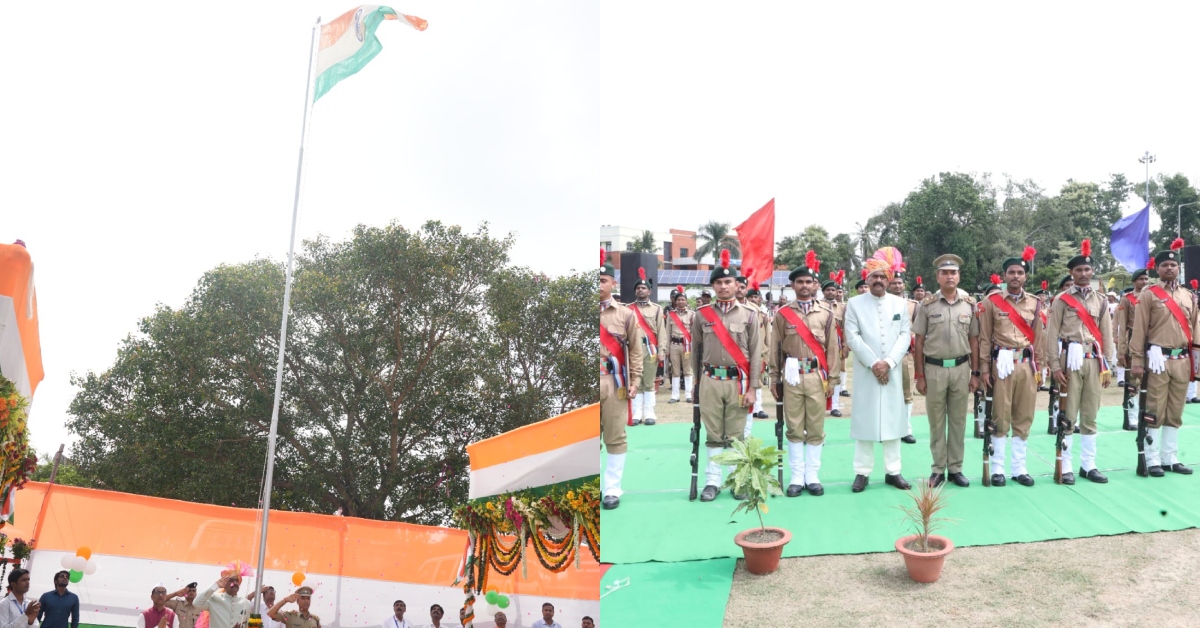
Vice-chancellor Dr D.R. Singh hoisted the national flag in the presence of students, faculty members, scientists, officers, staff, NCC cadets and security personnel.
The Vice-Chancellor inspected the parade by NCC cadets and the security team before the flag was hoisted to the rendition of Vande Mataram. Female students subsequently performed the national anthem, with those present standing at attention.

‘Research Is The Greatest Form Of Patriotism’
Addressing the university community, Singh said Independence Day should be an occasion not only to celebrate but also to remember the sacrifices of previous generations, assess the country’s achievements and consider its future responsibilities.
He said political independence had been followed by major progress in food security, science and technology, but the next phase would require greater self-reliance in knowledge, technology, seeds, agricultural inputs and food and nutritional security.
Singh told students that their role extended beyond academic study, arguing that asking questions, conducting research and developing solutions to problems faced by farmers and rural communities were forms of nation-building.
“Research is the greatest form of patriotism today,” he said.
He said agricultural scientists could strengthen India’s food, water and environmental security by developing improved seeds, increasing yields with less water and finding ways to conserve natural resources.
Focus On Sustainable Agriculture
Singh said India’s independence story could not be separated from agriculture, noting the contribution of the Green Revolution to national food security.
The challenge now, he said, was to increase agricultural productivity while using fewer resources, promote sustainable farming, conserve soil and water, improve nutritional security and protect farmers’ incomes and dignity.
He also highlighted specialised initiatives being developed at the university, including the Centre of Excellence on Sindoor (Bixa orellana L.) and the Centre of Excellence on Exotic Fruits.
According to the university, these initiatives are being supported through the efforts of Agriculture Minister Vijay Kumar Sinha and funding from the Agriculture Department of the Bihar government.
Three projects worth approximately Rs 3.85 crore have also been approved under the Rashtriya Krishi Vikas Yojana, while approvals have been granted for an edible oil and oilseed hub in Lakhisarai and a seed storage facility on the university campus.
Sabour Research Contributing Beyond Bihar
The Vice-Chancellor highlighted the university’s contribution to national agricultural research through its crop varieties.
A linseed variety developed by the university is meeting approximately 25% of national demand for breeder seeds, according to the university. The Sabour Til-1 variety, notified in 2025, is meeting about 20% of national breeder-seed demand this year.
Singh said the figures demonstrated that agricultural research at Sabour was contributing beyond Bihar to national agricultural development.
Rs 19.70 Crore In Research Projects Sanctioned
During 2025-26, research and development projects worth approximately Rs 19.70 crore were sanctioned for university scientists, according to the university.
The projects are supported by national research organisations including ANRF, BRNS and NSMP, as well as corporate social responsibility collaborations with organisations including Maruti Suzuki India Limited and the ICICI Foundation.
Research areas include paddy, makhana, turmeric, Katarni and Marcha rice, honey processing and biodegradable packaging for litchi.
An international project has also been sanctioned in collaboration with the Bill & Melinda Gates Foundation in the US.
University Holds 32 Patents
The university currently has 32 patents, 29 copyrights and one trademark, according to Singh.
Since August 2025, it has secured 12 patents and 11 copyrights.
The Vice-Chancellor said the intellectual property portfolio reflected the growing emphasis on research and innovation at the university.
He urged students and researchers to focus on practical solutions to agricultural and rural challenges, linking scientific advancement with the wider goal of building a more self-reliant India.