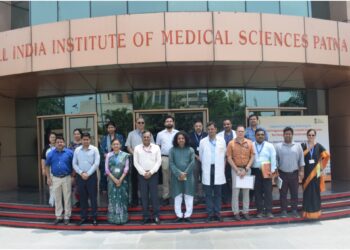
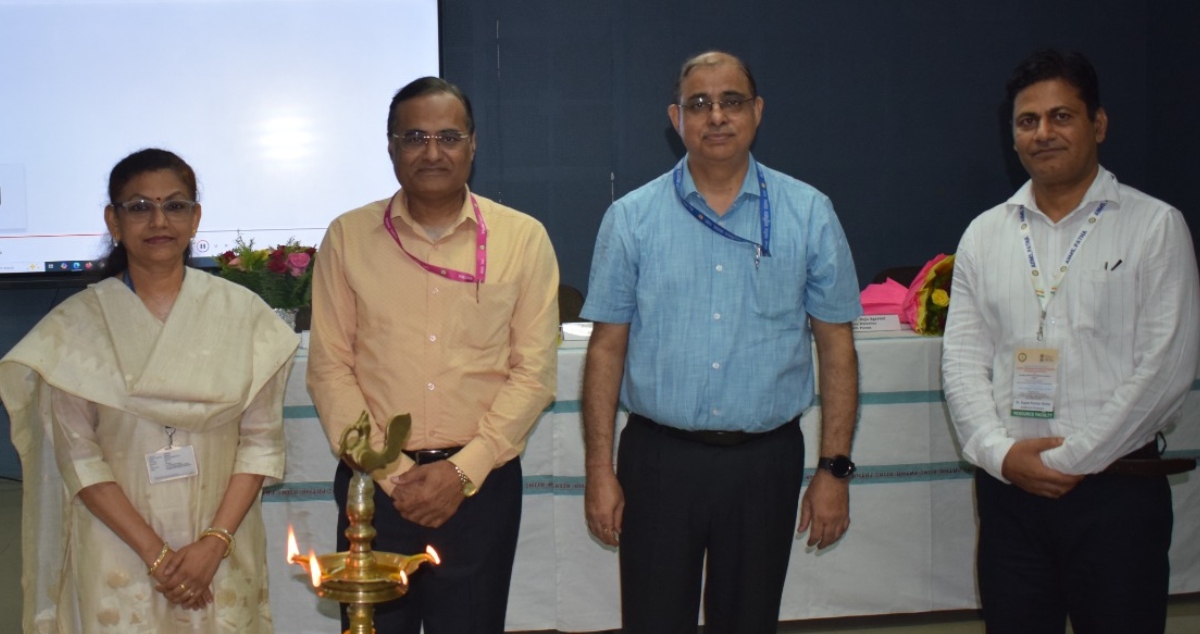
Patna: The Department of Hospital Administration at All India Institute of Medical Sciences (AIIMS), Patna, organised a six-day capacity-building training programme on “Hospital Preparedness for Health Emergencies” from August 17 to 22 to strengthen disaster preparedness, emergency response and resilience across healthcare institutions.

The programme brought together hospital administrators from Bihar, Jharkhand, West Bengal and Manipur and was supported by the Disaster Management Cell of the Ministry of Health and Family Welfare, Government of India.
AIIMS Patna Director Stresses Emergency Preparedness

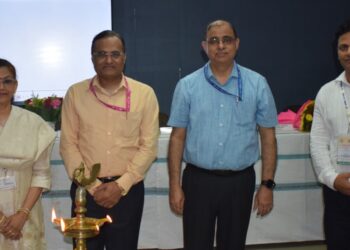
The programme was inaugurated by Prof. (Brig.) Dr. Raju Agarwal, Executive Director, AIIMS Patna, in the presence of Prof. Dr. Sanjay Pandey, Dean (Research); Prof. Dr. Punam Prasad Bhadani, Dean (Academics); Dr. Sujeet Kumar Sinha, Head of the Department of Hospital Administration; and Dr. Ram Krishna Mondal of the same department.
Addressing the participants, Prof. Agarwal emphasised the need for hospitals to remain prepared for both routine emergencies and large-scale disasters.
He stressed that regular training, mock drills and coordinated response mechanisms are essential to ensure patient safety and maintain uninterrupted healthcare services during emergencies.
Training Covers Hospital Disaster Management
Held at the Conference Hall of the College of Nursing, AIIMS Patna, the programme covered several aspects of hospital disaster preparedness.
Key areas included disaster management principles, safe hospitals, emergency department planning, mass casualty and mass fatality management, pre-hospital care, field hospital planning, logistics management, rapid health risk assessment and triage.
Participants also received practical training in Basic Life Support (BLS) and Advanced Trauma Life Support (ATLS).
Focus on Emergency Response Systems
The participants were familiarised with the Incident Response System and Hospital Emergency Incident Response System (HEIRS).
Sessions on surge capacity, disaster risk communication and hospital disaster management planning were also conducted to strengthen the practical preparedness of hospital administrators.
NDRF Conducts CBRN Mock Drill
A dedicated session by the Bihar Unit of the National Disaster Response Force (NDRF) focused on CBRNE emergencies, covering chemical, biological, radiological, nuclear and explosive hazards.
The session included a CBRN mock drill designed to provide participants with practical exposure to emergency response procedures.
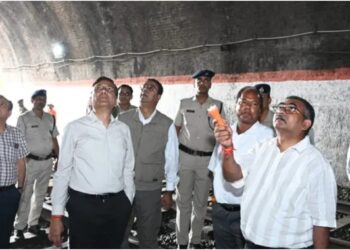
Fire safety and hospital evacuation preparedness were demonstrated with support from the Bihar Home Guard & Fire Services and the AIIMS Patna Fire Safety Team.
Psychosocial Support and Continuity of Healthcare Discussed
The training also addressed psychosocial challenges that can arise during hospital disasters.
Participants were briefed on the importance of maintaining essential hospital services during emergencies and restoring normal operations as quickly and safely as possible after a disaster.
Programme Concludes with Certificates
The six-day programme concluded with a post-test, participant feedback and certificate distribution.
Faculty and resource persons from the departments of Hospital Administration, Emergency Medicine, Trauma Surgery & Critical Care, Community & Family Medicine, Anaesthesiology and Psychiatry at AIIMS Patna contributed to the training. Experts from the NDRF and Bihar Home Guard & Fire Services also participated.
The initiative underlined AIIMS Patna’s continued focus on developing a prepared, coordinated and resilient healthcare system capable of responding effectively to disasters and health emergencies.