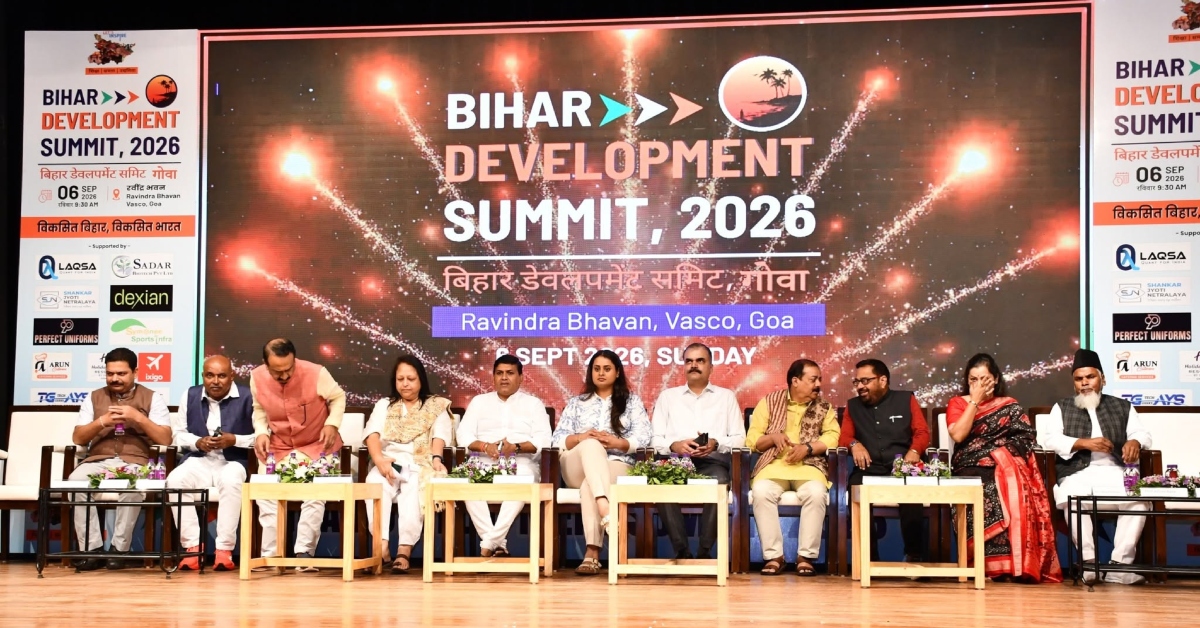
Goa/Patna: The vision of a new and aspirational Bihar took centre stage in Goa on Sunday as Let’s Inspire Bihar (LIB) organised the Bihar Development Summit 2026 at Ravindra Bhavan in Vasco da Gama, bringing together more than 500 delegates from across India and abroad.

Held under the theme “Developed Bihar – Developed India 2047”, the summit brought together policymakers, entrepreneurs, academics, professionals, journalists, social leaders and members of the Bihar diaspora to discuss the state’s developmental challenges and explore a collective roadmap for its transformation.
The event was attended by Bihar Industry and Sports Minister Shreyasi Singh, LIB founder Vikas Vaibhav, Vasco MLA Krishna Daji Salkar, Sulabh International Executive Convenor Nitya Pathak, Private Schools and Children Welfare Association national president Syed Shamael Ahmed, IRS officer Ajit Kumar, Prof Ashmi Raza, Ministry of Culture adviser and social entrepreneur Deepak Thakur and others.

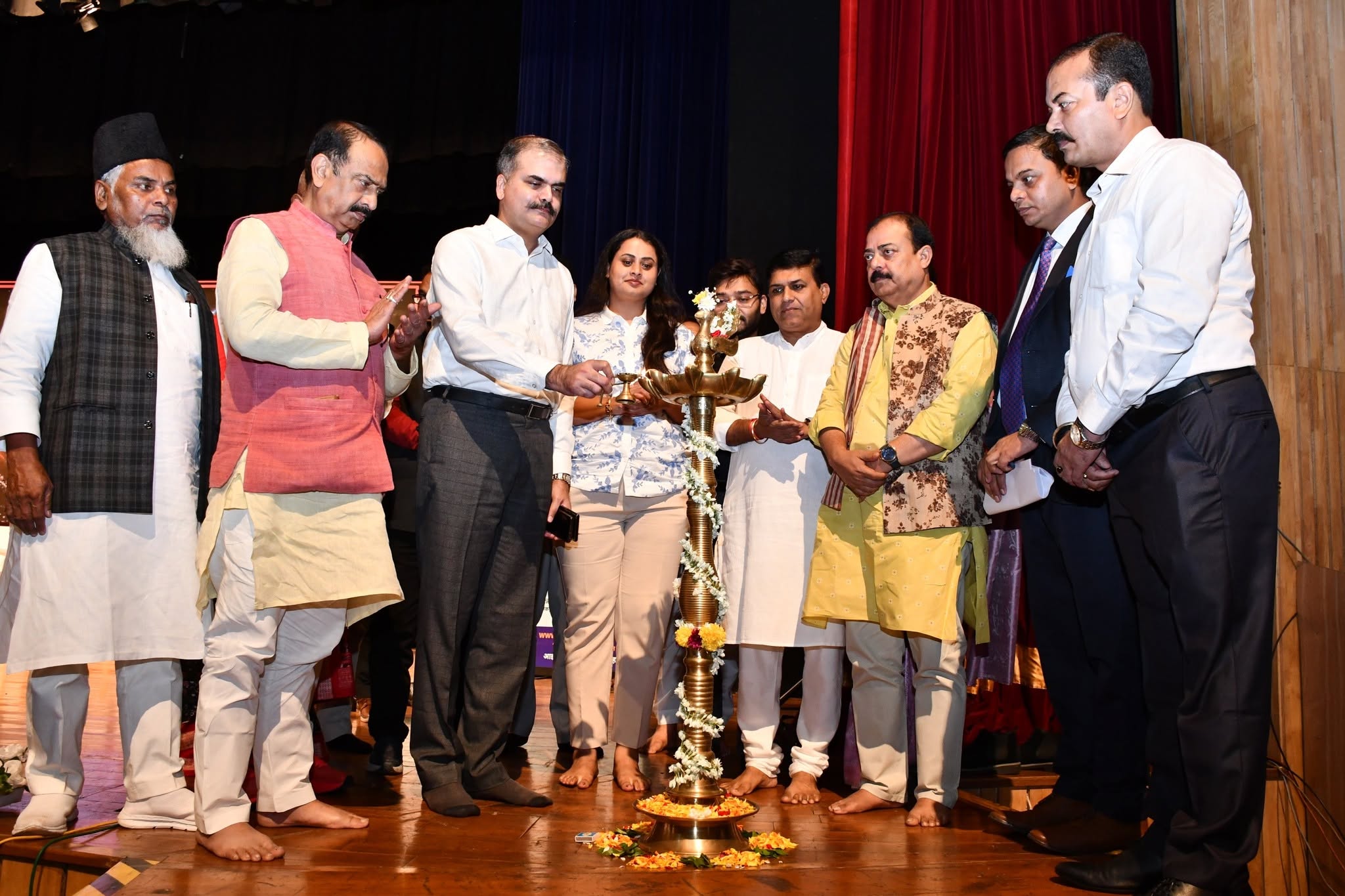
Vikas Vaibhav calls for a ‘New Bihar’
Addressing the gathering, Vikas Vaibhav said the growing presence of Let’s Inspire Bihar across India and abroad reflected the emergence of a “New Bihar”.
He said around four lakh people are voluntarily associated with LIB, including about 600 in its Goa chapter. According to Vaibhav, the participation of people living outside Bihar demonstrates their continuing emotional and developmental connection with the state.
Recalling his school years in Bhopal, where his father was posted, Vaibhav said he was sometimes mocked for being a “Bihari”. The experience prompted him to question why the identity had become a term of ridicule despite Bihar’s civilisational history.
He said his subsequent study of history revealed a Bihar associated with knowledge, entrepreneurship, valour and a global outlook, motivating him to work towards restoring that legacy.
Vaibhav said Bihar faces a significant developmental challenge despite its historical contributions, noting that its per-capita income remains among the lowest in the country while states such as Goa rank much higher.
He said Bihar would need sustained growth of around 15 per cent to achieve the objective of becoming a developed state by 2047. Development, he added, should create sufficient opportunities within the state so that people are not compelled to migrate elsewhere for education, employment or advanced healthcare.
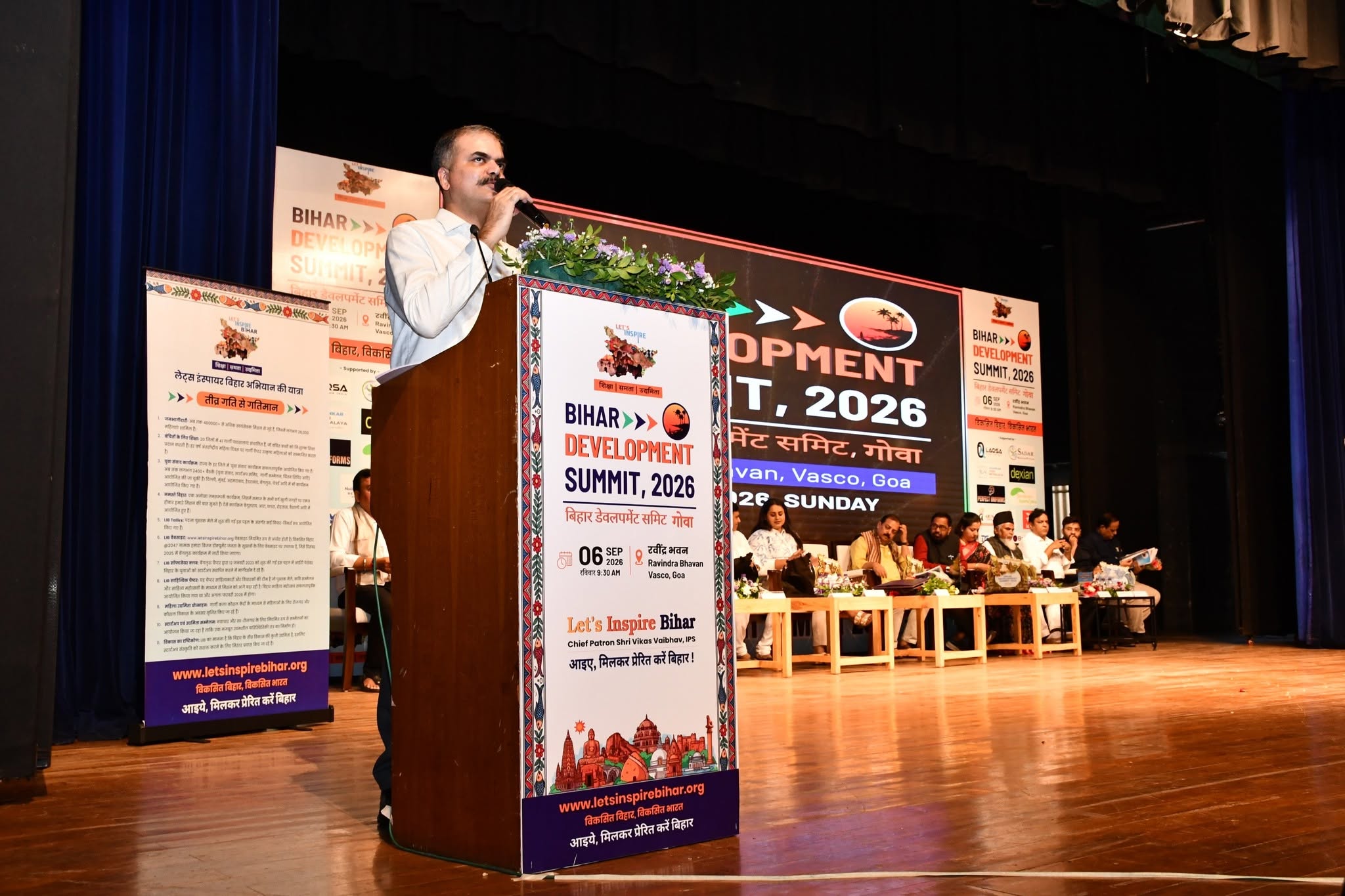
Diaspora urged to contribute to Bihar
Vaibhav stressed that government action alone would not be enough and called on Biharis living outside the state to contribute to their villages, towns, blocks and districts.
He highlighted the work of 104 LIB associates who have already undertaken initiatives including libraries, scholarships in the names of their parents, medical camps and virtual classes.
He urged Biharis living in Goa to participate in the development process in whatever way possible.
LIB, he said, aims to increase its membership from around four lakh to 10 lakh by its sixth anniversary in March next year.
The organisation is also associated with around 600 startups. Vaibhav recalled LIB’s target of having at least one startup in every Bihar district employing 100 or more people by the end of 2028.
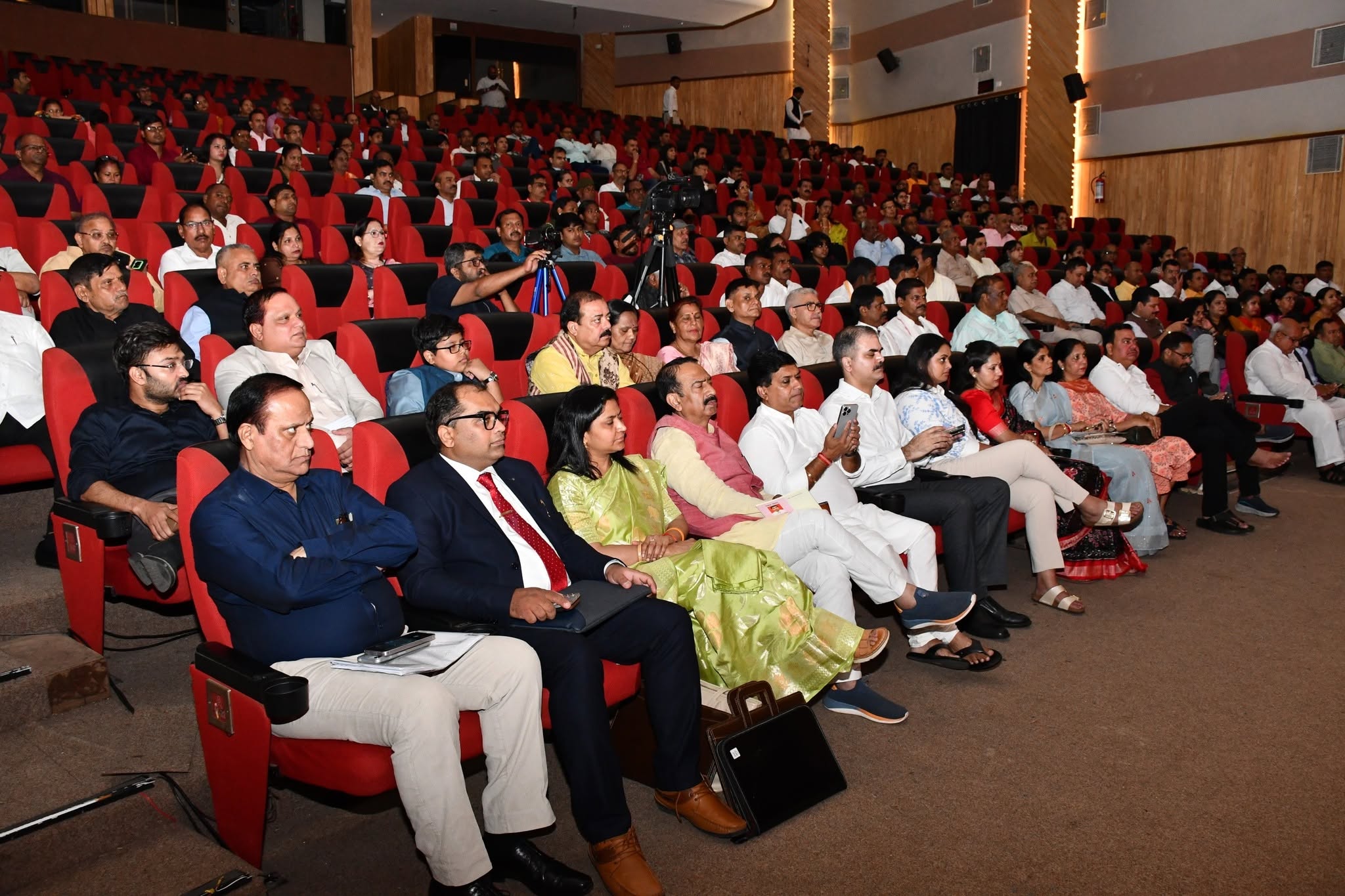
Focus on social integration
Vaibhav also spoke about Bihar’s social challenges, expressing concern over the growing prominence of caste-based divisions in public discourse.
Drawing on the history of Vaishali, he said Bihar had once demonstrated the power of unity in diversity and produced one of the world’s earliest republican systems.
He said the decline of Vaishali also carried lessons for contemporary Bihar, arguing that internal divisions, selfishness, jealousy and the abandonment of a broader collective vision could weaken society.
He said Bihar today stood between two competing forces — social integration and development on one side and social disintegration on the other.
Vaibhav also expressed concern that even discussions about crime were increasingly framed through the caste identity of victims or accused persons.
Referring to Nalanda, Vikramshila and Vaishali, he said Bihar had historically demonstrated a global outlook in which seekers of knowledge were welcomed irrespective of caste, region or nationality.
With around 14 crore people and nearly nine crore young people, he said Bihar possessed enormous human potential. If its people collectively resolved to transform the state, he argued, no force could prevent that change.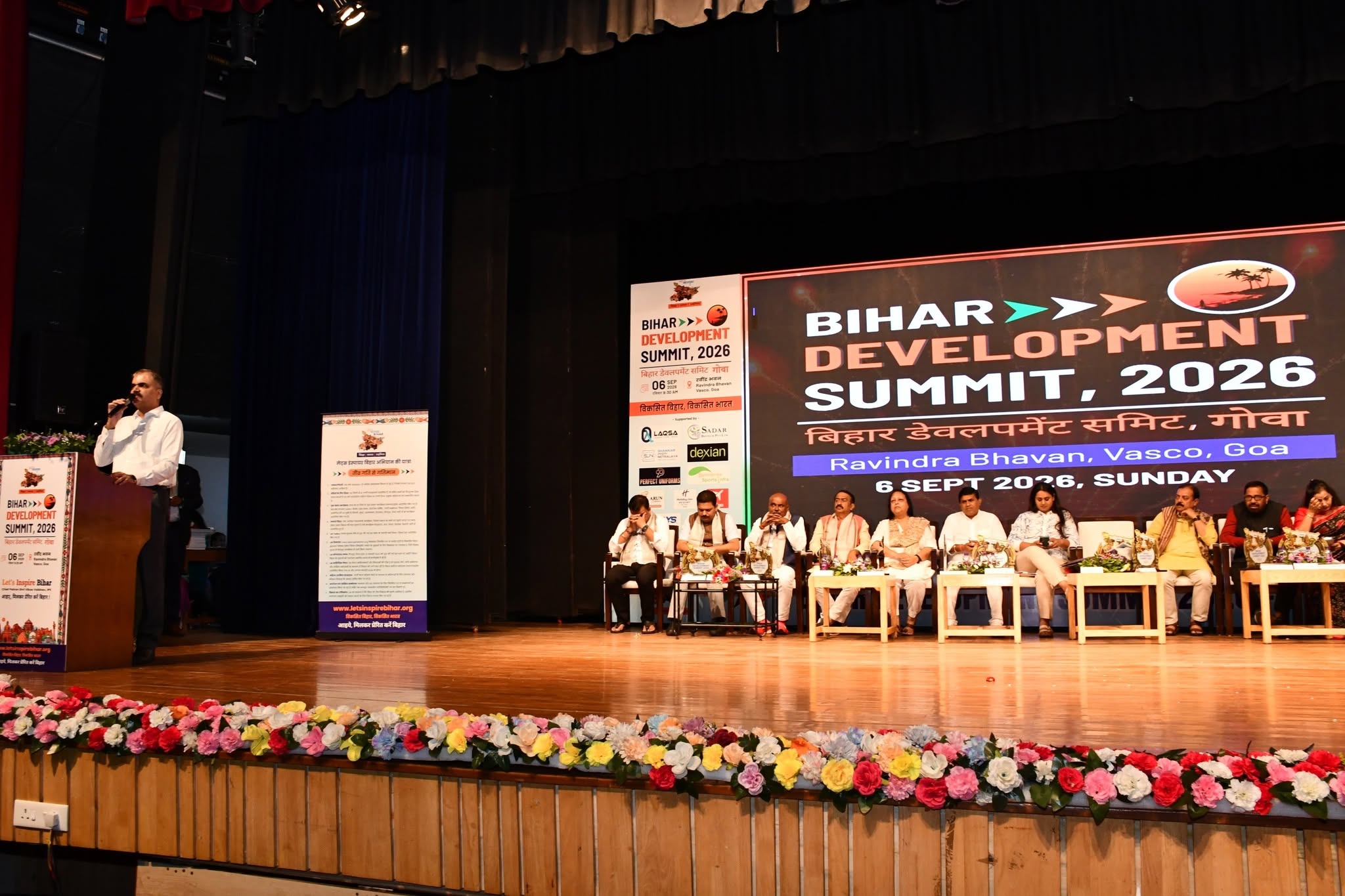
Women’s empowerment and entrepreneurship highlighted
Vaibhav highlighted LIB’s work in education, entrepreneurship, skill development and social leadership, including its Gargi Chapter, which focuses on empowering women and girls.
The organisation currently has 42 Gargi Pathshalas across 20 districts, he said.
He also urged those committed to Bihar’s development to speak more strongly against divisive narratives, particularly on social media.
Shreyasi Singh backs collective development effort
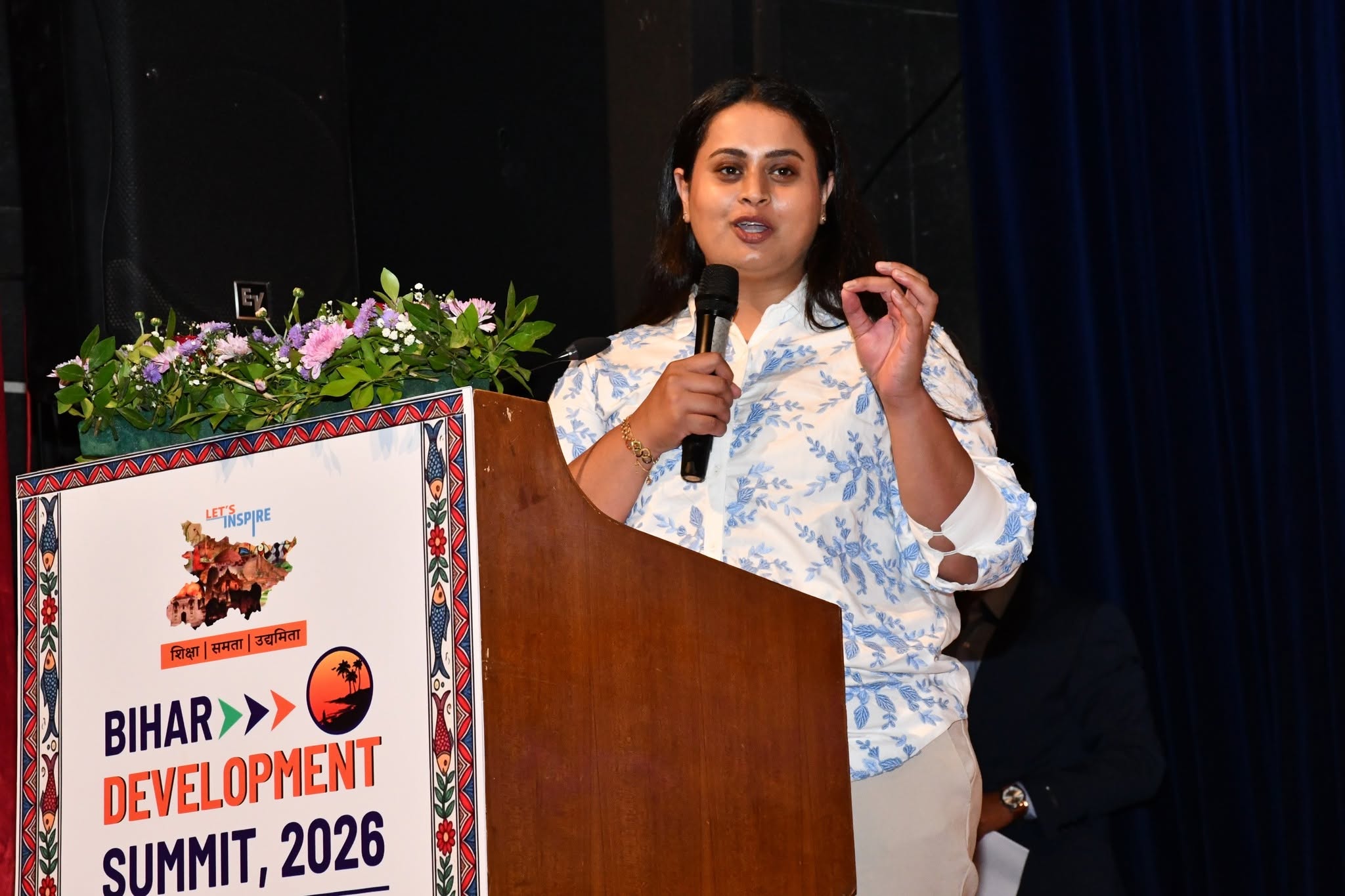
Industry and Sports Minister Shreyasi Singh appreciated the initiative and the efforts of Vikas Vaibhav in bringing together people committed to Bihar’s development.
She said Bihar’s transformation would require not only government intervention but also active participation from citizens, professionals, entrepreneurs, social organisations and the Bihar diaspora.
Singh highlighted education, entrepreneurship, women’s empowerment, skill development and social leadership as important areas for the state’s future.
She said Bihar had considerable potential in its young population, entrepreneurial spirit, cultural heritage and human resources, but the challenge was to convert that potential into meaningful opportunities.
She expressed confidence that collective participation, social harmony and sustained efforts in education, industry, innovation and employment generation could help Bihar move towards the goal of becoming a developed state by 2047.
Four thematic sessions
The summit featured four major thematic sessions.
The first, on “Entrepreneurship”, was moderated by Pankaj Mani and focused on entrepreneurship, employment generation, innovation, investment opportunities and creating an ecosystem in which Bihar’s youth could become job creators.
The second session, “Bihar’s Culture, Heritage & Identity”, was moderated by Indramohan Yadav. Participants discussed Bihar’s civilisational heritage and cultural identity, as well as the potential of heritage to support tourism, cultural revival and economic opportunities.
The third panel, “Bihar @ 2047”, moderated by LIB Goa coordinator Sanjeev Lal, examined the state’s long-term development roadmap, including economic growth, human capital, employment, education and innovation.
The fourth session, “LIB मातृशक्ति @ 2047 – सशक्त नारी, विकसित बिहार”, was moderated by Namita Sharan and focused on women’s education, entrepreneurship, leadership and participation in Bihar’s social and economic transformation.
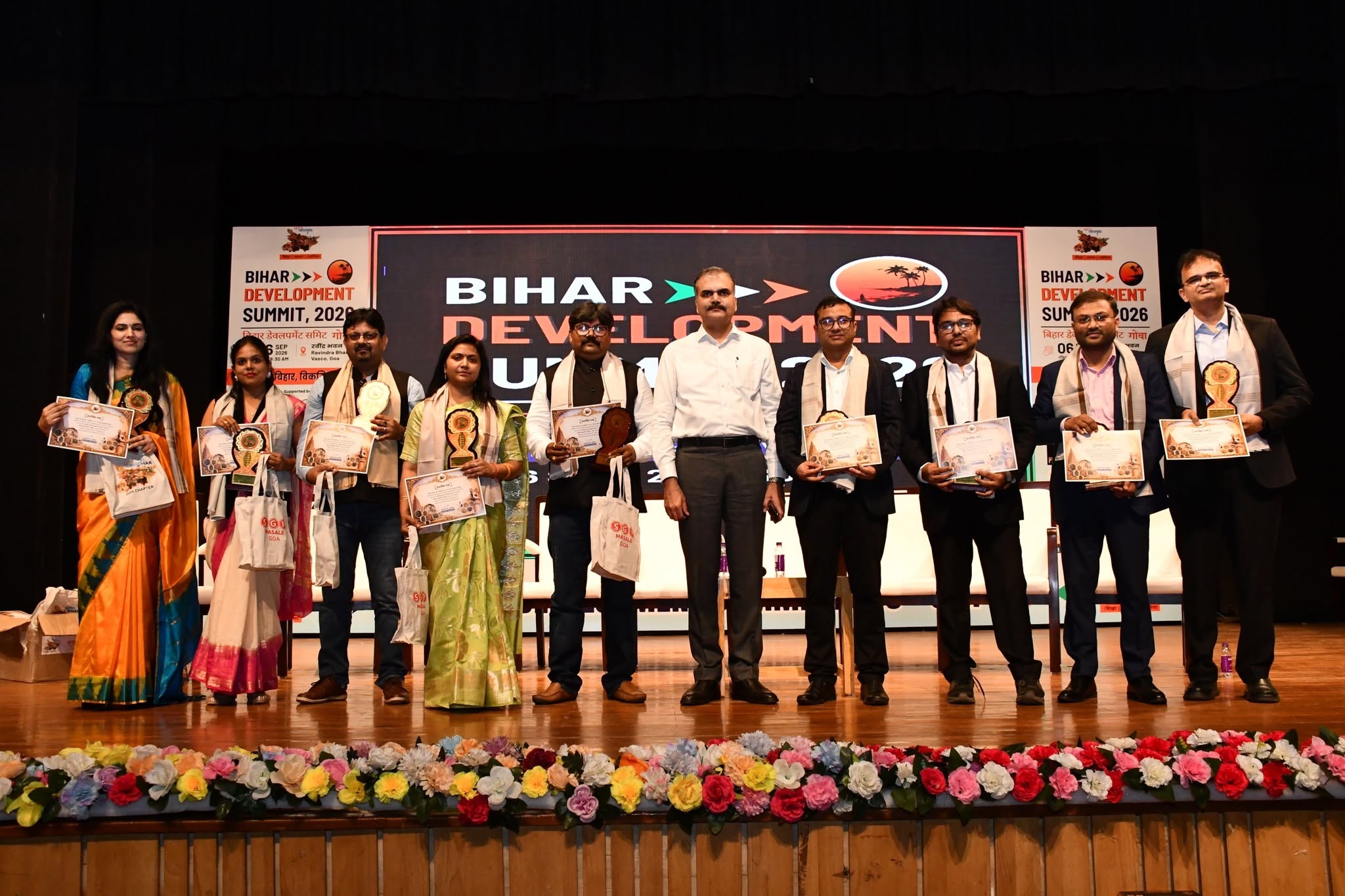
Bihar Prernashrot Samman presented
The summit also featured the Bihar Prernashrot Samman, recognising individuals and organisations associated with contributions to Bihar’s progress.
Among those recognised were Ajit Kumar IRS, Vishal, Sadar Biotech represented by Sarfaraz Alam and Prashant Mishra, Shankar Jyoti Netralaya Patna represented by Md Akhtar, Kamla Prasad, Dr Vijay Kumar Ranjan, Sangita Verma, Anand Singh, Dr Lakshay Kumar Jha, P.K. Mandal, Saumya IPS, Pushpendra Mandal, Sanjay Sinha, Akhilesh Sharma, Ashish Verma from the Accounts & Audit Department, Goa, and Abhimanyu Singh, vice-president of Reliance Industries.
A book was also launched during the programme, followed by poetry recitations by Jyoti Jha and Pallavi Rani.
Bihar diaspora strengthens Goa connection
The summit highlighted the growing involvement of the Bihar diaspora in the state’s development.
Participants travelled from different parts of India and abroad, including Shashikant from Australia and Sunita from the United States.
Rohit Kumar, national spokesperson of Let’s Inspire Bihar, said the Goa summit reflected the growing strength of the Bihar diaspora and its commitment to the state’s transformation.
He said LIB would continue to connect people, ideas and opportunities around the larger vision of a developed Bihar by 2047.
The event was also attended by several other LIB representatives, social leaders and professionals, including National Convenor Mohan Jha, Shailendra Mishra, Sujit Singh, Subhash Singh and social media coordinator Aashish Ranjan.
The Bihar Development Summit concluded with a vote of thanks and a reaffirmation of the “Developed Bihar – Developed India 2047” vision, with participants emphasising citizen participation, social harmony, entrepreneurship, investment in human capital and the role of Biharis across India and abroad in shaping the state’s future.