Patna: Patna has recorded a significant decline in dengue cases over the past few years, with the Patna Municipal Corporation (PMC) intensifying mosquito-control and disease-prevention measures across the city.

According to year-wise figures provided by the health department, Patna recorded around 8,000 dengue cases in 2023. The number fell to approximately 5,000 in 2024 and further declined to 1,800 in 2025.
By September 2, 2026, only 178 dengue cases had been recorded in Patna, according to the figures shared by the authorities.

Compared with 2023, the number of cases in 2025 represented a decline of approximately 79 per cent. Patna had recorded 6,784 cases in 2022, before cases rose sharply in 2023 and subsequently declined following sustained preventive efforts by the municipal corporation and health department.
Fogging And Anti-Larval Measures At The Core
The civic body’s strategy focuses not only on reducing adult mosquitoes but also on breaking the mosquito breeding cycle.
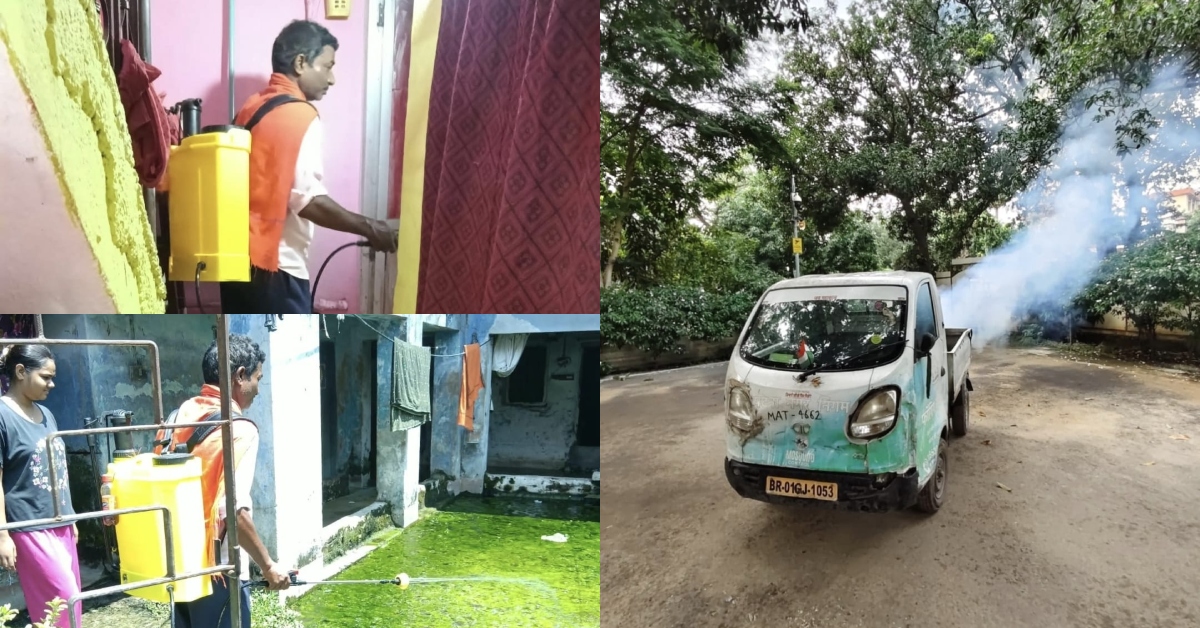
Fogging and anti-larval spraying are being conducted across all 75 municipal wards every day in two shifts. In hotspots and vulnerable areas identified by the health department and vector-borne disease specialists, the frequency can be increased to up to three times a day, depending on local requirements.
Authorities have also directed teams to act immediately after receiving information about a dengue case. Health department data and area-wise assessments are being used to direct municipal teams towards locations requiring targeted intervention.
132 Fogging Machines Deployed
The PMC currently has 132 fogging machines deployed across the city, including 57 vehicle-mounted machines and 75 handheld machines.
A total of 132 personnel are directly involved in the fogging campaign.
The New Capital Circle has 12 vehicle-mounted and 16 handheld machines, with 28 personnel. The Patliputra Circle has 13 vehicle-mounted and 16 handheld machines, supported by 29 personnel.
The Bankipore Circle has 9 vehicle-mounted and 12 handheld machines, with 21 personnel, while the Kankarbagh Circle has 10 vehicle-mounted and 11 handheld machines with 21 personnel.
The Patna City Circle has 6 vehicle-mounted and 8 handheld machines, with 14 personnel. The Azimabad Circle has 7 vehicle-mounted and 12 handheld machines, supported by 19 personnel.
375 Anti-Larval Units Cover 75 Wards
To identify and eliminate mosquito breeding sites, the city’s 75 wards have been divided into 375 sectors.
Each sector has one anti-larval unit, with teams conducting regular inspections according to a fixed roster.
The teams also respond to complaints received through the municipal corporation’s control room and information received from residents and field-level sources.
Potential breeding sites in drains, waterlogged areas, vacant plots, construction sites, public premises and private properties are being identified and treated with anti-larval measures wherever required.
Residents are also asked to provide feedback following spraying operations through field logbooks.
Extra Vigilance Along Ganga Ghats
The PMC has increased monitoring around Ganga-side ghats and other vulnerable areas, particularly following the decline in the river’s water level.
Officials are concerned that water remaining stagnant along riverbanks and around ghats could create suitable conditions for mosquito breeding.
Teams are inspecting these areas for water accumulation and potential breeding sites. Anti-larval measures are being undertaken wherever necessary, while fogging is being carried out in areas with higher mosquito activity.
Metropolitan Surveillance Unit Keeps Watch
The campaign is being monitored from the municipal circle level to the corporation headquarters. The Metropolitan Surveillance Unit (MSU) is also conducting regular inspections of fogging and anti-larval operations.
MSU teams visit different areas to assess field-level implementation and issue instructions where corrective action is required.
Personnel involved in the campaign have also received training from MSU specialists. The training covers the prescribed procedures for fogging and anti-larval spraying, identification of breeding sites, safety precautions and field-level working methods.
Complaints To Trigger Quick Response
Citizen complaints have been incorporated into the city’s dengue-control strategy.
Residents can request fogging or anti-larval spraying around their homes, offices or surrounding areas by contacting the PMC’s toll-free number 155304.
The complaint mechanism is intended to help authorities identify locations requiring additional intervention.
Residents Asked To Remove Stagnant Water
The municipal corporation has appealed to residents to support the prevention campaign by ensuring that water does not accumulate in and around homes.
Residents have been advised to check rooftops, balconies, coolers, flower pots, old tyres, empty containers and other potential mosquito-breeding sites at least once a week.
Any stagnant water should be removed, while containers and other potential breeding sites should be cleaned regularly.
The civic body said public participation is essential for sustained control of dengue and other mosquito-borne diseases.
With dengue cases continuing to remain substantially below the levels recorded in previous years, the PMC aims to maintain the trend through continuous surveillance, rapid response, widespread fogging, anti-larval operations and community participation.
The broader objective is to strengthen Patna’s preparedness against dengue and other mosquito-borne diseases while preventing a resurgence in cases.